Disclosure: This article contains affiliate links. If you buy through them we may earn a small commission at no extra cost to you. See our affiliate disclosure. This guide is general, researched information and is not a substitute for an exam by a reptile veterinarian.
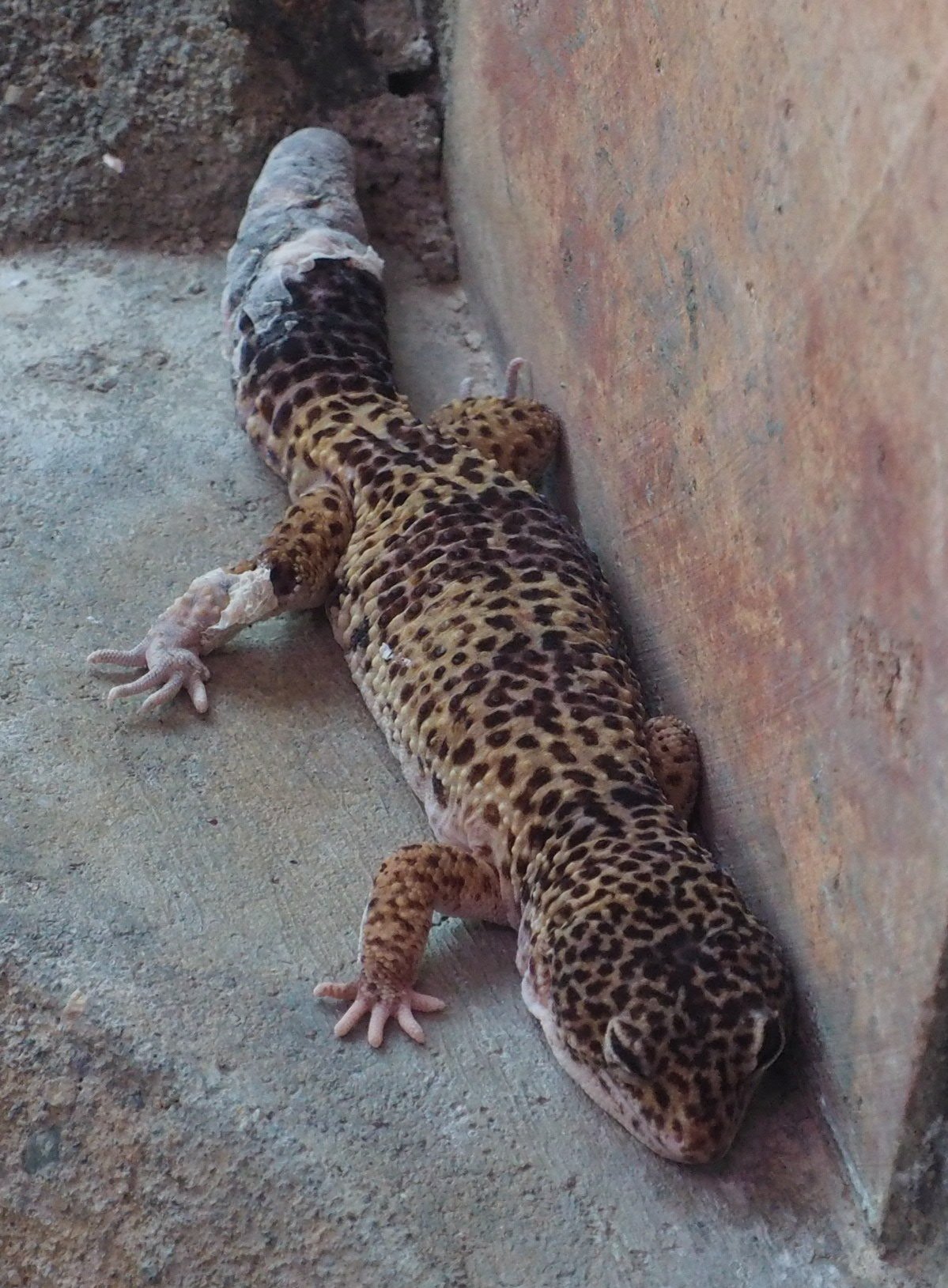
A healthy leopard gecko sheds its whole skin in a few hours and usually eats it. Stuck shed (vets call it dysecdysis) most often happens on the toes, tail tip and around the eyes. The usual causes are an enclosure that is too dry, no humid hide, dehydration or a vitamin A shortfall in the diet. Mild stuck shed can often be loosened with a humid hide or a short lukewarm soak. Rings of old skin on the toes, swollen or dark toes, and shed stuck in the eyes need a reptile vet, because left alone they can cost a toe or damage the eye.
This guide covers what a normal shed looks like, why sheds go wrong, how to help safely, what not to do, and how to prevent the next shed from sticking.
How often do leopard geckos shed?
Leopard geckos shed throughout their lives because their outer skin does not grow with them. Young, fast-growing geckos shed most often: a veterinary review in Vet Times notes juveniles can shed as often as every 10 days during rapid growth, while adults typically shed every six to eight weeks. Other veterinary sources describe adult sheds as roughly monthly or every four to eight weeks. Individual geckos vary, so it helps to note shed dates on a calendar to learn your own gecko’s rhythm.
What a normal shed looks like
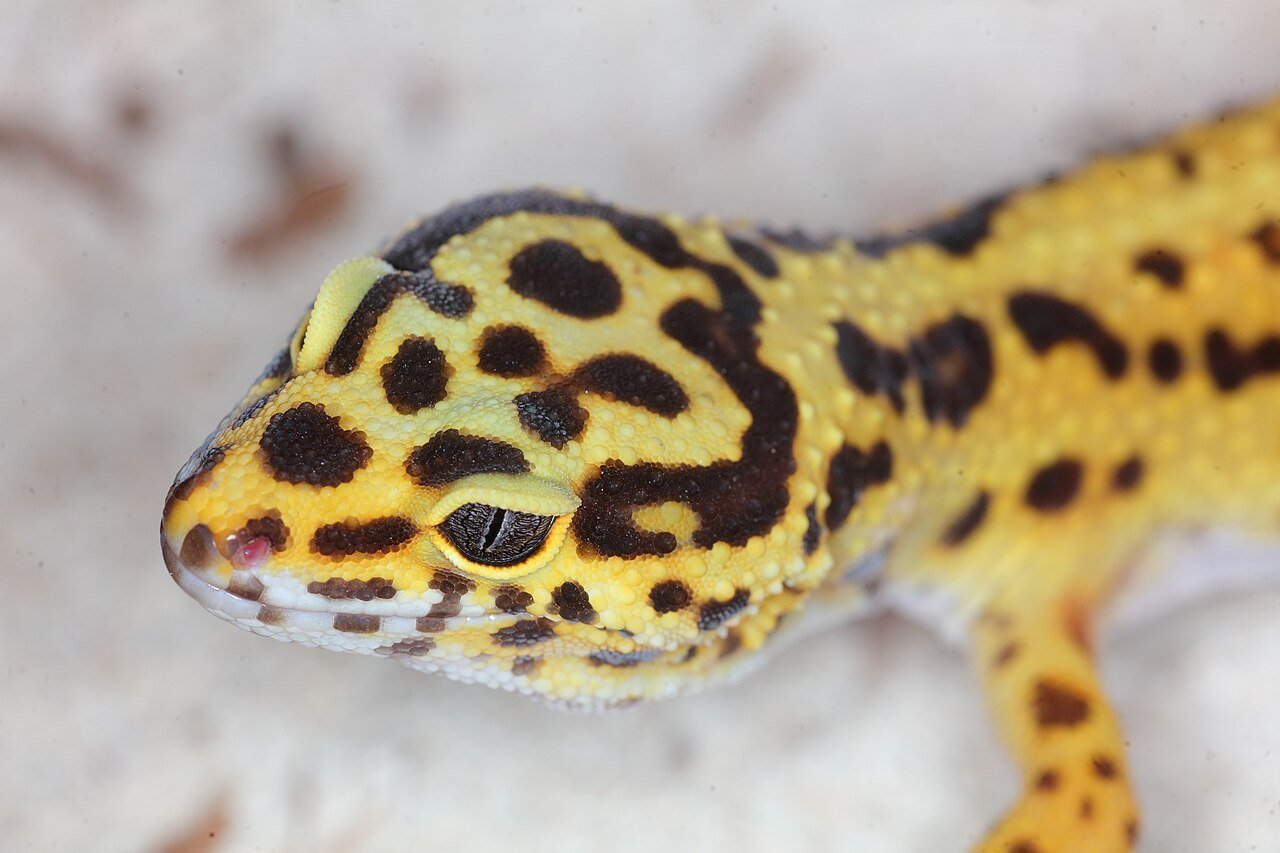
- Going pale. A day or two before shedding, the gecko turns dull, greyish or whitish as fluid separates the old skin from the new. Colours look washed out.
- Hiding and less appetite. Many geckos spend more time in the humid hide and may skip a meal.
- The shed itself. The gecko rubs its face to split the skin, then pulls the old skin off in large pieces with its mouth, usually within an hour or two.
- Eating the shed. Most leopard geckos eat their shed skin. This is normal, so do not worry if you never find it.
After shedding, the gecko should look bright and clean, with no pale patches left on the toes, tail tip or around the eyes.
Signs of stuck shed
- Toes: white or grey bands or “gloves” of skin on the toes, or toes that look thicker than usual. Over time these bands dry and tighten.
- Tail tip: dull, dry skin left on the end of the tail.
- Eyes: squinting, keeping one or both eyes closed, crusty material along the eyelids, or seeming to have trouble finding food. Leopard geckos have movable eyelids, and shed can collect underneath them.
- Body: patches of pale, flaky skin that stay after the rest of the shed is gone.
Why leopard gecko shed gets stuck
Low humidity or no humid hide
Leopard geckos come from dry habitats and do well at around 30–40% humidity overall, but they need a moist retreat to shed cleanly. Our leopard gecko care sheet recommends a humid hide at around 70–80%. Without one, the old skin can dry onto the body before it comes off. Veterinary sources describe an environment that is too dry as the most common cause.
Dehydration
A gecko that is not drinking enough, or is unwell, may struggle to shed. Always keep a shallow dish of fresh water available.
Temperatures that are too low or too high
Shedding is a metabolic process, and an enclosure that is too cool slows it down. Overly hot, dry setups can make it worse too. Check the warm and cool sides with digital thermometers, as described in our leopard gecko tank setup guide.
Nothing rough to rub against
Geckos start a shed by rubbing against rough surfaces. Bare, smooth enclosures make this harder. Rocks, cork bark and textured hides all help.
Vitamin A deficiency
The Vet Times review explains that crickets cannot store vitamin A, so leopard geckos fed un-gut-loaded, unsupplemented insects can become deficient, and this affects the skin’s ability to separate. Reptiles Magazine adds that many insect-eating reptiles convert beta-carotene to vitamin A poorly. See our leopard gecko diet guide for gut-loading and supplement routines. Vitamin A can also be overdosed in small lizards, so do not add extra vitamin A on your own. Ask your vet if you suspect a deficiency.
Illness or parasites
Mites, skin infections, internal parasites and general illness can all disrupt shedding. Repeated bad sheds despite good husbandry are a reason to book a vet check.
How to help a leopard gecko with stuck shed
These steps are for mild stuck shed on an otherwise healthy, alert gecko. If toes are swollen, dark or constricted, or the eyes are involved, skip to the vet section.
1. Refresh the humid hide
Fill a hide with damp (not dripping) sphagnum moss or paper towel and place it on the warm side. Many small pieces of stuck shed come off on their own within a day or two once a gecko has a properly humid hide.
2. Give a lukewarm soak
- Use a small tub with a few air holes and shallow, lukewarm water, no deeper than the gecko’s elbows. Its head must stay well above water.
- Soak for about 10–15 minutes, supervised the whole time.
- Some owners use a “sauna”: a ventilated tub lined with warm, damp paper towel, which raises humidity without standing water. Supervise this too, and do not leave it in a hot spot.
3. Gently loosen the skin
After soaking, roll a damp cotton bud gently along the toes or tail tip toward the end of the limb. If the skin slides off easily, great. If it resists, stop. Repeat the soak once a day for a few days rather than forcing it.
4. Dry off and return to a warm enclosure
Pat your gecko dry and put it back in its enclosure so it can warm up.
What not to do
- Do not pull dry skin. You can tear the new skin underneath or pull off a toe tip.
- Do not use tweezers on toes or near the eyes at home. Vets use fine tools under magnification for good reason.
- Do not use oils, lotions or creams unless your vet recommends them.
- Do not soak in deep or hot water, and never leave a gecko unattended in water.
- Do not try to remove shed from the eyes yourself. Corneas are easily damaged.
When to see a reptile vet
Book a visit with a reptile vet (find one through the ARAV vet finder) if you see:
- Toes that are swollen, dark, dry or shrivelled, or old skin forming tight rings around a toe or tail tip
- Stuck shed that does not come off after a few days of soaks and a humid hide
- Squinting, closed or crusty eyes, or any sign the gecko cannot see its food
- A gecko that has stopped eating, is losing weight, or has a thinning tail (see our leopard gecko not eating checklist)
- Repeated bad sheds even after you have fixed humidity and diet
Veterinary sources describe how bands of retained skin can cut off blood supply to toes, causing toe loss that is painful and may become infected. A vet can safely remove retained skin and eye plugs, check for infection, and look for underlying causes such as vitamin A deficiency or parasites.
Prevention checklist
- Humid hide with damp moss, kept moist at all times (check it every couple of days)
- Overall humidity around 30–40%, monitored with a digital hygrometer
- Correct warm and cool side temperatures, controlled by a thermostat
- Fresh water available every day
- Rough surfaces such as rocks, slate or cork bark
- Gut-loaded, varied insects with calcium and a reptile multivitamin as directed
- Check toes, tail tip and eyes after every shed
Helpful supplies
- Humid hide / moist hide box
- Sphagnum moss for the humid hide
- Digital hygrometer/thermometer
- Reptile multivitamin containing vitamin A (follow the label, or your vet’s advice)
These are search links to help you compare options. We have not hands-on tested these products.
Frequently asked questions
Is it normal for my leopard gecko to eat its shed?
Yes. Most leopard geckos eat their shed skin. It is a normal behaviour and nothing to worry about.
Why is my leopard gecko white or grey?
A pale, washed-out look usually means a shed is coming in the next day or two. If the gecko stays pale for days with no shed, or patches remain after shedding, review humidity and check for stuck skin.
Will stuck shed fall off on its own?
Small patches on the body often come off at the next shed. Shed on the toes, tail tip or eyes is different. It can tighten over time and should be dealt with promptly.
How long does a leopard gecko shed take?
The actual shed usually takes an hour or two, after a day or two of looking pale.
Should I feed my leopard gecko while it is shedding?
You can offer food as normal, but many geckos eat less around a shed. Appetite usually returns within a day or two.
Sources and further reading
- Vet Times: Management, Care and Common Conditions of Leopard Geckos
- Reptiles Magazine: Diagnosing and Treating Dysecdysis (Retained Shed)
- Cat and Exotic Care: Leopard Gecko – Dysecdysis
- VCA Animal Hospitals: Leopard Geckos: Care and Feeding
This article is general, researched information and does not replace advice from a qualified reptile veterinarian. Questions or corrections? Contact us at info@myhealthyreptile.com.
Related: ball python stuck shed, leopard gecko care sheet and all leopard gecko guides.
Related: leopard gecko metabolic bone disease and leopard gecko dropped tail.