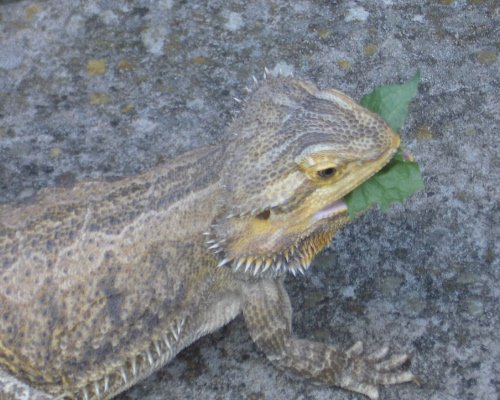
Bearded Dragon Feeding Guide
Feeding a bearded dragon is not just about offering insects and hoping for the best. A healthy diet depends on the right balance of leafy greens, vegetables, live prey, calcium, and variety over time. Young bearded dragons usually need more insect-heavy feeding to support growth, while adults shift toward a more plant-forward diet with greens and vegetables making up most of the menu.
This guide covers what bearded dragons eat, how feeding changes with age, which foods work best as staples, why supplementation matters, and which common mistakes can quietly cause problems over time.
What Do Bearded Dragons Eat?
Bearded dragons are omnivores, which means they eat both plant and animal foods. Their diet should include leafy greens, other vegetables, appropriately sized live insects, and only limited fruit.
For adults, greens and vegetables should make up the majority of the diet, while insects become a smaller portion than they are for younger dragons.
How Feeding Changes With Age
Young bearded dragons need more protein from insects because they are still growing. Adults need less protein and a more plant-forward diet built around greens and vegetables.
- Babies and young juveniles: more insect-heavy meals, fed more often
- Older juveniles: daily plant foods plus regular live prey
- Adults: greens and vegetables regularly, with insect meals several times per week
This age-based shift is one of the most important feeding concepts for beginners to understand.
Best Staple Greens for Bearded Dragons
Leafy greens should form the foundation of the plant side of the diet. Good staple greens often include collard greens, mustard greens, turnip greens, dandelion greens, escarole, endive, and arugula.
These are generally better choices than watery lettuces because they provide better nutritional value and create a stronger daily salad base.
Best Vegetables to Rotate In
Vegetables should support the greens rather than replace them. A practical way to build a salad is to start with dark leafy greens, add a smaller amount of chopped vegetables, and rotate ingredients through the week.
Helpful rotation vegetables may include items like squash and bell peppers in appropriate amounts. Variety helps improve overall nutrition and keeps the diet from becoming too narrow.
How Much Fruit Should Be Fed?
Fruit should be limited. It can be offered as an occasional treat, but it should not become a daily staple or crowd out more useful greens and vegetables.
Foods like strawberries, mango, and similar sweet fruits can fit into the diet in small amounts, but they should stay occasional rather than frequent.
Best Live Insects for Bearded Dragons
Live prey is still important, especially for younger dragons. Common feeder insects include crickets, dubia roaches, and black soldier fly larvae.
The most important beginner rule is size. Feeder insects should not be larger than the space between the dragon’s eyes.
Gut-Loading Feeder Insects
Gut-loading means feeding insects a nutritious diet before they are offered to your bearded dragon. This helps improve the nutritional value of the prey and supports better calcium intake overall.
In plain terms, gut-loading helps turn feeder insects into better nutrition instead of just a source of protein.
Calcium and Vitamin Supplements
Supplementation matters because many feeder insects are naturally low in calcium compared with phosphorus. A practical baseline is to gut-load insects, dust feeders with calcium as appropriate, and use a reptile multivitamin on a sensible schedule.
- gut-load insects before feeding
- dust feeders with calcium as appropriate
- use a reptile-specific multivitamin sensibly
- avoid both under-supplementing and over-supplementing
It is smarter to build a sensible supplement routine from the start than to wait for visible problems.
How Often Should You Feed a Bearded Dragon?
Feeding frequency depends largely on age.
Babies and Small Juveniles
Offer food daily, with a stronger emphasis on live prey plus access to finely prepared greens and vegetables.
Larger Juveniles
Continue daily feeding, but begin increasing the importance of salad and plant variety rather than letting insects dominate every meal.
Adults
Offer greens and vegetables regularly, with live prey several times per week rather than as the centerpiece of every day.
Foods to Avoid or Limit
Some foods are poor choices because they are watery, low in nutritional value, too sugary, or simply not useful as staples. Pale lettuces and excessive fruit are common examples of foods that should stay limited.
Other common feeding problems include insects that are too large, too little variety, and not using calcium or gut-loading.
Common Feeding Mistakes Beginners Make
One of the most common mistakes is feeding every bearded dragon the same way regardless of age. Young dragons and adults do not need the same balance of plant and animal foods.
Other frequent mistakes include:
- feeding too much fruit
- offering low-value lettuce as a major food
- feeding insects that are too large
- skipping calcium
- not gut-loading feeders
- repeating the same greens every day
- leaving uneaten insects in the enclosure too long
A good feeding routine is built on variety, age-appropriate balance, and consistency.
Simple Feeding Checklist
Here is a practical feeding checklist for beginners:
- offer dark leafy greens regularly
- rotate vegetables through the week
- keep fruit occasional
- feed appropriately sized live prey
- gut-load insects before feeding
- dust feeders with calcium as needed
- use a reptile multivitamin sensibly
- adjust the balance of insects and plant foods as your dragon matures
- watch body condition, appetite, and stool quality over time
Diet Ratios by Age (Quick Reference)
Sources differ slightly, but most vet and welfare guidance follows this general shift from insect-heavy to plant-heavy as dragons mature:
| Age | Approx. insects : plants | Insect feeds | Salad | Calcium dusting* |
|---|---|---|---|---|
| Hatchling (0–4 months) | ~70–80% : 20–30% | Small feeds 2–3 times daily | Finely chopped, daily | Most insect feeds |
| Juvenile (4–12 months) | ~50–60% : 40–50% | Once or twice daily | Daily | Most days |
| Sub-adult (12–18 months) | ~40% : 60% | Once daily or every other day | Daily | Several times a week |
| Adult (18 months +) | ~20% : 80% | 2–3 times per week | Daily | 2–3 times per week |
*Dusting frequency depends on your UVB setup, the supplement product (with or without vitamin D3) and your vet’s advice. Always follow the product label.
Building a Balanced Salad: Calcium-to-Phosphorus
Veterinary sources such as VCA recommend that the overall diet provide more calcium than phosphorus, commonly cited at about 1.5–2:1. That is why greens matter so much: high-calcium greens offset insects and fruit, which tend to be phosphorus-heavy.
| Food (raw, per 100 g) | Calcium | Phosphorus | Approx. Ca:P | Use |
|---|---|---|---|---|
| Collard greens | ~232 mg | ~25 mg | 9 : 1 | Staple |
| Turnip greens | ~190 mg | ~42 mg | 4.5 : 1 | Staple |
| Dandelion greens | ~187 mg | ~66 mg | 2.8 : 1 | Staple |
| Mustard greens | ~115 mg | ~43 mg | 2.7 : 1 | Staple |
| Butternut squash | ~48 mg | ~33 mg | 1.5 : 1 | Rotating vegetable |
| Zucchini | ~16 mg | ~38 mg | 0.4 : 1 | Rotating vegetable |
| Strawberries | ~16 mg | ~24 mg | 0.7 : 1 | Occasional fruit |
| Iceberg lettuce | ~18 mg | ~20 mg | 0.9 : 1 | Avoid as a staple (low nutrition) |
Feeder Insects Compared
| Feeder | Pros | Cons | Use |
|---|---|---|---|
| Dubia roaches | Good protein, easy to gut-load, quiet, can’t climb smooth surfaces | Not legal to keep in some areas (e.g. Florida) | Staple |
| Crickets | Widely available, encourage hunting | Noisy, die quickly, can nibble a resting dragon if left in | Staple |
| Black soldier fly larvae | Naturally higher calcium than most feeders | Small; may pupate quickly | Staple / rotation |
| Silkworms / hornworms | Soft-bodied, hydrating | Can be costly | Rotation |
| Mealworms / superworms | Easy to keep | Higher fat, harder exoskeleton | Occasional, adults |
| Waxworms | Highly palatable | Very high fat | Rare treat only |
Never feed wild-caught insects (pesticide and parasite risk) and never feed fireflies, which are toxic to bearded dragons.
Sample Weekly Plan for an Adult
- Every day: fresh salad of 2–3 staple greens, plus a small amount of a rotating vegetable (e.g. squash, bell pepper). Remove uneaten salad at the end of the day.
- Mon / Wed / Fri: a feed of gut-loaded insects (roughly what your dragon eats in 10–15 minutes), dusted with calcium as your vet advises.
- Once a week: a light multivitamin dusting, per product label.
- Occasionally: a small fruit treat mixed into greens (see our guides to strawberries, mango, apples and blueberries).
Diet Problems Need Lighting Too
Even a perfect diet cannot prevent calcium problems without correct UVB, because dragons need UVB to make vitamin D3 and absorb calcium. Pair this feeding plan with a strong linear UVB tube and a proper basking heat source. Signs like twitching, soft jaw or swollen limbs can indicate metabolic bone disease and need a vet visit.
Frequently Asked Questions
What should adult bearded dragons eat most of?
Adults should generally eat a more plant-forward diet built around leafy greens and vegetables, with live insects making up a smaller share than in younger dragons.
Can bearded dragons eat fruit every day?
Fruit should be limited and used as an occasional treat rather than a daily staple.
Do feeder insects need calcium dusting?
Yes. Calcium supplementation is an important part of bearded dragon feeding, especially because many feeder insects are naturally low in calcium.
Why is gut-loading important?
Gut-loading improves the nutritional value of feeder insects before your dragon eats them.
How often should I feed my bearded dragon?
Young dragons usually eat more often than adults. Adults generally do best with regular greens and vegetables plus insect meals several times per week.
Sources
- VCA Animal Hospitals: Bearded Dragons: Feeding
- RSPCA: Bearded dragon care and welfare
- Merck Veterinary Manual: Routine Health Care of Reptiles
- USDA FoodData Central (nutrient values, raw food, per 100 g; values are approximate and vary by sample)
This page is general education based on published veterinary and nutrition sources, not hands-on testing or a substitute for a reptile vet. If your dragon is unwell, contact a qualified exotics veterinarian (you can search the ARAV vet finder).
This guide is part of our bearded dragon care guides hub.
Related Bearded Dragon Guides
- Safe foods list for bearded dragons
- Foods bearded dragons should never eat
- How long bearded dragons can go without food
- Best UVB light for bearded dragons