Disclosure: This article contains affiliate links. If you buy through them we may earn a small commission at no extra cost to you. See our affiliate disclosure. This guide is general, researched information and is not a substitute for an exam by a reptile veterinarian.
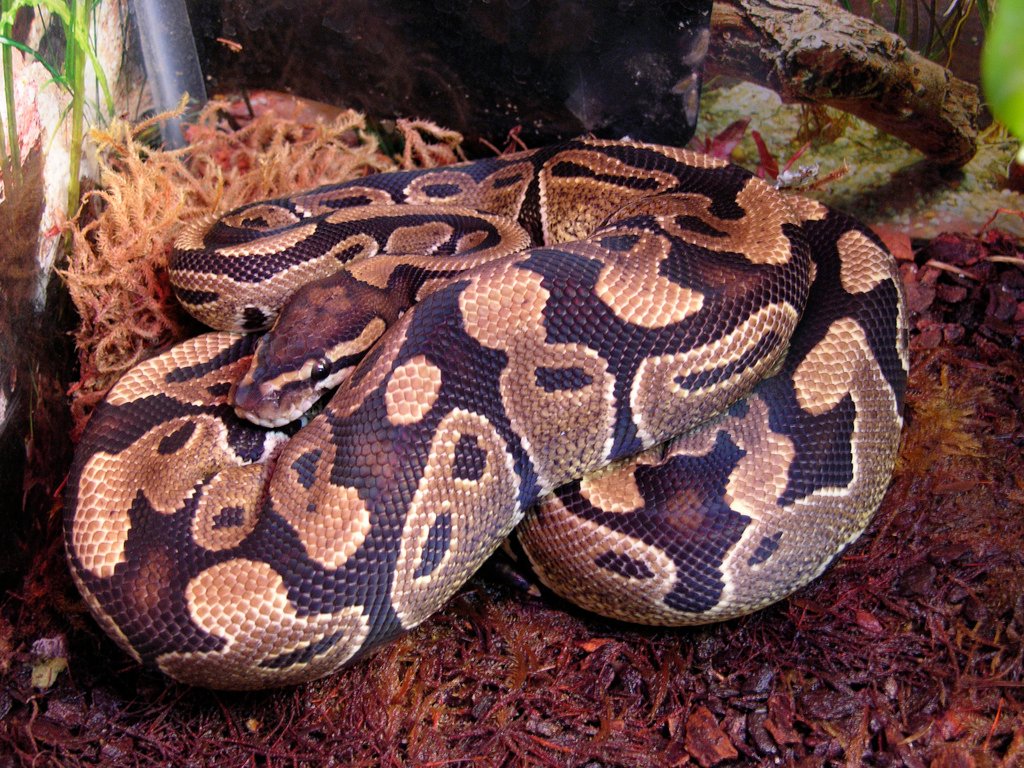
An adult ball python should be able to stretch out, hide at both ends of a temperature gradient, and find a drink without leaving cover for long. A 4 × 2 × 2 ft (120 × 60 × 60 cm) enclosure is the adult size we recommend on our ball python care sheet. Smaller “40-gallon” starter tanks are outdated for a full-grown snake. Every heat source must be on a thermostat, and humidity should be measured at snake level, not guessed from a stick-on dial.
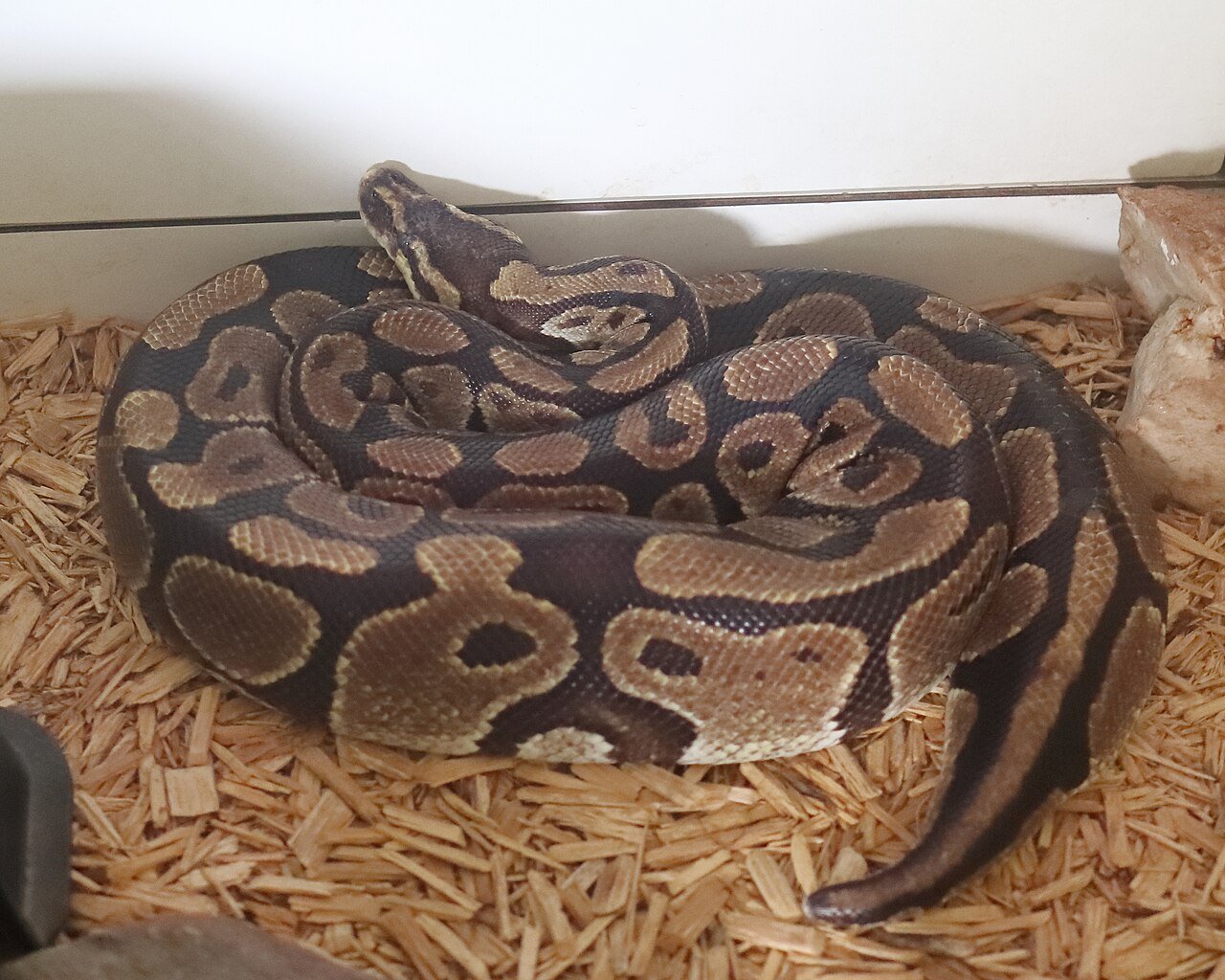
This step-by-step setup guide covers enclosure size and type, heat, humidity, hides, substrate, lighting and a pre-move-in checklist, with links to feeding, shedding and common health problems once the snake is home.
Step 1: Choose the enclosure
A minimum of 4 × 2 × 2 ft is widely recommended for an adult ball python. Larger is fine if you add enough hides and clutter so the snake still feels secure. Hatchlings and small juveniles can start in a smaller enclosure, but many keepers go straight to the adult size and fill it with cover. The snake should be able to stretch out along the floor; older advice that a tank only two-thirds the snake’s length is enough is no longer the standard we use.
Common enclosure types:
- PVC, front-opening. Lightweight for the size and holds heat and humidity well, which suits this species. A good long-term option.
- Front-opening glass. Easy to see the snake and usually has a secure door. Mesh tops lose heat and humidity faster, so you may need to cover part of the mesh and watch readings closely.
- Wooden or melamine vivariums. Common in some regions if they are sealed against moisture and have no toxic finishes. Avoid unsealed wood that can warp or off-gas.
The enclosure must be escape-proof. Ball pythons are strong and patient. Check that doors latch and that there are no gaps around cables. House one snake per enclosure. They are not social, and sharing a tub is a stress and injury risk.
Step 2: Plan the heat gradient
Ball pythons need a warm end and a cool end so they can choose their temperature. Targets from our care sheet, which align with common veterinary ranges, are:
- Warm-side surface: about 88–92 °F (31–32 °C)
- Ambient air: about 75–80 °F (24–27 °C)
- Cool side: around 75 °F (24 °C)
- Night: a slight drop is fine, but avoid going below about 72 °F (22 °C)
Popular heat sources include an overhead halogen bulb, a radiant heat panel, or a deep heat projector, always regulated by a thermostat and placed so the snake cannot contact a hot surface. Under-tank heat mats are still sold as a complete solution; if you use one at all, it must be thermostat-controlled, cover only part of the floor, and never be the only heat source you do not measure. Do not use heat rocks. They are a well-known burn risk.
Measure. Use a digital probe thermometer on each end and check the warm surface with an infrared temperature gun. Stick-on analogue dials are not accurate enough. Our guide to heating a reptile enclosure covers thermostats and heat sources in more detail. Incorrect heat is a common factor in respiratory infections and poor appetite; see also what to do if a snake refuses to eat.
Step 3: Set humidity and ventilation
Day to day, aim for about 50–60% relative humidity at snake level. During a shed, raise it to around 60–70%, or make sure a humid hide with damp sphagnum moss or damp paper towel is available. Veterinary clinic sheets often use a similar pattern. The Merck Veterinary Manual lists a wider 50–80% envelope for the species; that is a range, not a reason to hold the whole enclosure wet all the time.
Chronically low humidity is a common cause of stuck sheds and can dry the airways. Chronically high humidity with poor airflow and wet substrate is a common factor in scale rot and respiratory infections. Do not tape over all the vents just to hold humidity.
Practical ways to stay in range:
- Use a moisture-retaining substrate such as cypress mulch or a soil-style mix, and add water to the substrate as needed without leaving standing puddles
- Provide a large water bowl the snake can soak in, placed toward the cooler end if the warm end is getting too humid
- If a mesh top dries the enclosure too quickly, cover part of it and leave enough ventilation for fresh air
- Add a humid hide and keep the contents damp during sheds
- Track humidity with a digital hygrometer at snake level
Step 4: Add two hides and real cover
A ball python that cannot hide will often sit in a stressed “ball,” refuse food, or roam along the glass. Provide at least two snug hides: one on the warm end and one on the cool end, so the snake never has to choose between security and the temperature it wants. Each hide should be dark and just large enough for the coiled snake to feel the sides. Upgrade the hides as the snake grows.
Then add clutter: cork rounds, branches, fake or live plants, and leaf litter so the snake can move from hide to hide under cover. Many ball pythons will climb if you give them a sturdy branch. A bare box with one hide and a water bowl is easier to clean, but it is a poor long-term home.
Step 5: Choose a substrate
Good everyday options include cypress mulch, coconut husk, a soil-style mix, or, for a hospital or quarantine setup, paper towel or newspaper. Aspen is easy to spot-clean and works in drier rooms, but it does not hold humidity as well and should not be kept wet. Avoid cedar and untreated pine shavings, which can give off irritating oils, and avoid loose gravel or sand.
Spot-clean waste promptly and replace substrate on a schedule that keeps it from staying sour or soaked. Wet, filthy bedding is a scale-rot risk; bone-dry bedding is a stuck-shed risk.
Step 6: Lighting and a day/night cycle
Ball pythons can survive without UVB, and older handouts often said it was unnecessary because the species is nocturnal. Current husbandry, including our care sheet, treats a low-output UVB tube as beneficial if the snake can move into shade. Provide a regular day/night cycle of about 12 hours. If you use a bright heat lamp, the snake must be able to retreat from the light as well as from the heat.
Step 7: Water and feeding station
Use a sturdy water bowl large enough for the snake to soak, heavy enough not to tip, and refreshed whenever it is soiled. Frequent soaking can mean the enclosure is too hot or that the snake has mites, so treat a sudden soaking habit as information, not just a curiosity.
Feed in the enclosure or in a separate tub, according to the schedule in our ball python feeding chart. There is no need to handle the snake on feeding day if it is defensive. Prey should be an appropriate size; live prey can injure a snake and is best avoided.
Step 8: Test the setup before the snake moves in
Run the empty enclosure for at least a few days and check:
- Warm-surface, warm-air, cool-side and night temperatures
- Humidity at snake level, day and night, and after you add water to the substrate
- That both hides stay in place and the doors latch
- That cables are protected and the thermostat is actually cycling the heat source
Adjust before the snake arrives. It is much harder to fix a gradient with an unsettled python already inside.
Setup checklist
- Escape-proof enclosure, ideally 4 × 2 × 2 ft for an adult
- Thermostat-controlled heat source and a cool end the snake can actually use
- Digital thermometers, an infrared temperature gun, and a digital hygrometer
- Two snug hides, plus clutter and a water bowl
- A substrate that can hold moderate humidity without staying soggy
- A humid hide for sheds
- Optional low-output UVB and a clear day/night cycle
Helpful supplies
- 4×2×2 PVC reptile enclosure
- Dimming or proportional thermostat
- Infrared thermometer gun
- Digital thermometer / hygrometer
- Snug hide caves
- Cypress mulch substrate
These are search links to help you compare options. We have not hands-on tested these products.
Frequently asked questions
Is a 40-gallon tank big enough for a ball python?
A standard 40-gallon tank is far smaller than a 4 × 2 × 2 ft enclosure and is not a good long-term home for an adult. Use it only as a short-term or quarantine setup, if at all, and plan for the adult size.
Do ball pythons need a heat lamp?
They need a controlled heat gradient, which can come from an overhead heat source or another thermostat-regulated option. Room temperature alone is not enough. Avoid heat rocks and unregulated mats.
How often should I soak my ball python?
A healthy snake with a large water bowl and correct humidity usually does not need routine soaks. A humid hide during shed is more useful than repeated baths. Frequent soaking can be a sign that something in the setup is off.
Can I use aspen bedding?
Yes, especially in a drier climate or a quarantine tub, if you can still hold everyday humidity around 50–60% and offer a humid hide for sheds. Do not keep aspen wet. Cypress, coconut husk or a soil-style mix usually hold humidity more easily in an adult enclosure.
When should I see a vet about a new setup?
If the snake is wheezing, bubbling at the mouth, has stuck shed, belly sores, or is losing weight, review the setup and book a reptile vet through the ARAV vet finder. Do not wait for a “break-in” period to fix those signs.
Sources and further reading
- My Healthy Reptile, “Ball Python Care Sheet: Enclosure, Heat, Humidity & Feeding” — ball python care sheet (everyday humidity 50–60%; 60–70% or a humid hide during shed)
- Merck Veterinary Manual, husbandry and humidity discussion for boas and pythons (50–80% envelope, higher during ecdysis) — merckvetmanual.com
- Association of Reptilian and Amphibian Veterinarians, find a vet — arav.org
Related: Ball python hub · Care sheet · Feeding chart · Stuck shed · Respiratory infection · Scale rot