Disclosure: This article contains affiliate links. If you buy through them we may earn a small commission at no extra cost to you. We only recommend gear that meets current reptile care guidelines. See our affiliate disclosure.
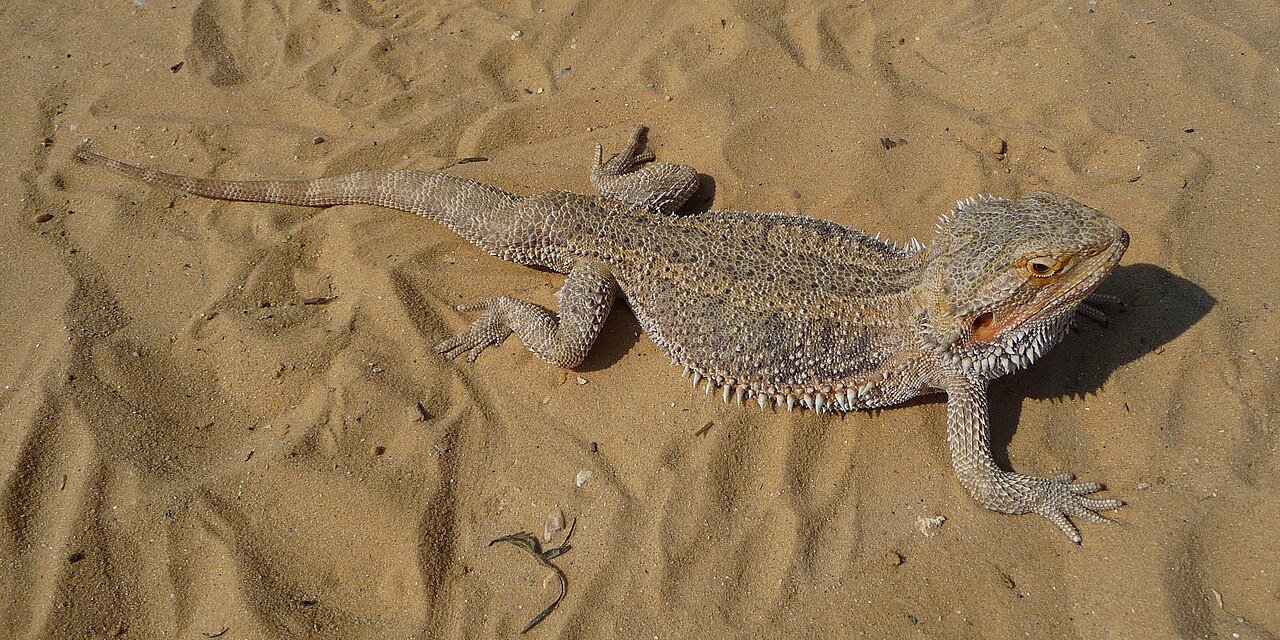
The right heat lamp is one of the most important pieces of equipment in a bearded dragon enclosure. Bearded dragons are ectotherms from the hot, dry interior of Australia. They rely on a bright, hot basking spot to warm their bodies, digest food, fight off illness and stay active. Choose the wrong bulb, or set it up poorly, and you can end up with a dragon that will not eat, does not digest properly or, at worst, gets burned. This guide covers what kind of heat lamp works best, what temperatures to aim for, how to control them safely and which products are widely recommended by keepers and reptile care guidelines.
What to look for in a bearded dragon heat lamp
Current reptile care guidelines favour heat sources that mimic the sun: bright, visible light that heats a basking surface from above. The most important qualities are:
- Bright white light. Bearded dragons are diurnal and respond to light as well as heat. A bright basking bulb encourages natural basking behaviour.
- Infrared A and B output. Halogen bulbs produce a good share of IR-A, which penetrates deeper into tissue, much like sunlight.
- A focused beam. A flood-style bulb creates a defined basking spot rather than heating the whole enclosure evenly.
- Thermostat compatibility. The bulb should work with a dimming thermostat so temperatures stay stable.
- Correct wattage for your enclosure. Wattage depends on enclosure height, room temperature and fixture, not just tank size.
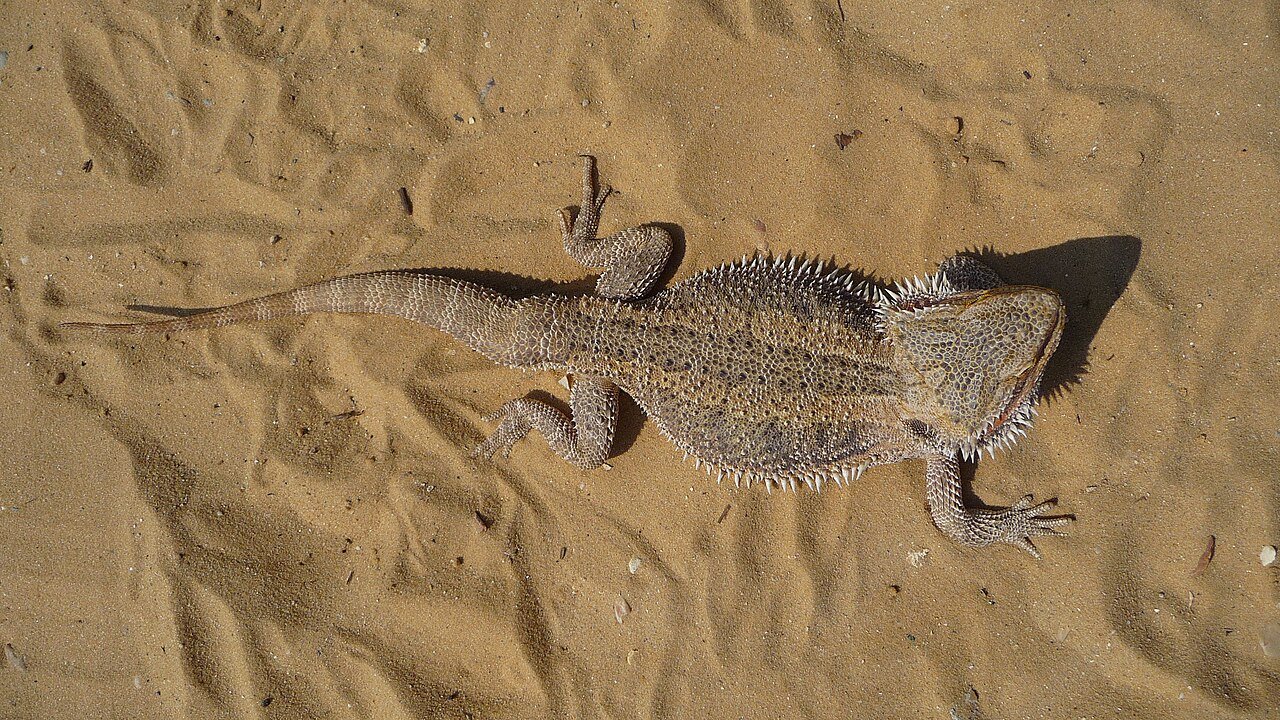
Best type of heat lamp: halogen flood bulbs
For most bearded dragon setups, a halogen flood bulb is the best basking heat source. Halogens are efficient at turning electricity into the kind of heat and light that reptiles use well, they are inexpensive and easy to find, and they dim smoothly on a dimming thermostat. Many keepers use two lower-wattage halogens side by side rather than one large bulb, which creates a wider basking area so the whole body warms evenly.
A popular reptile-branded option is the Zoo Med Repti Tuff halogen, which is splash-resistant and designed for reptile enclosures. It is available as a Zoo Med Repti Tuff 50W halogen 3-pack and in a 75W version for taller enclosures or cooler rooms. Standard household PAR38 or PAR30 halogen floods from a hardware store also work well, as long as they are true halogens and not LEDs, which produce light but little useful heat.
Fixtures: choosing a dome
A heat lamp needs a ceramic-socket dome fixture rated for the wattage you plan to use. Deep domes direct heat downward and reduce glare. The Zoo Med Combo Deep Dome dual fixture holds two bulbs and has separate switches, which suits the two-halogen approach. For smaller setups, the Zoo Med Mini Combo Deep Dome is a compact alternative. Always check the fixture’s wattage rating, and do not use a combo dome with ceramic heat emitters unless the manufacturer says it is suitable.
Target temperatures
Measure temperatures with a digital probe thermometer or an infrared temperature gun at the basking surface, not the air. Commonly recommended ranges are:
- Basking surface (adults): about 40–43 °C (104–110 °F).
- Basking surface (juveniles): a similar or slightly lower range; many keepers aim for around 40–42 °C (104–108 °F).
- Warm side air: about 30–35 °C (86–95 °F).
- Cool side air: about 24–29 °C (75–85 °F).
- Night: lights off, with temperatures dropping to around 18–24 °C (65–75 °F).
The gradient matters as much as the hot spot. Your dragon should be able to move from the basking spot to a cooler area and regulate its own temperature. That is one reason enclosure size matters. A 4×2×2 ft enclosure, as covered in our bearded dragon tank size guide, makes a real gradient much easier to achieve.
Use a thermostat, ideally a dimming one
A heat lamp without a thermostat will drift with room temperature, and it can overheat the enclosure on a warm day. A dimming thermostat reduces the bulb’s output gradually to hold your set temperature, which keeps the light steady and avoids constant flicker. On/off thermostats such as the Inkbird ITC-306T are better than nothing and work well for ceramic heat emitters, but they switch the bulb fully on and off. For a basking bulb, a dimming reptile thermostat is the better choice. Place the probe at the basking spot, secured so the dragon cannot move it.
Night heat: usually unnecessary
Bearded dragons benefit from a natural nighttime temperature drop, and most homes stay warm enough that no night heat is needed. If your room regularly falls below about 16–18 °C (60–65 °F), add a ceramic heat emitter (CHE) on a thermostat. A CHE produces heat with no light, so it does not disturb sleep. The Zoo Med ReptiCare 100W ceramic heat emitter and 150W version are common choices. CHEs get very hot and must go in a ceramic-socket fixture rated for their wattage.
Heat sources to avoid
- Red or “night” bulbs: bearded dragons can see red light, and these bulbs can disrupt sleep.
- Heat rocks: these can develop hot spots and cause serious belly burns.
- Under-tank heaters as the main heat source: dragons warm themselves from above, so belly heat alone is not appropriate.
- LED “heat” bulbs: standard LEDs produce little infrared heat.
- Mercury vapor bulbs as your only option without a plan: some keepers use them, but they cannot be dimmed and need careful distance management. Most keepers do better with halogen for heat plus a separate T5 UVB tube.
Heat and UVB work together
A heat lamp is not a UVB source. Bearded dragons also need a strong linear UVB tube, usually a T5 HO, running across the warm side of the enclosure. Put the halogen basking spot under the same area as the strongest UVB so your dragon gets both while basking. Our best UVB light for bearded dragons guide covers tube strength, distance and replacement schedules.
Setup checklist
- Mount the dome fixture over the mesh top or inside the enclosure on a safe guard.
- Place a flat basking platform such as a slate tile or rock at the right distance below the bulb.
- Plug the bulb into a dimming thermostat with the probe at the basking surface.
- Run the lights on a timer for about 12–14 hours a day in summer and slightly less in winter.
- Check basking surface temperature with a temperature gun after an hour, then adjust bulb wattage or platform height.
- Recheck temperatures seasonally, since room temperature changes affect results.
Frequently asked questions
What wattage heat lamp does a bearded dragon need?
There is no single answer. Many 4×2×2 ft setups use one or two 50–75W halogens, but enclosure height, mesh tops, fixture and room temperature all change the result. Start lower, measure, and adjust.
Should a bearded dragon heat lamp be on at night?
No. Turn the basking lamp off at night. Only add night heat, such as a ceramic heat emitter, if the room gets very cold.
Can I use a regular household halogen bulb?
Yes. Household halogen floods are widely used and work well. Make sure the bulb is a true halogen and that your fixture is rated for its wattage.
How far should the heat lamp be from my bearded dragon?
Distance depends on the bulb. Adjust the basking platform until the surface reaches the target temperature, and make sure your dragon cannot touch the bulb.
Is a heat lamp enough on its own?
No. You also need a UVB tube, a thermostat and an enclosure large enough to create a temperature gradient.
Our recommendation
For most keepers, the best heat lamp for a bearded dragon is one or two halogen flood bulbs in a deep ceramic dome, controlled by a dimming thermostat and paired with a T5 HO UVB tube. That combination is simple, reliable and in line with current reptile care guidelines. For more on building a complete setup, visit our bearded dragon care hub.