Disclosure: This article contains affiliate links. If you buy through them we may earn a small commission at no extra cost to you. We only recommend gear that meets current reptile care guidelines. See our affiliate disclosure.
Short answer: An adult bearded dragon needs an enclosure of at least 4 ft × 2 ft × 2 ft (120 × 60 × 60 cm, about 120 US gallons). Bigger is better: 5×2.5×2 or 6×2×2 ft gives a much better heat gradient and more room to move. Babies can start in the same adult-sized enclosure if you add clutter and keep food easy to find. The old “40-gallon breeder” advice is outdated.
Why 4×2×2 is the modern minimum
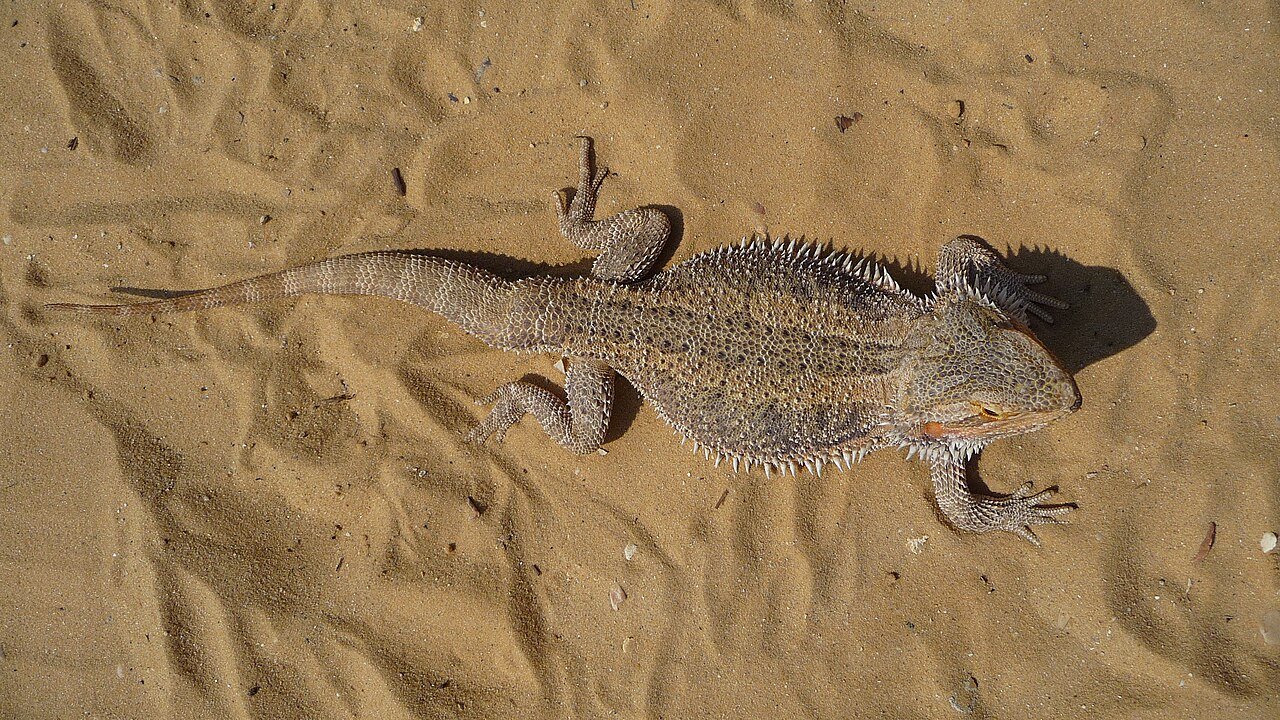
Adult central bearded dragons (Pogona vitticeps) reach 40–60 cm (16–24 in) nose to tail. A good enclosure has to fit:
- A thermal gradient, running from a basking surface of about 40–43 °C (104–110 °F) for adults down to a cool end of about 24–29 °C (75–85 °F). In a short tank the whole space heats up and there’s nowhere to cool off.
- A UVB gradient, from a UVI of 4–6 at the basking spot down to near zero in the shade. See our UVB lighting guide.
- Room to walk, turn around and climb, plus a hide, a basking platform and enrichment.
Since the late 2010s, care resources and reptile vets have moved toward 4×2×2 ft as the minimum. Reptifiles, the UK’s RSPCA guidance and many herp societies give the same figure.
Sizes by age
| Age / length | Workable size | Notes |
|---|---|---|
| Baby (under 25 cm / 10 in) | Can start in 4×2×2 | Add plants and clutter so it feels secure, and use a feeding dish so insects don’t scatter. A 40-gal is OK temporarily but they outgrow it within months. |
| Juvenile (25–40 cm) | 4×2×2 ft | Grows fast, so buy once instead of upgrading 3 times. |
| Adult (40 cm+) | 4×2×2 minimum; 5×2.5×2 or 6×2×2 ideal | Big males and “giant” lines really benefit from 6 ft. |
Width matters more than height. Dragons are mostly ground- and rock-dwellers. A 2 ft (60 cm) depth front to back lets them turn and thermoregulate, while extra height mostly adds climbing branches.
Glass, PVC or wood?
Glass front-opening terrariums
These are widely available and easy to clean, and you get the best view. Glass loses heat, though, and a mesh top cuts UVB by about 30–50%. Two popular examples that suit the 4×2 floor size:
- Phailozoo 120 gallon (48×24×24 in) has sliding front doors, a screen top, and a raised bottom frame for a heat mat if you need one. It hits the minimum size exactly, but check that the doors line up when it arrives. Check Phailozoo 120 gallon reptile tank on Amazon
- REPTI ZOO 67 gallon (48×18×18 in) is the same length but only 18 in deep. That’s below the recommended 24 in for an adult, so it works better for juveniles or as a temporary or quarantine setup. Check REPTI ZOO 67 gallon terrarium on Amazon
PVC enclosures
These include Animal Plastics, Kages, Zen Habitats PVC and similar. They’re lighter than glass for their size and hold heat and humidity well. Lights can mount inside, which avoids losing UVB through mesh. They cost more but are the best long-term option. Check 4×2×2 PVC reptile enclosure on Amazon
Wooden vivariums
Melamine or sealed wood vivariums are common in the UK and good for insulation. Seal every joint, because moisture and urates swell bare MDF.
Setting up the space
- Basking zone (one end). Put a flat rock or slate platform under a halogen flood bulb and the T5 UVB tube. Measure the surface with an infrared temperature gun, not a stick-on dial. Check infrared temperature gun on Amazon
- Middle. Add branches and ramps at varied heights.
- Cool end. Place the hide, plus a shallow water dish if your dragon uses one.
- Substrate. Use a soil/sand mix (about 60/40 topsoil to play sand), tile, or a non-adhesive liner. Avoid calcium sand and walnut shell. Healthy adults kept at the right temperatures face a low impaction risk on a proper soil mix.
- Thermostat. Put a dimming thermostat on the basking lamp, and only use ceramic heaters at night if your room drops below about 16 °C (60 °F).
Our full habitat setup guide walks through each part.
Signs the enclosure is too small
- Glass surfing (constantly pawing at the glass). This can also be stress or seeing their own reflection, but too little space is a common cause.
- The cool end reads above about 30 °C (86 °F).
- The dragon can’t fully stretch out or turn around on the basking platform.
- Low activity, poor appetite, or stress marks (dark belly lines).
See bearded dragon behavior for more on reading these signals.
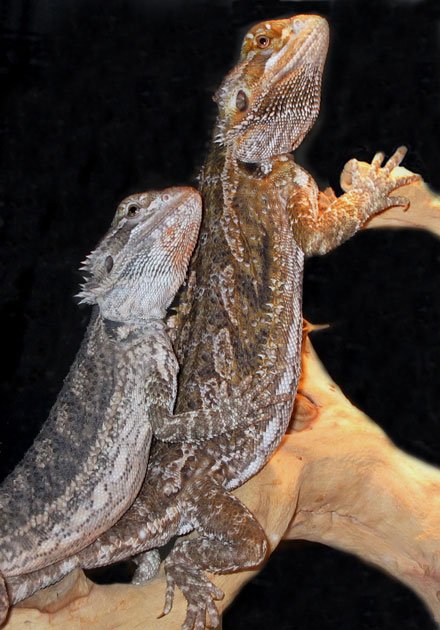
Can two dragons share a tank?
No, keep them separately. Bearded dragons are solitary. Housed together, they compete for the basking spot and food, the subordinate dragon often loses weight quietly, and males fight. Even a large tank doesn’t fix this.
Budget: what a proper setup costs
US prices for 2026 vary a lot, but a realistic first-time 4×2×2 setup looks like this:
| Item | Typical range |
|---|---|
| Enclosure (glass or PVC) | $250–$700 |
| T5 HO UVB tube and reflector | $60–$110 |
| Halogen basking bulbs and a dome | $30–$60 |
| Dimming thermostat | $40–$150 |
| Infrared thermometer | $15–$30 |
| Basking platform, hides, branches | $40–$120 |
| Substrate | $20–$50 |
Many “starter kits” in smaller sizes look cheaper but include coil UVB bulbs and stick-on dials. You end up replacing most of it, so buying the right enclosure once usually saves money. Check dimming thermostat for reptiles on Amazon
What to look for in a 48-inch glass terrarium
Based on manufacturer specs and owner reviews, these are the practical points that matter most:
- Check the depth, not just the gallons. Listings advertise volume, but 48×18 and 48×24 floors are very different for an adult dragon.
- Front-opening doors make feeding and cleaning much easier, and approaching from the front is less stressful than reaching in from above, which looks like a predator.
- A raised base lets you run cables underneath and protects the floor if you use a heat mat.
- Knock-down (flat-pack) designs ship more safely, but check every seam for gaps feeder insects could escape through.
- Screen tops are great for ventilation but cut UVB, so plan on a 12% T5 tube rather than a 6%.
FAQ
Is a 75-gallon tank big enough for a bearded dragon?
A standard 75 gallon tank is 48×18×21 in. It has the right length but is shallow, so it’s acceptable short-term for a small adult. 4×2×2 ft is the better target.
How many gallons is a 4×2×2 enclosure?
About 120 US gallons (450 litres).
Is a 40-gallon breeder okay for a baby?
Yes, for a few months. Most babies outgrow it by 6–8 months, so many keepers skip straight to the adult size.
Do bearded dragons need a tall tank?
Not especially. 2 ft (60 cm) is plenty, though extra height allows climbing branches and keeps the dragon farther from the lamp’s heat.
Glass or PVC for a beginner?
Glass is cheaper upfront, and PVC is better for heat retention and UVB, since lights can mount inside. Either works if your temperatures and UVI measure correctly.
Sources: RSPCA bearded dragon care guidance; Reptifiles bearded dragon care guide; ARAV; Mader, Reptile Medicine and Surgery. Product dimensions from the manufacturers’ listings. General information, not veterinary advice.
This guide is part of our bearded dragon care guides hub.
Related Bearded Dragon Guides
Related: Best heat lamp for bearded dragons.