Disclosure: This article contains affiliate links. If you buy through them we may earn a small commission at no extra cost to you. We only recommend gear that meets current reptile care guidelines. See our affiliate disclosure.
Bearded dragons can eat grapes, but only rarely and only when they are prepared correctly. Grapes are not toxic to bearded dragons the way they are to dogs, yet they are high in sugar, have more phosphorus than calcium, and are a real choking hazard if served whole. Used carefully, a grape can be a once-in-a-while reward. Used carelessly, grapes can contribute to obesity, digestive upset and calcium imbalance. Here is what you need to know before sharing one with your beardie.
Quick answer
- Safe? Yes, as a rare treat, seedless only, cut into small pieces.
- How often? No more than once every two weeks for adults. Skip them for babies and young juveniles.
- How much? One or two grapes, quartered, for an adult.
- Red or green? Either is fine. Both are similar nutritionally.
- Raisins? No. Raisins are concentrated sugar and are best avoided entirely.
Grape nutrition for bearded dragons
When deciding whether a food works for a bearded dragon, keepers look at three things: the calcium-to-phosphorus (Ca:P) ratio, sugar content and water content. A healthy overall diet should have about 1.5 to 2 parts calcium for every part phosphorus.
USDA nutrient data shows that 100 g of grapes contains about 10 mg of calcium and about 20 mg of phosphorus, an inverted ratio of roughly 1:2. Grapes also contain around 16 g of sugar per 100 g, which is noticeably higher than apples or berries, and they are roughly 80% water. They provide small amounts of vitamin K, vitamin C and antioxidants, but nothing a bearded dragon cannot get from leafy greens and vegetables with far less sugar.
The takeaway: grapes add flavour and moisture, but they do not add much nutritionally and they push the diet in the wrong direction on both sugar and calcium. That is why they belong in the “rare treat” column.
The choking risk: always cut grapes up
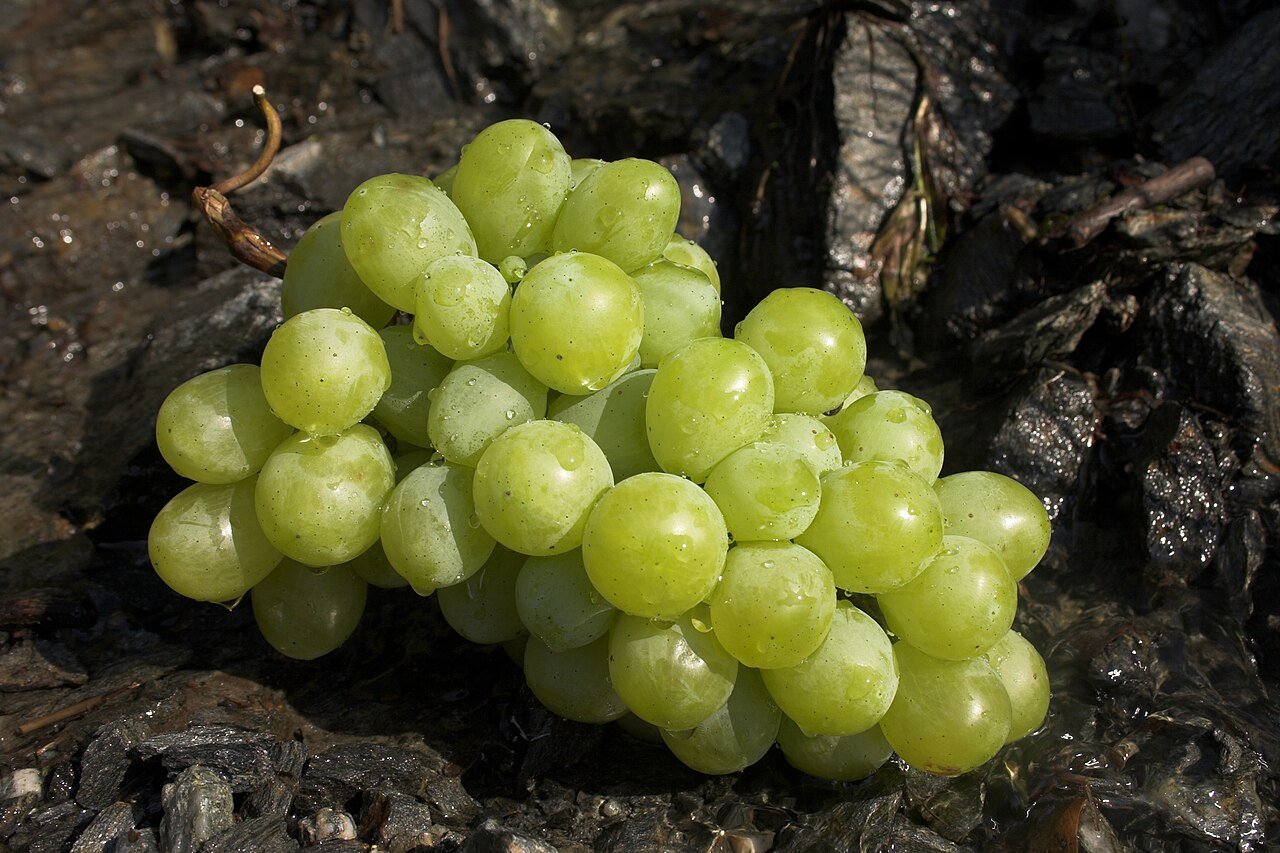
A whole grape is round, slippery and roughly the size of a young dragon’s head. Bearded dragons tend to gulp food rather than chew it thoroughly, which makes whole grapes a genuine choking and impaction hazard. A good rule is that no food item should be larger than the space between your dragon’s eyes. For grapes, that means cutting each one into halves for a large adult, or quarters or smaller for everyone else.
Seeded vs seedless grapes
Always use seedless grapes. Grape seeds are hard, difficult to digest and add to the impaction risk. If you only have seeded grapes, cut them open and remove every seed before serving, or simply choose a different treat that day.
How to prepare grapes for a bearded dragon
- Choose fresh, ripe, seedless grapes. Avoid soft, bruised or fermenting fruit.
- Wash them well. Grapes are often treated with pesticides. Organic grapes reduce that exposure.
- Peel if you like. Peeling is optional but makes the fruit easier to swallow and digest, especially for smaller dragons.
- Cut into small pieces, quartering each grape at minimum.
- Mix into a salad of staple greens. A few bright pieces of fruit can encourage reluctant eaters to dig into their greens.
- Remove leftovers after a few hours to avoid spoilage and fruit flies.
What about grape leaves?
Fresh, pesticide-free grape leaves are commonly listed as an acceptable green for bearded dragons and are lower in sugar than the fruit itself. Only use leaves you are certain have not been sprayed. Never use jarred or brined grape leaves, which are high in salt.
How grapes compare with other fruits
Grapes are near the top of the sugar scale for fruits commonly offered to bearded dragons. If you want to rotate treats, here is how they compare:
- Apples: less sugar than grapes; peel and remove seeds; occasional treat.
- Blueberries: small and easy to portion; also an occasional treat.
- Bananas: high in sugar and phosphorus; about as occasional as grapes.
For the foods that should make up the bulk of the diet, see the feeding and safe-food guides linked from our bearded dragon care hub.
Risks of feeding too many grapes
- Obesity: extra sugar adds up quickly in a small reptile, especially an adult that is already less active.
- Digestive upset: too much fruit can cause loose, watery stools.
- Calcium imbalance: inverted Ca:P foods, fed often, contribute to metabolic bone disease over time.
- Picky eating: dragons that get sweet treats often may start refusing greens.
- Dental and mouth problems: sugary residue can contribute to periodontal disease.
If your dragon has persistent diarrhoea, weight loss, lethargy or swelling of the jaw or limbs, see a reptile vet. Those signs can point to parasites or metabolic bone disease rather than diet alone.
Diet is only part of the picture
Even a perfect diet will not keep a bearded dragon healthy without the right environment. Bearded dragons need strong UVB lighting to produce vitamin D3 and absorb calcium, and a hot basking spot to digest food properly. If your setup is older or you are unsure about it, review our guides to the best UVB light for bearded dragons, the best heat lamp for bearded dragons and the right bearded dragon tank size.
Most keepers also dust feeder insects with calcium and use a multivitamin on a schedule. A common all-in-one option is Repashy Calcium Plus LoD. Follow the label and your vet’s guidance for how often to use it.
A treat schedule that works
One simple approach is to pick a single “treat day” each week and rotate the fruit. For example:
- Week 1: two or three blueberries, halved.
- Week 2: a few small pieces of peeled apple.
- Week 3: one grape, quartered.
- Week 4: a small piece of mango or papaya.
This keeps any one fruit from becoming a habit and keeps total sugar low, while still giving your dragon some variety and enrichment.
Frequently asked questions
Can baby bearded dragons eat grapes?
It is best not to. Babies are small enough that even quartered grapes can be a choking risk, and they need a calcium-dense diet built on insects and greens while they grow.
Are grapes toxic to bearded dragons like they are to dogs?
No. The grape toxicity seen in dogs has not been documented in bearded dragons. The concerns for beardies are sugar, phosphorus and choking.
Can bearded dragons eat raisins?
Raisins are best avoided. Drying concentrates the sugar, and the sticky texture can be hard for a dragon to swallow and digest.
Can bearded dragons eat grape skins?
Yes, well-washed skins are fine in small amounts. Some keepers peel grapes for small dragons to make them easier to swallow.
How many grapes can a bearded dragon eat?
For an adult, one or two grapes cut into pieces on an occasional treat day is plenty. More than that adds a lot of sugar for a small animal.
My bearded dragon swallowed a whole grape. What should I do?
Watch for gagging, open-mouth breathing, lethargy or a lack of stools over the next few days. If you notice any of these, or your dragon is small, contact a reptile vet promptly.
The bottom line
Grapes are safe for bearded dragons as a rare treat, as long as they are seedless, washed and cut into small pieces. Keep them to one or two grapes every couple of weeks for adults, skip them for babies, and build the everyday diet around greens, vegetables, gut-loaded insects, proper supplements and good UVB lighting.