Disclosure: This article contains affiliate links. If you buy through them we may earn a small commission at no extra cost to you. We only recommend gear that meets current reptile care guidelines. See our affiliate disclosure.
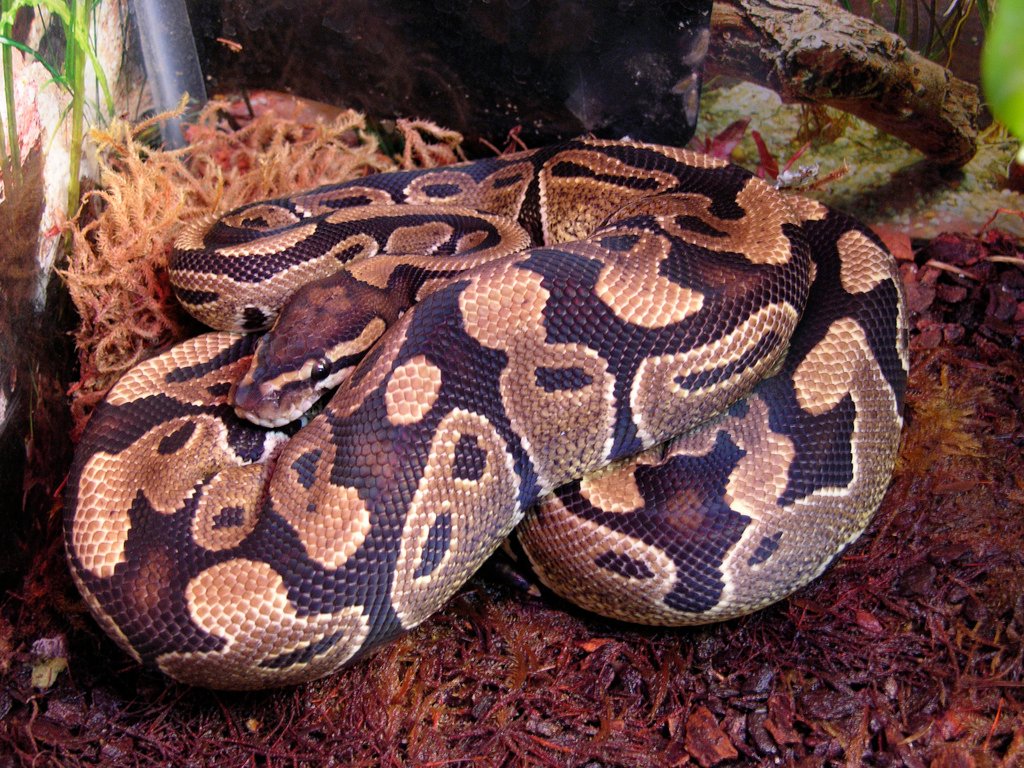
Ball pythons (Python regius), also called royal pythons, are among the most popular pet snakes in the world. They are docile, stay a manageable size and come in hundreds of colour morphs. They are also a serious commitment: a well-kept ball python can live 20–30 years or more. This care sheet covers everything a new or experienced keeper needs to know, including enclosure size, temperatures, humidity, feeding, shedding and common health problems, based on current reptile care guidelines.
Ball python quick facts
- Native range: grasslands and open forests of West and Central Africa.
- Adult size: typically 3–5 ft (90–150 cm); females are usually larger than males.
- Lifespan: 20–30+ years with good care.
- Activity: mostly nocturnal and crepuscular.
- Temperament: calm and shy; usually balls up rather than bites when stressed.
- Diet: whole prey, usually frozen-thawed rodents.
Enclosure size
A minimum enclosure of 4 × 2 × 2 ft (120 × 60 × 60 cm) is widely recommended for an adult ball python. Larger enclosures are fine and encourage more activity, provided you add enough cover. Hatchlings and small juveniles can start in a smaller enclosure, but many keepers go straight to the adult size and fill it with clutter so the snake feels secure.
PVC and front-opening glass enclosures are both common. PVC holds heat and humidity well, which suits ball pythons. Whatever you choose, make sure it has a secure, lockable lid or doors; ball pythons are strong and good at escaping.
Temperatures and heating
Ball pythons need a gradient from warm to cool so they can regulate their body temperature. Common targets:
- Warm-side surface: about 31–32 °C (88–92 °F).
- Ambient air: about 24–27 °C (75–80 °F).
- Cool side: around 24 °C (75 °F).
- Night: a slight drop is fine, but avoid going below about 22 °C (72 °F).
Popular heat sources include overhead halogen bulbs, radiant heat panels and ceramic heat emitters. A Zoo Med ReptiCare 100W ceramic heat emitter produces heat without light, making it suitable for day and night use, and the 150W version suits larger or cooler setups. Our heat lamp guide explains halogen and CHE options in more detail. Every heat source must be connected to a thermostat, such as the Inkbird ITC-306T, and enclosed heat sources need a guard so the snake cannot coil around them and get burned.
Monitor temperatures with at least two digital probe thermometers and check surfaces with an infrared temperature gun.
Humidity
Ball pythons need moderate to high humidity, generally 60–80%. Low humidity is one of the most common causes of stuck sheds and respiratory issues. Ways to keep humidity in range:
- Use a moisture-retaining substrate such as cypress mulch, coconut husk or a bioactive soil mix.
- Provide a large water bowl that the snake can soak in.
- Cover part of a mesh top to reduce evaporation.
- Add a humid hide with damp sphagnum moss.
- Mist lightly when needed, but avoid constantly soaked substrate, which can cause scale rot.
Use a digital hygrometer to track humidity at snake level.
Lighting and UVB
Ball pythons can survive without UVB, but current guidelines suggest that low-level UVB is beneficial, as long as the snake can retreat into shade. A low-output tube such as a Arcadia ShadeDweller 7% kit is a common choice. Provide a regular day/night cycle of about 12 hours.
Hides and enrichment
Ball pythons are shy, and a lack of secure hides is a leading cause of stress and food refusal. Provide at least two snug hides, one on the warm side and one on the cool side, just large enough for the snake to fit inside with its body touching the walls. A Zoo Med Reptile Shelter 3-in-1 works well as a humid hide. Add cork bark, branches, artificial or live plants and leaf litter to create cover across the enclosure. Many ball pythons climb more than expected when given the chance.
Feeding
Feed ball pythons appropriately sized, frozen-thawed rodents. Frozen-thawed prey is safer than live, which can injure snakes. General guidance:
- Prey size: about 10% of the snake’s body weight, or roughly the width of the thickest part of its body.
- Hatchlings and juveniles: every 7–10 days.
- Adults: every 2–4 weeks, depending on size and body condition.
Thaw prey in the refrigerator, then warm it in a sealed bag in warm water. Offer it with long tongs. Do not handle the snake for 48 hours after a meal to avoid regurgitation.
Ball pythons are known for going off food, especially adult males during the cooler months or during breeding season. If your snake is otherwise healthy and not losing much weight, this is usually normal. Check temperatures, humidity and hides first. If weight loss becomes significant, see a reptile vet.
Water
Provide a heavy water bowl large enough for the snake to soak in, and change the water at least every couple of days, or immediately if it is soiled. Frequent soaking can be a sign that the enclosure is too hot or that the snake has mites.
Shedding
Healthy ball pythons shed in one complete piece every 4–8 weeks. Before a shed, their eyes turn cloudy blue and their colours look dull. Increase humidity slightly during this period. Stuck shed, especially around the eyes or tail tip, usually means humidity is too low. A lukewarm soak or a damp towel can help, but never pull retained eye caps yourself; ask a vet.
Handling
Let a new ball python settle for one to two weeks before handling. Support its body fully, move calmly and keep sessions short at first. Avoid handling during shed or right after feeding. Always wash your hands before and after, since reptiles can carry salmonella.
Common health problems
- Respiratory infections: wheezing, mucus or open-mouth breathing; often linked to low temperatures or poor humidity.
- Scale rot: discoloured or blistered belly scales from constantly wet or dirty substrate.
- Mites: tiny black dots around the eyes and chin, or lots of soaking.
- Burns: from unguarded or unregulated heat sources.
- Obesity: from overfeeding adults.
- Neurological issues: some morphs, such as the spider, are linked to a “wobble” condition. Research morphs before buying.
Find an experienced reptile vet before you need one, and schedule a check-up shortly after bringing your snake home.
Ball python setup checklist
- 4 × 2 × 2 ft enclosure with secure doors.
- Heat source on a thermostat, with a guard.
- Two probe thermometers, a temperature gun and a hygrometer.
- Moisture-retaining substrate.
- At least two snug hides plus a humid hide.
- Cork bark, branches and plants for cover.
- Large, heavy water bowl.
- Optional low-level UVB tube.
- Frozen-thawed rodents and feeding tongs.
Frequently asked questions
How big do ball pythons get?
Most adults reach 3–5 ft. Females tend to be longer and heavier than males.
How long do ball pythons live?
With good care, 20–30 years is common, and some have lived longer than 40 years.
Why won’t my ball python eat?
Common causes are stress, incorrect temperatures, too few hides, shedding or seasonal fasting. Check husbandry first and consult a vet if the snake loses noticeable weight.
Do ball pythons need a heat lamp?
They need a heat source, which can be a halogen, a radiant heat panel or a ceramic heat emitter, always on a thermostat.
Are ball pythons good for beginners?
Yes, they are often recommended for beginners because of their calm temperament, as long as the keeper is ready for their long lifespan and humidity needs. Other good beginner options include the leopard gecko and corn snake.
Can I keep a ball python in the UK?
Yes. Ball (royal) pythons are legal to keep in the UK without a licence. See our guide to what reptiles you can own in the UK.
The bottom line
Ball pythons are rewarding, gentle snakes that thrive when their basics are right: a 4 × 2 × 2 ft enclosure, a thermostat-controlled warm side around 31–32 °C, humidity of 60–80%, snug hides and appropriately sized frozen-thawed prey. Set up properly from day one, and your ball python can be a companion for decades.
This guide is part of our ball python care guides hub.