Disclosure: This article contains affiliate links. If you buy through them we may earn a small commission at no extra cost to you. See our affiliate disclosure. This guide is general, researched information and is not a substitute for an exam by a reptile veterinarian.
Most keepers feed hatchling ball pythons about every 5-7 days, juveniles every 7-10 days, sub-adults every 10-14 days and adults every 2-4 weeks. Each meal is usually one appropriately sized rodent, roughly as wide as the widest part of the snake’s body, which often works out at around 10-15% of body weight for young snakes and less for adults. Frozen-thawed rodents are the safest choice. Use your snake’s weight trend, not the calendar alone, to fine-tune the schedule.
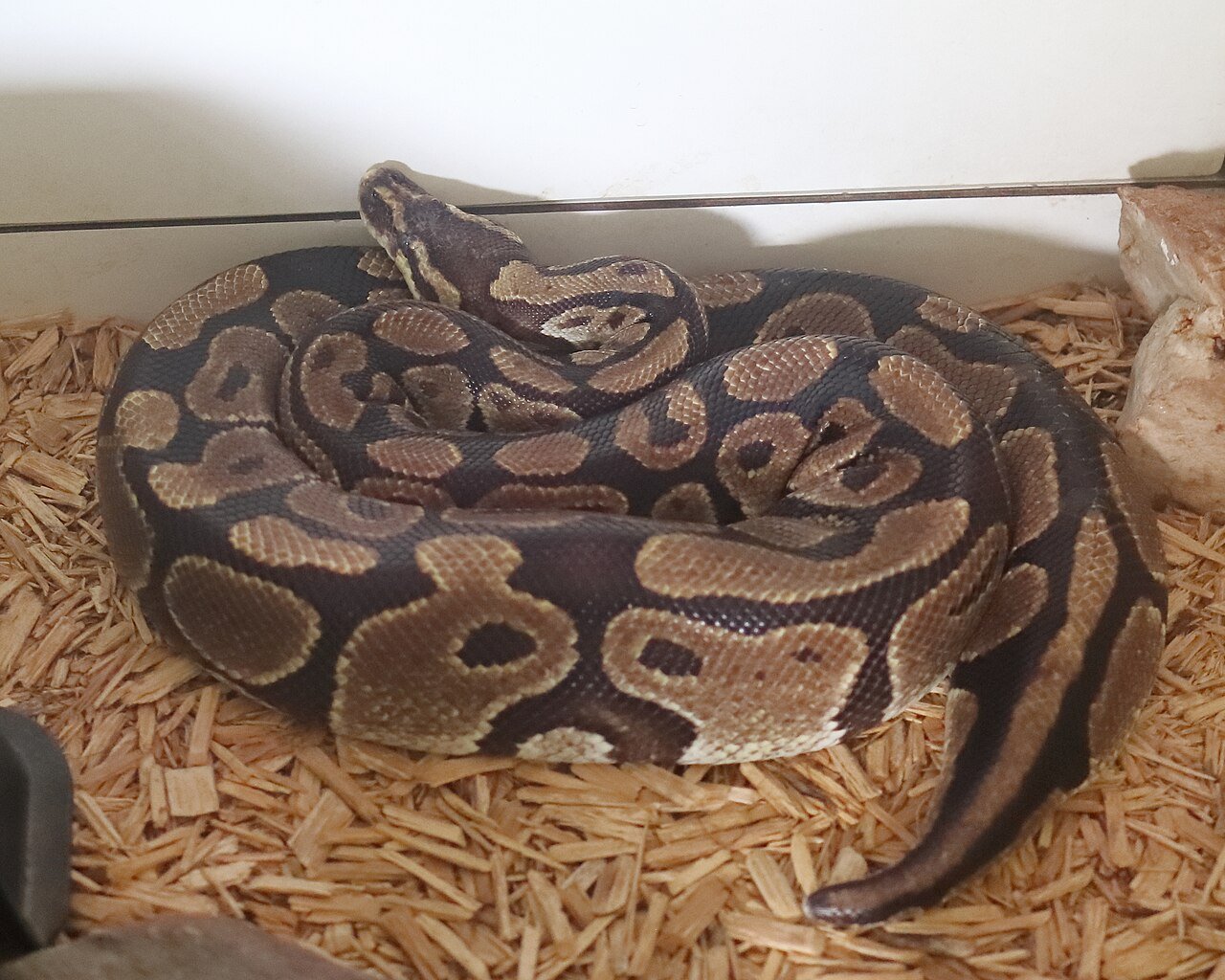
This guide includes a feeding chart by age and weight, how to pick prey size, how to thaw and offer frozen prey safely, and what to do if your python skips meals.
Ball python feeding chart
| Stage | Typical weight | Feed every | Typical prey |
|---|---|---|---|
| Hatchling | Under about 100 g | 5-7 days | Hopper mouse or rat pup |
| Juvenile | About 100-500 g | 7-10 days | Adult mouse or weaned/small rat |
| Sub-adult | About 500-1,000 g | 10-14 days | Small to medium rat |
| Adult | Over about 1,000 g | 14-28 days | Medium rat (sometimes large for big females) |
These ranges are common starting points from care sheets and breeders, not rules. Ball pythons vary a lot, and males often stay smaller than females. Adjust based on weight and body shape.
How to choose the right prey size
- Width check: the prey’s widest point should be about the same as, or slightly wider than (up to about 1.25 times), the snake’s widest point.
- Weight check: weigh the snake and the prey. Young snakes commonly get prey at around 10-15% of their body weight; healthy adults need less, often around 5-10%, and less often.
- One prey item of the right size is usually better than several small ones.
- Rats vs mice: many keepers switch to rats early because adult ball pythons need fewer, larger meals, and some snakes become fixed on one prey type. If your snake was raised on mice, any switch should be gradual.
A digital kitchen scale that reads in grams makes both checks easy and lets you track your snake’s weight over time.
Is your ball python overweight or underweight?
A healthy ball python has a rounded, loaf-like cross-section with a gentle curve along the back. Signs of obesity include fat rolls when the snake bends, skin showing between scales, and a “pinched” look where the tail starts. Signs of being underweight include a visible spine ridge, a triangular cross-section and loose skin. Obesity is a common problem in pet ball pythons, and the fix is usually smaller or less frequent meals, not skipping food entirely. Ask a reptile vet before major diet changes.
How to feed frozen-thawed prey safely
- Thaw in the fridge overnight, or in a sealed plastic bag in cool to lukewarm water. Never microwave or leave prey thawing at room temperature for hours.
- Warm it before feeding by placing the sealed bag in warm water for a few minutes. Ball pythons find prey by heat, so a slightly warm head helps.
- Offer with long tongs in the evening, gently moving the prey. Ball pythons can strike fast, so keep hands clear.
- Leave the snake alone if it doesn’t strike within 15-30 minutes. Some snakes will take prey left near the hide overnight, but remove uneaten prey by morning and throw it away. Do not refreeze it.
- No handling for about 48 hours after a meal, to reduce the risk of regurgitation.
- Long reptile feeding tongs
- Digital probe thermometers to confirm the warm side is right before feeding
Why frozen-thawed instead of live?
Live rodents can bite and seriously injure a snake that is not hungry. Frozen-thawed prey is safer for the snake, easier to store and kinder to the prey animal. Most captive-bred ball pythons accept it. If yours is a confirmed live feeder, work with a reptile vet or experienced breeder on switching, and never leave a live rodent unattended in the enclosure.
Temperatures matter for digestion
A snake that is too cool will refuse food or regurgitate it. Commonly recommended targets are a warm-side surface of about 88-92°F (31-33°C) and a cool side of about 75-80°F (24-27°C), with humidity around 50-70%. See our full ball python care sheet and how to heat a reptile enclosure.
When your ball python skips meals
Ball pythons are famous for fasting. Common causes include an upcoming shed, a recent move, cooler seasons and breeding season, especially in males. A healthy adult can skip several meals with little harm as long as its weight stays steady. Weigh it weekly. A drop of more than about 10% of body weight, or signs such as wheezing, mouth discharge, regurgitation or lethargy, means a vet visit. Our snake refusing to eat checklist walks through each cause, and if a shed is the issue see ball python stuck shed.
Frequently asked questions
Can I feed my ball python two mice at once?
You can if a single mouse is too small, but it is usually better to move up to one larger prey item, such as a small rat.
Should I feed in a separate container?
It is not necessary. Feeding inside the enclosure means less handling and stress. Loose substrate stuck to prey is rarely a problem if you feed on a flat surface or from tongs.
Can I feed my ball python right after it sheds?
Yes. Many snakes are especially hungry just after a shed.
My snake regurgitated its meal. What now?
Wait at least 10-14 days before offering food again, offer a smaller item, and check temperatures. Repeated regurgitation needs a vet.
Sources and further reading
- VCA Animal Hospitals: Snakes: Feeding
- Merck Veterinary Manual: Routine Health Care of Reptiles
- ARAV: Find a reptile vet
This article is general, researched information and does not replace advice from a qualified reptile veterinarian. Questions or corrections? Contact us at info@myhealthyreptile.com.
Related: all ball python guides and care guides.