If your snake refuses to eat, first stay calm: many healthy snakes skip meals, sometimes for weeks or months. Check the basics in this order: is it about to shed, has it recently moved or been handled a lot, are the temperatures right, is the prey the right size and type, and is it the season when your species naturally fasts? Fix any husbandry problems, offer food again in a week, and weigh the snake regularly. If it is losing weight, has stopped eating for longer than is normal for its species, or shows signs such as wheezing, mouth discharge, regurgitation, lumps or lethargy, take it to a reptile vet.
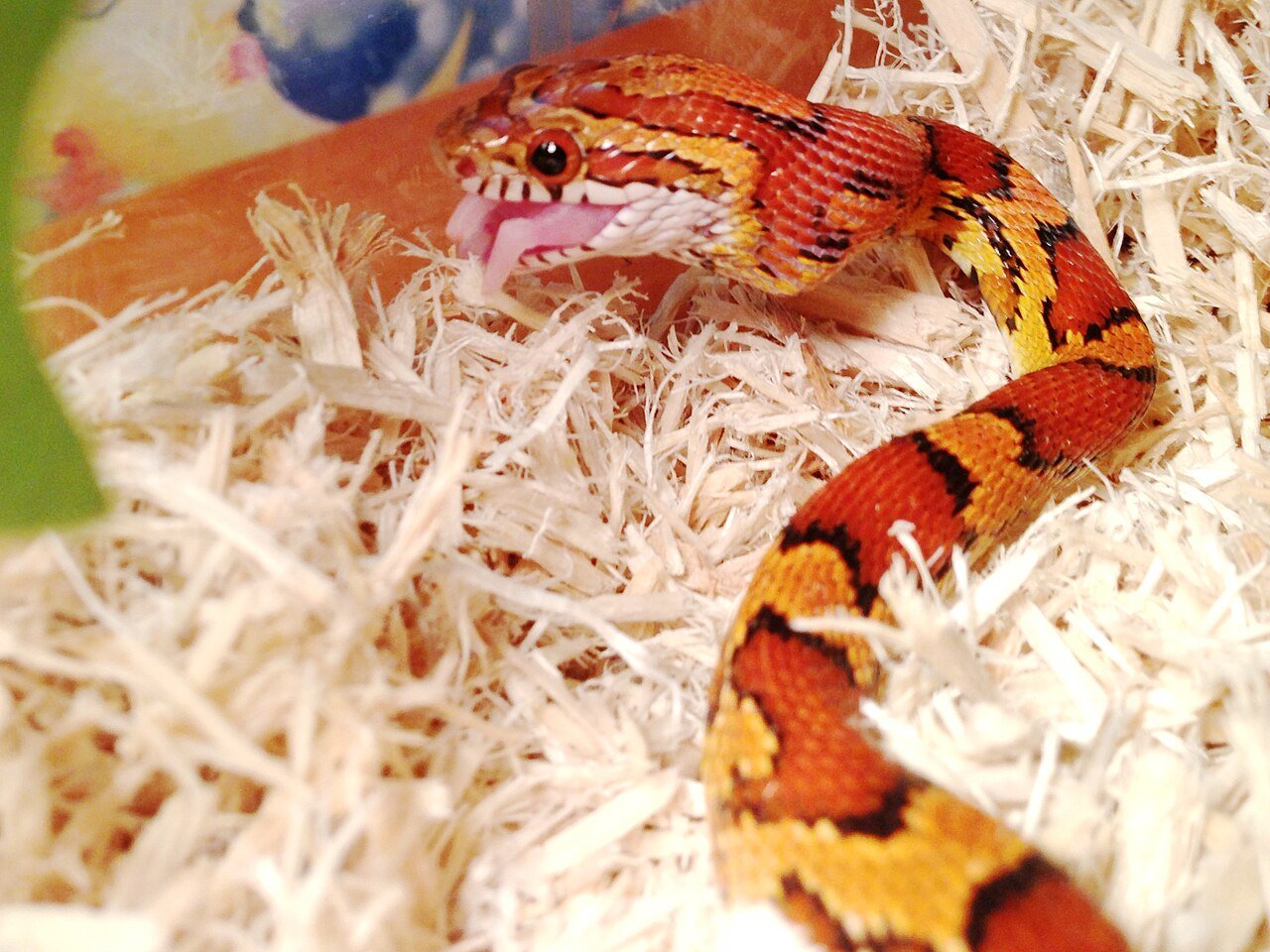
This guide covers the most common reasons snakes go off food, a troubleshooting checklist, species-specific fasting patterns, safe tips to tempt a reluctant feeder, and the red flags that mean a vet visit.
Why snakes stop eating
Snakes are built for an irregular food supply. Their slow metabolism lets them go much longer between meals than mammals. A missed meal is often normal behaviour rather than illness. The main causes fall into a few groups:
- Shedding. Snakes often refuse food from the time their eyes turn blue/cloudy until a few days after the shed. See our stuck shed guide if the shed comes off in pieces.
- Stress. A new home, a recent move, frequent handling, a busy room, other pets nearby or a lack of secure hides.
- Temperatures. A snake that is too cool cannot digest well and will often refuse food.
- Prey problems. Wrong size, wrong type (live vs frozen-thawed, mouse vs rat), prey not warmed enough, or a change in supplier.
- Seasonal fasting and breeding. Many species eat less in cooler months or during the breeding season, especially males.
- Females with eggs (gravid) commonly stop eating.
- Illness. Respiratory infection, mouth infection (stomatitis), parasites, injuries, or other disease.
Step-by-step troubleshooting checklist
- Weigh your snake in grams on a kitchen scale and write it down. Weight trend tells you more than days without food.
- Look for a shed. Dull colours or blue-grey eyes mean wait until after the shed.
- Measure temperatures with a digital probe thermometer at both ends of the enclosure, not just the stick-on dial. See the table below.
- Check humidity for your species.
- Review hides and security. Offer at least one snug hide on the warm side and one on the cool side, plus cover such as plants.
- Reduce handling to none for a week or two before the next feeding attempt.
- Re-check prey. Offer prey roughly as wide as the widest part of the snake’s body, fully thawed and warmed to around body temperature.
- Offer food in the evening for nocturnal and crepuscular species, and leave the snake undisturbed.
- Wait about a week between attempts. Offering food every day adds stress.
- Book a vet if weight drops or any warning sign appears (see below).
Temperature and fasting guide for popular pet snakes
These are commonly recommended ranges from care guides and vet resources. Individual setups vary, so use them as a starting point and ask your vet if unsure.
| Species | Warm side / hot spot | Cool side | Typical adult feeding interval | Is a long fast common? |
|---|---|---|---|---|
| Ball python | 88-92°F (31-33°C) surface | 75-80°F (24-27°C) | Every 10-21 days | Yes. Healthy adults, especially males, may fast for weeks or months, often in winter |
| Corn snake | 85-88°F (29-31°C) | 72-78°F (22-26°C) | Every 10-14 days | Sometimes, mainly in winter or breeding season |
| California kingsnake | 85-88°F (29-31°C) | 72-78°F (22-26°C) | Every 7-14 days | Uncommon; usually strong feeders |
| Boa constrictor | 88-92°F (31-33°C) | 78-82°F (26-28°C) | Every 2-4 weeks | Sometimes |
| Hognose (western) | 88-92°F (31-33°C) | 72-78°F (22-26°C) | Every 5-7 days (young), 10-14 (adult) | Yes, especially in winter |
For a full ball python setup, see our ball python care sheet, and for heat equipment and thermostats see the best way to heat a reptile enclosure.
How long can a snake go without eating?
It depends on species, age and body condition. Healthy adult ball pythons are well known for fasting for several months without lasting harm, provided they hold their weight. Hatchlings and juveniles have much smaller reserves, so a young snake that has missed several meals in a row needs attention sooner. As a rough rule, a loss of more than about 10% of body weight, or any visible loss of condition (spine and ribs becoming prominent, skin folds), means it is time to see a vet regardless of how many weeks it has been.
Safe ways to tempt a reluctant feeder
- Warm the prey properly. Thaw in the fridge or in a sealed bag in warm water, then warm the head slightly. Never microwave.
- Try a different prey item or size, such as a smaller rat or a mouse instead of a rat, after checking with your vet or breeder what the snake was eating before.
- Use tongs and gently wiggle the prey to mimic movement, or leave it near the hide overnight.
- “Braining” (making a small cut in the prey’s skull to release scent) is a technique some keepers use; it is messy but can help.
- Feed in a quiet room with low light, and do not watch closely.
Avoid force-feeding or assist-feeding unless a vet shows you how and recommends it, as it can injure the snake and cause regurgitation. Live prey can bite and seriously injure a snake that is not hungry, so never leave live rodents unattended in the enclosure.
Red flags: when to see a reptile vet
| Sign | Possible concern |
|---|---|
| Steady weight loss or visible loss of condition | Underlying illness, parasites |
| Wheezing, clicking, open-mouth breathing, bubbles at the nose | Respiratory infection |
| Swelling, redness or discharge in the mouth | Mouth infection (stomatitis) |
| Regurgitation, unusual or very smelly droppings | Digestive disease, parasites, wrong temperatures |
| Lumps, retained eggs, swelling | Many causes needing exam |
| Lethargy, poor muscle tone, abnormal head movements or balance | Serious illness |
| A juvenile that has missed several meals | Smaller reserves |
The Association of Reptile and Amphibian Veterinarians (ARAV) has a directory to help you find a vet experienced with snakes. Bring your weight log, temperature readings and photos of the setup.
Keeping a feeding and weight log
A simple log is the most useful tool you have when a snake goes off food. It takes a minute per feeding and turns vague worry into clear information you can share with a vet. Record:
| Column | Example | Why it helps |
|---|---|---|
| Date | 3 Nov | Shows patterns such as winter fasting |
| Prey offered | Small rat, frozen-thawed, 70 g | Tracks size and type changes |
| Result | Refused / struck but dropped / ate | Distinguishes disinterest from difficulty |
| Snake weight | 1,420 g | The key health indicator |
| Shed status | Blue eyes | Explains many refusals |
| Warm / cool temps | 90°F / 78°F | Rules husbandry in or out |
| Notes | Moved tank, new room | Records stressors |
Weigh at the same time of day and before feeding for consistent numbers. A gradual trend down is more important than a single reading.
Seasonal fasting: what is normal?
Many snakes in the wild eat less in cooler, darker months, and pet snakes often follow the same rhythm even in a heated room. Ball pythons are the best-known example: keeper reports of adults skipping food from late autumn to early spring are common, particularly in males during the breeding season. Corn snakes and other colubrids may also reduce intake in winter, and some keepers deliberately “brumate” them under vet guidance. During a seasonal fast:
- Keep normal temperatures unless you are deliberately cooling under expert guidance.
- Offer food every one to two weeks and remove it if refused.
- Weigh every couple of weeks.
- Keep fresh water available at all times.
If a snake fasts for the first time outside its usual pattern, or a young snake stops eating, treat it more seriously and look harder for a cause.
Frequently asked questions
Why won’t my new snake eat?
Moving to a new home is stressful. Give a new snake about one to two weeks to settle with minimal handling before offering food, and check that temperatures and hides are right.
My ball python hasn’t eaten in two months. Should I worry?
Not necessarily, if it is an adult that is holding its weight and otherwise looks healthy. Ball pythons commonly fast. Keep weighing it, keep offering food about once every week or two, and see a vet if weight drops or symptoms appear.
Can I switch my snake from live to frozen prey?
Many snakes switch successfully. Warm the thawed prey well, move it with tongs, and be patient. Frozen-thawed prey is safer for the snake.
Should I feed my snake during a shed?
Most snakes refuse food while in shed. Wait until a few days after the shed is complete, then offer food again.
Can stress really stop a snake eating?
Yes. Excessive handling, a lack of hiding places, a busy room or other pets nearby are some of the most common causes of food refusal.
Is it OK to leave a dead prey item in overnight?
A thawed prey item can be left for a few hours or overnight, but remove it by morning and do not refreeze it.
Sources and further reading
- VCA Animal Hospitals: Snakes – Feeding and Snakes – Diseases
- Merck Veterinary Manual: Routine Health Care of Reptiles
- RSPCA: Snake care
- ARAV: Find a reptile vet
This article is general, researched information and does not replace advice from a qualified reptile veterinarian. Questions or corrections? Contact us at info@myhealthyreptile.com.
Related: the ball python feeding chart, the ball python hub, leopard gecko not eating, and our reptile care basics.