Disclosure: This article contains affiliate links. If you buy through them we may earn a small commission at no extra cost to you. We only recommend gear that meets current reptile care guidelines. See our affiliate disclosure.
Quick facts: Leopard geckos (Eublepharis macularius) are crepuscular ground-dwelling geckos from the arid grasslands and rocky scrub of Afghanistan, Pakistan, northwest India and Iran. Kept well, they live 15–20+ years, reach 18–25 cm (7–10 in) long, and eat only insects. They’re one of the best beginner reptiles, but “easy” doesn’t mean a 10-gallon tank and a heat mat.
Care sheet at a glance
| Enclosure | Minimum 36×18×18 in (90×45×45 cm). 4×2×2 ft is better. |
|---|---|
| Warm-side surface | 32–35 °C (90–95 °F) under a basking spot or on the warm hide floor |
| Cool side | 21–26 °C (70–79 °F) |
| Night | Can drop to 18–21 °C (65–70 °F) |
| Humidity | 30–40% overall, with a humid hide at 70–80% |
| UVB | Low-level UVB is beneficial (Ferguson Zone 1, UVI 0.5–2 near the warm end) |
| Diet | Live, gut-loaded insects, dusted with calcium |
| Housing | One gecko per enclosure. Never house males together. |
Enclosure
The old “10–20 gallon” rule came from breeding facilities, not good care. Current guidance from Reptifiles, the RSPCA and many keepers is at least 36×18×18 in, which is about a 50-gallon footprint. Floor space matters more than height. Front-opening glass or PVC is easiest. Check 36×18×18 front-opening terrarium on Amazon
Give them at least three hides:
- Warm hide over the heat source.
- Cool hide at the far end.
- Humid hide lined with damp sphagnum moss, positioned in the warm-to-middle zone. This hide is the single biggest fix for bad sheds.
Add rocks, cork bark and low branches. Leopard geckos climb more than people expect.
Heating
Leopard geckos absorb heat both from warm surfaces and from overhead radiant heat. Two approaches work:
- Overhead: a low-wattage halogen or deep-heat projector over a flat stone. It mimics sunlight and warms the gecko’s back as well as its belly.
- Under-tank heat mat: covering about a third of the floor under the warm hide. Fine and widely used.
Whichever you choose, every heat source must run through a thermostat. Unregulated heat mats cause serious belly burns. Check surface temperatures with an infrared thermometer. Check Inkbird ITC-306T thermostat on Amazon Check infrared temperature gun on Amazon
Lighting and UVB
Leopard geckos are active at dusk and dawn, but research shows they do bask in low UV and synthesise vitamin D3 from it (Ferguson Zone 1). A low-output tube such as the Arcadia ShadeDweller or a ReptiSun 5.0 T5 over a third to half of the enclosure, with plenty of shade, is now widely recommended. If you don’t use UVB, use a calcium supplement with D3. Run lights for 12 hours a day with no lights at night, and never use red or blue “night” bulbs. Check Arcadia ShadeDweller ProT5 7% kit on Amazon
Our UVB guide explains how UV Index and the zones work.
Substrate
- Good: a soil/sand mix (about 70/30 topsoil to play sand), slate tile, or paper towel for quarantine.
- Avoid: calcium sand, walnut shell, and loose reptile carpet, which snags claws and holds bacteria.
Impaction is mostly a husbandry problem, caused by low temperatures, dehydration or calcium-sand ingestion, rather than by naturalistic substrate on its own.
Diet and supplements
Leopard geckos are insectivores. They don’t eat fruit or veg.
- Staples: crickets, dubia roaches, black soldier fly larvae, silkworms. Check live dubia roaches on Amazon
- Occasional: mealworms, superworms, and hornworms. Waxworms are fatty, so treats only.
- Gut-load feeders for 24–48 hours with greens or a commercial gut-load.
- Dust insects with plain calcium at most feedings and a multivitamin about once a week. Use calcium with D3 if you have no UVB. Check Repashy Calcium Plus LoD on Amazon
| Age | Feeding |
|---|---|
| Hatchling–4 months | Daily, 5–7 small insects |
| 4–12 months | Every other day |
| Adult | 2–3 times per week, 6–8 appropriately-sized insects |
Offer a shallow water dish and refresh it daily.
Shedding
Healthy geckos shed every 2–6 weeks and usually eat the shed. Watch the toes and tail tip, because stuck shed there can constrict blood flow and cost a toe. If you see stuck shed, add a humid hide, or give a 10-minute soak in shallow warm water and gently roll the shed off with a damp cotton bud.
Health warning signs
- Thin tail. Leopard geckos store fat in the tail, so a stick-thin tail means weight loss. Common causes are parasites (including cryptosporidium) and poor temperatures.
- Soft or bent jaw, wobbly legs. These point to metabolic bone disease.
- Bubbles at the nose, open-mouth breathing. Possible respiratory infection.
- Wobbling or stargazing, especially in “enigma” morphs, which carry a known neurological syndrome.
Find a reptile vet before you need one through the ARAV vet finder.
Handling
Let a new gecko settle for 1–2 weeks first. Scoop it from underneath, never grabbing from above (it looks like a predator), and keep sessions short at first. Never grab the tail. Leopard geckos can drop it (autotomy), and the regrown tail is never the same.
Leopard gecko vs bearded dragon
Thinking about both? Bearded dragons need more space, high UVB and a lot of greens. Leopard geckos are smaller, insect-only and quieter, and they’re active in the evening. Compare with our bearded dragon care guide and reptile care basics.
Choosing a healthy leopard gecko
Whether you buy from a breeder, a reptile expo or a store, check for:
- A plump tail, roughly as wide as the neck in adults.
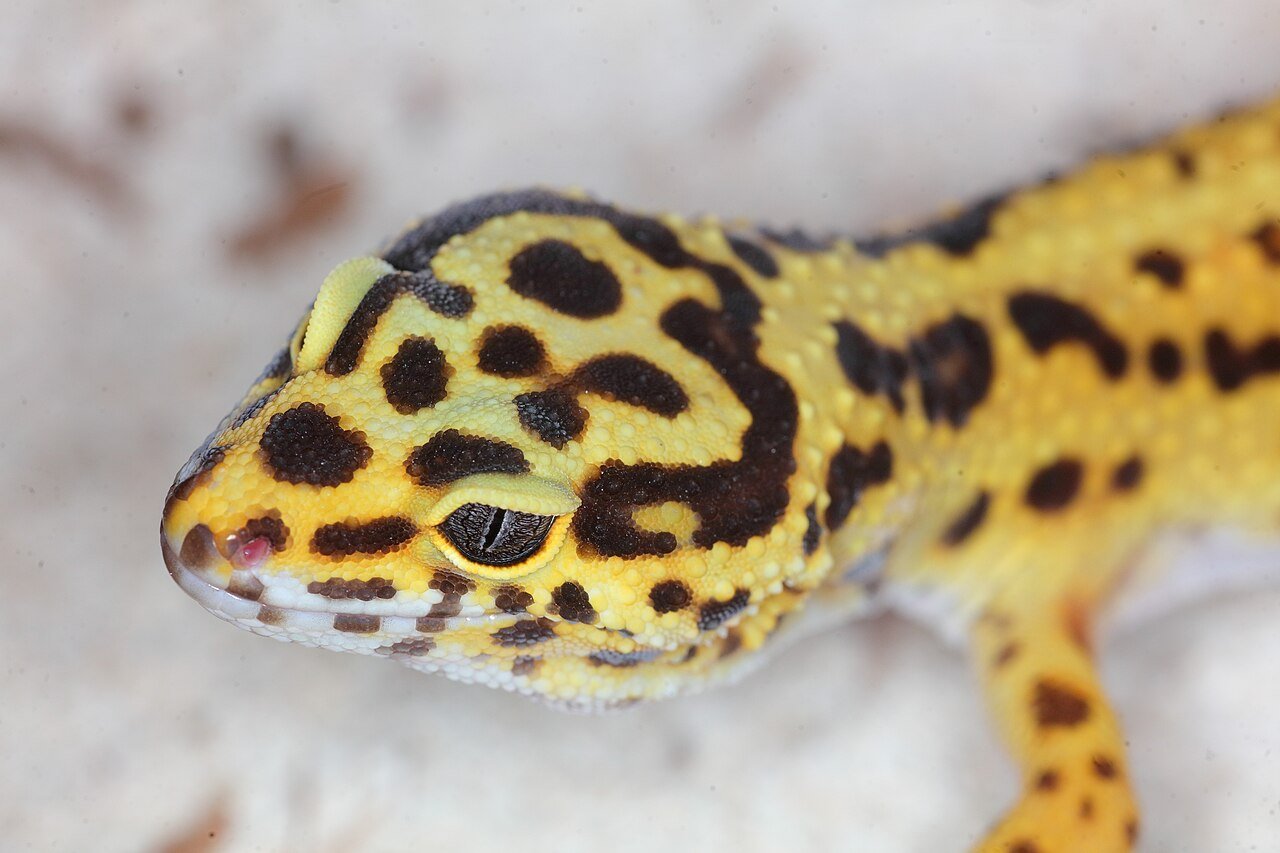
- Clear, bright eyes and clean nostrils.
- All toes and the tail tip intact, with no stuck shed.
- A clean vent with no smeared faeces.
- An alert, curious gecko. Some initial shyness is normal, but it shouldn’t be limp.
Ask the seller for hatch date, sex, current diet, and whether any parents carry the enigma gene. Captive-bred geckos from a dedicated breeder are almost always healthier than imports.
A simple cleaning routine
- Daily: Spot-clean droppings. Leopard geckos usually choose one or two “toilet” corners, which makes this easy. Refresh the water and check the humid hide moss.
- Weekly: Wipe the glass, rinse the water dish, and replace the humid hide moss.
- Monthly: Deep-clean hides and decor with a reptile-safe disinfectant such as F10 or diluted chlorhexidine, and rinse well. Top up or replace the substrate as needed. Check F10 SC veterinary disinfectant on Amazon
Starter shopping list
- Enclosure, 36×18×18 in or larger
- Heat source (halogen or heat mat) and a thermostat
- Low-output UVB kit (optional but recommended)
- Three hides (warm, cool, humid)
- Substrate (soil/sand mix or tile)
- Infrared thermometer
- Calcium, calcium + D3, and multivitamin powders
- Shallow water dish and a feeding dish
- Feeder insects and gut-load
Set everything up and run it for 2–3 days to stabilise temperatures before the gecko comes home.
FAQ
Do leopard geckos need a heat lamp or a heat mat?
Either works, as long as a thermostat controls it and the warm-side surface reaches about 32–35 °C. Many keepers now prefer overhead heat.
Can leopard geckos live together?
Housing them alone is safest. Males fight, and pairs often lead to stress or unwanted eggs.
How long can a leopard gecko go without eating?
Healthy adults with good tail fat can go 1–2 weeks, and longer during winter slow-downs. A juvenile refusing food, or any gecko losing tail mass, needs a vet check.
Do leopard geckos need water?
Yes. Always provide a shallow dish of fresh water.
Why is my leopard gecko licking things?
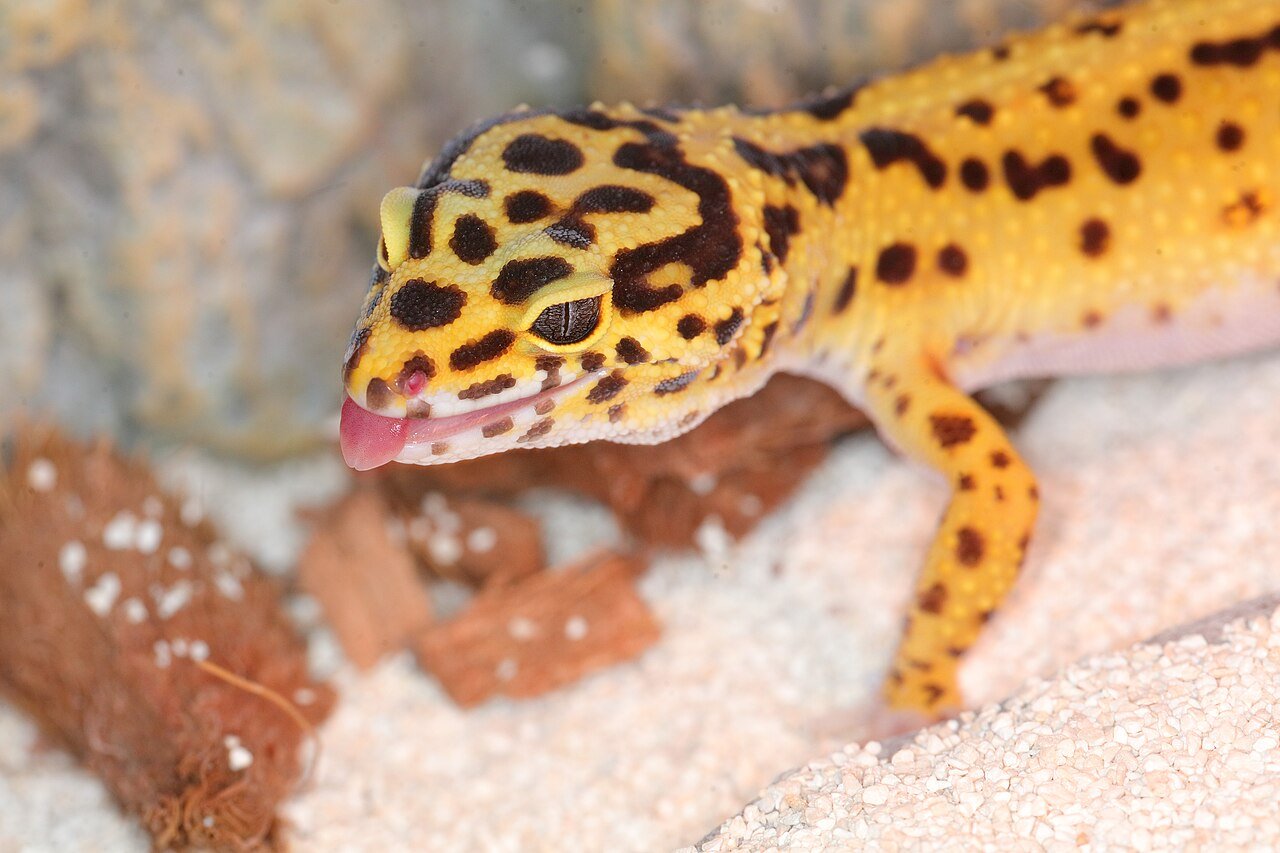
That’s normal. They “taste” the air and surfaces with their tongue to explore.
Sources: RSPCA leopard gecko care; Reptifiles leopard gecko care sheet; Gould A. et al. (2018) on UVB and vitamin D3 in leopard geckos, J. Zoo Aquar. Res.; ARAV. General information, not veterinary advice.
Next step: our guide to reptiles you can own in the UK compares the leopard gecko with other beginner species.
This guide is part of our leopard gecko care guides hub. Setting up an enclosure? Read our leopard gecko tank setup guide.