Disclosure: This article contains affiliate links. If you buy through them we may earn a small commission at no extra cost to you. See our affiliate disclosure. This guide is general, researched information and is not a substitute for an exam by a reptile veterinarian.
Leopard geckos can drop their tails on purpose. This is called autotomy, a defence that helps a gecko escape when a predator, a tank mate, or a person grabs the tail. The detached tail may twitch, and there is often some bleeding. The gecko can survive and, in most cases, grow a replacement tail, but the stump can become infected, and the new tail will not look or work exactly like the original. Do not pull a hanging tail, apply a tight tourniquet, or pack the wound with household chemicals.
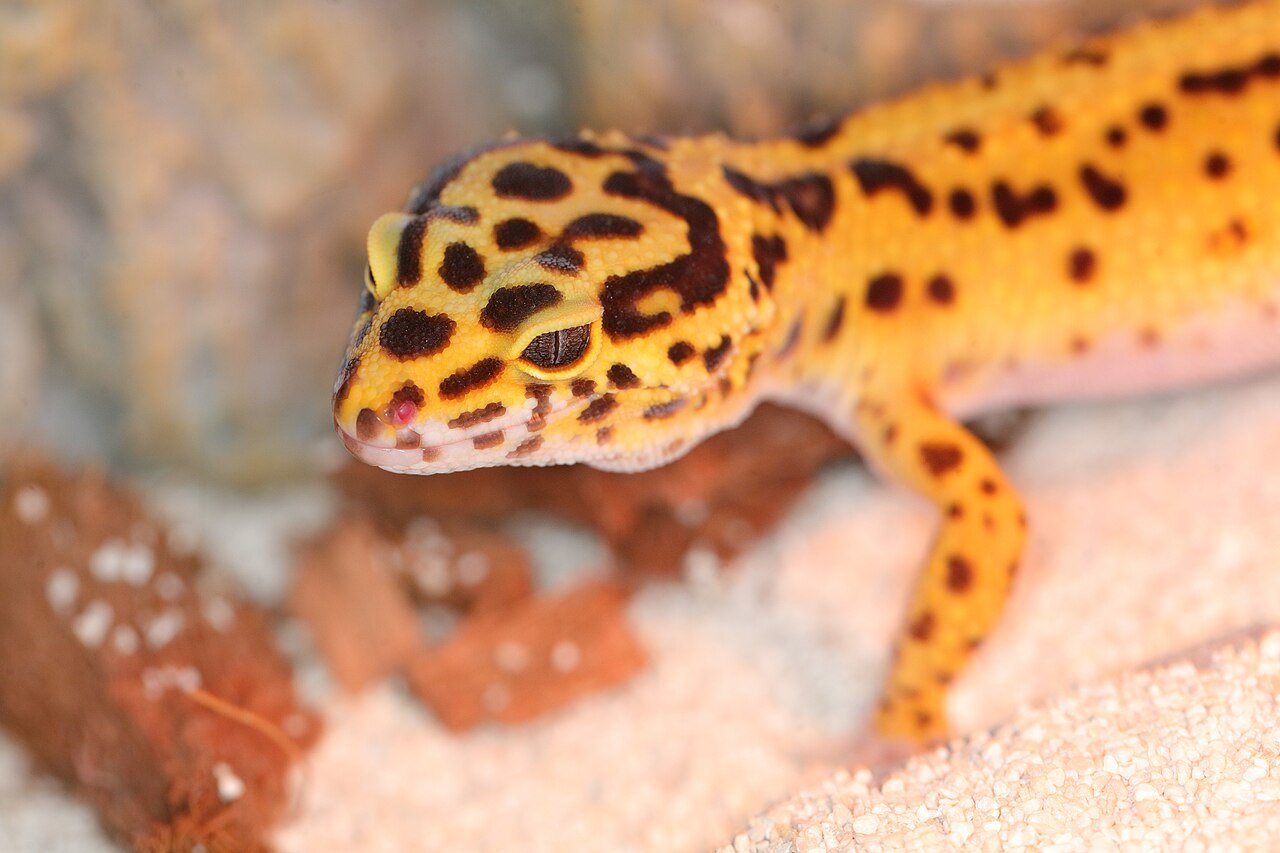
This guide covers why tails drop, what you can safely do in the first hours, how the tail typically heals and regrows, when to see a reptile vet, and how to lower the risk of it happening again.
Why leopard geckos drop their tails
LafeberVet’s leopard gecko information sheet, by Christal Pollock, DVM, DABVP, explains the mechanism clearly: a vertical fracture plane runs through each caudal vertebra, and the tail can come off when it is grasped, sometimes with very little pressure. The Merck Veterinary Manual’s clinical procedures chapter gives the same warning for lizards in general: never grasp a gecko by the tail during handling or an exam.
In the home, common triggers include:
- Being picked up, restrained, or pulled by the tail, even gently
- A fall, a closing door, or the tail catching on décor, a screen lid or sticky tape
- Being housed with another gecko that bites or chews the tail
- A sudden fright, rough handling, or a dog or cat at the enclosure
- Stuck shed, injury or infection at the tail tip that makes the gecko more likely to drop it
A dropped tail is distressing to watch, but it is not automatically a disaster. Treat it as an injury that needs clean conditions and a close watch, not as something to ignore.
What to do in the first hours
Stay calm. The twitching tail is normal. Move the gecko to a simple, clean temporary setup if the main enclosure is dirty, heavily decorated, or uses loose substrate that can stick to the wound.
- Control bleeding with gentle pressure if needed. A modest amount of blood is common and often slows on its own. In a lecture on common reptile emergencies, Eric Klaphake, DVM, DACZM, describes a pressure bandage until bleeding stops as an important first step in species that autotomise. You can apply clean, gentle pressure with sterile gauze or a clean cloth. Do not tie a tight string or rubber band around the stump, and do not use super glue, hydrogen peroxide, or alcohol on the wound unless a veterinarian has told you to use a specific product.
- Do not pull the remaining tail. If a piece is hanging, leave it and call a vet. Pulling can worsen the injury and is not a home amputation.
- Keep the enclosure clean and dry at the stump. Paper towel or another easy-to-change, low-dust floor is a good temporary substrate. Spot-clean soiled paper promptly. A humid hide should still be available for shedding, but do not soak a fresh stump or leave the gecko sitting in a water bowl, which can macerate the wound.
- Keep temperatures in range. Healing is slower if the gecko cannot reach its usual warm-side temperatures. Check the warm hide or basking surface as you would in everyday care, following our leopard gecko care sheet and tank setup guide.
- Offer food and water, but do not force food. Some geckos eat the same day; others skip a meal. A skipped meal after a stressful event can be normal if the gecko is otherwise bright. See our guide to a leopard gecko that is not eating if appetite stays off or weight falls.
The tail itself can be disposed of; it will not reattach. Wash your hands after handling the gecko or the tail.
How the tail heals and what a regrown tail looks like
The stump usually dries and begins to close over days to a couple of weeks if it stays clean. A replacement tail, when it grows, is not a perfect copy. LafeberVet notes that the tail regrows as a cartilaginous rod rather than a bony replica of the original vertebrae. Klaphake describes a typical regrown tail as more rounded at the tip, often a more uniform colour, and made of cartilage rather than bone. It can still store fat, but it may be shorter, smoother or differently patterned than the first tail.
Regrowth takes weeks to months and varies by age, nutrition and how much tail was lost. A gecko that is underweight, not eating, or has metabolic bone disease may heal more slowly. The original tail held a large fat reserve, so keep a closer eye on body condition and diet after a drop, using the feeding guidance in what leopard geckos eat.
Do not assume every tail injury will regenerate neatly. If the drop was incomplete, very close to the body, dirty, or caused by a bite, a vet should assess it.
When to see a reptile vet
Book a reptile veterinarian, or an emergency clinic that sees reptiles, if:
- Bleeding is heavy or does not slow with gentle pressure
- Bone, tissue or a ragged, hanging piece is clearly exposed, or the drop looks incomplete
- The stump is swollen, discoloured, foul-smelling, or leaking discharge
- The gecko is lethargic, in obvious pain, or not using its hind legs normally
- The gecko will not eat, is losing weight, or the wound is not closing over the following days
- The tail was dropped because of a tank-mate bite, a fall from a height, or a crush injury
A vet can clean and trim tissue if needed, check for infection, discuss pain relief, and advise whether the site should be left open to encourage regeneration or surgically managed. Find a reptile vet through the ARAV vet finder.
How to lower the risk of another drop
- Never pick a leopard gecko up by the tail. Support the body and let the tail hang freely or rest on your hand.
- House leopard geckos separately. Cohabitation is a common cause of tail and toe injuries.
- Avoid sticky tape, loose threads, and décor with tight gaps that can catch the tail.
- Handle gently and not too often, especially with a newly arrived gecko or one that is shedding.
- Keep a humid hide damp so sheds release cleanly from the toes and tail tip. Stuck shed can precede a drop; our shedding problems guide covers what to do if skin is stuck.
- Secure the enclosure so other pets cannot disturb it, and close doors carefully.
A gecko that has already dropped its tail can drop a regrown tail as well, though the anatomy is different. Continue to handle the tail as a no-go zone.
Helpful supplies
- Sterile gauze pads for gentle pressure if the stump is bleeding
- Paper towel or similar plain flooring for a temporary clean setup
- Digital gram scale to watch weight after the fat-storing tail is lost
- Humid hide to support clean sheds on the remaining tail and toes
These are search links to help you compare options. We have not hands-on tested these products.
Frequently asked questions
Will a leopard gecko’s tail grow back?
Usually, yes, as a cartilaginous replacement that looks different from the original. How complete the regrowth is depends on the gecko’s health and how much tail was lost. A vet should advise you if the wound is atypical.
How much bleeding is normal?
Some bleeding is expected and often slows quickly. Heavy bleeding, pale gums, or a gecko that becomes very weak is an emergency. Use gentle pressure and get veterinary help rather than applying a tight tourniquet.
Can I put antibiotic ointment on the stump?
Do not add over-the-counter creams, oils or powders unless a veterinarian has recommended a specific product. Some ointments are harmful if licked, and a dirty or infected stump needs a vet, not a random ointment.
Should I still use the humid hide or give soaks?
The gecko still needs a way to shed cleanly, so a damp humid hide is reasonable. Avoid soaking a fresh, open stump or letting the wound sit in water. If you are unsure, ask the vet how to handle humidity for the first week.
Is a gecko without a tail in pain?
The drop itself is a built-in escape response, but the wound can be sore and can become infected. Treat the gecko gently, keep the setup clean, and see a vet if it seems distressed, if the site looks unhealthy, or if you simply want the wound checked.
Sources and further reading
- Christal Pollock, DVM, DABVP, “Basic Information Sheet: Leopard Gecko,” LafeberVet — lafeber.com/vet
- Eric Klaphake, DVM, DACZM, “Five Common Reptile Emergencies,” LafeberVet (PDF) — lafeber.com/vet
- Merck Veterinary Manual, “Clinical Procedures for Reptiles” (do not grasp lizards by the tail) — merckvetmanual.com
- Association of Reptilian and Amphibian Veterinarians, find a vet — arav.org
Related: Leopard gecko hub · Care sheet · Shedding problems · Tank setup · Not eating