Disclosure: This article contains affiliate links. If you buy through them we may earn a small commission at no extra cost to you. See our affiliate disclosure. This guide is general, researched information and is not a substitute for an exam by a reptile veterinarian.
Yes, bearded dragons can eat kale, and it is one of the better greens you can buy at a supermarket. Raw kale has a strong calcium-to-phosphorus ratio of about 4.6:1, plus vitamin A and fibre. The catch is that kale is a cruciferous (cabbage-family) vegetable with goitrogens, compounds that can affect thyroid function when one food is fed in large amounts every day. So feed kale as part of a rotation of greens, a few times a week, rather than as the only salad your dragon ever sees.
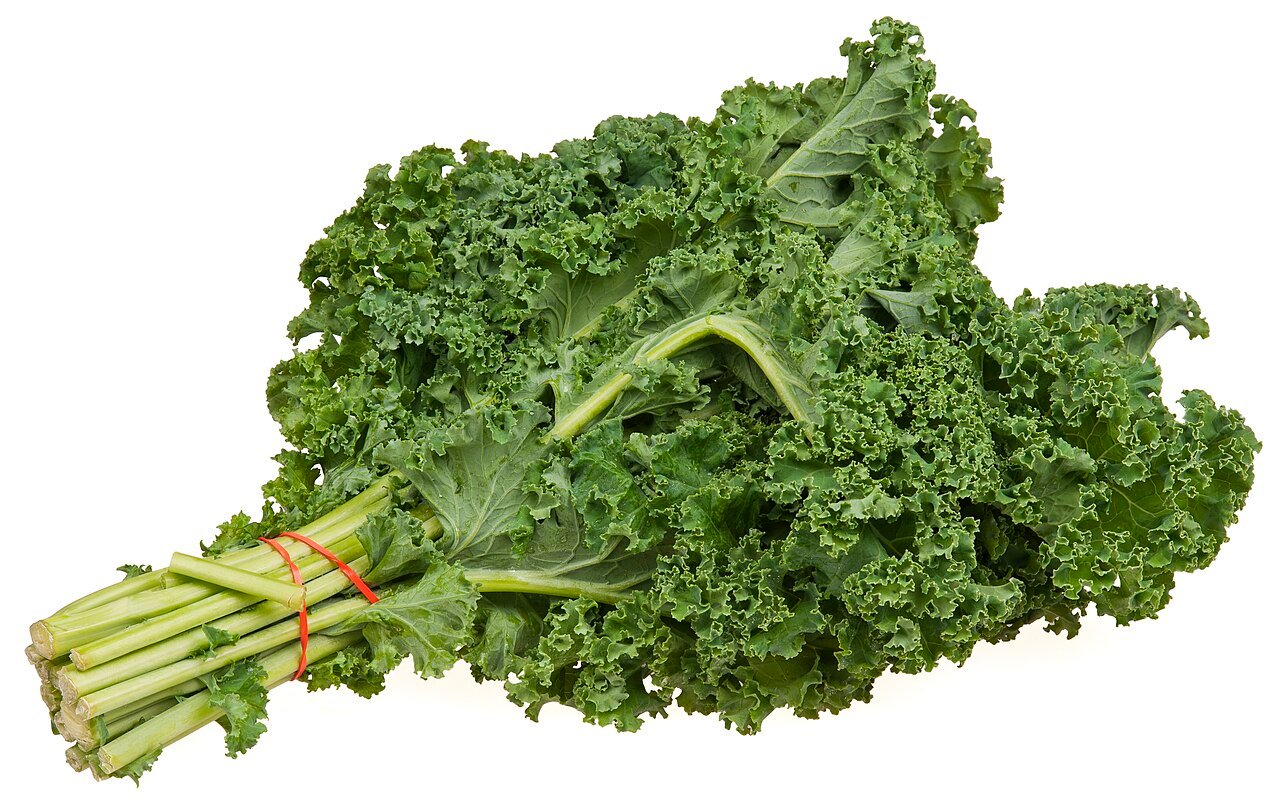
Below you will find the USDA nutrition numbers, how kale compares with other common greens, how much and how often to offer it, and how to prepare it.
Kale nutrition for bearded dragons
Bearded dragons need far more calcium than phosphorus in their diet. A ratio of at least 1:1, and ideally around 2:1 or higher, helps protect against metabolic bone disease (MBD). Kale clears that bar easily.
| Nutrient (per 100 g raw kale) | Amount | Why it matters |
|---|---|---|
| Water | 89.6 g | Adds some hydration |
| Calcium | 254 mg | Bone health; the main reason kale is a good green |
| Phosphorus | 55 mg | Low, which keeps the Ca:P ratio favourable |
| Ca:P ratio | about 4.6:1 | Well above the 2:1 target |
| Fibre | 4.1 g | Supports normal digestion |
| Vitamin A (RAE) | 241 µg | Useful, but another reason not to over-rely on one food alongside supplements |
| Sugar | 1.0 g | Very low, unlike fruit |
Source: USDA FoodData Central, “Kale, raw” (SR Legacy, FDC 168421).
How kale compares with other greens
Kale is good, but it is not the only good option. Rotating several greens spreads out the goitrogens and oxalates found in different plants and gives a wider range of nutrients.
| Green (raw) | Approx. Ca:P ratio | How often | Notes |
|---|---|---|---|
| Collard greens | about 9:1 | Staple | One of the most recommended everyday greens |
| Turnip greens | about 4.5:1 | Staple | Cruciferous, so rotate |
| Kale | about 4.6:1 | A few times a week | Cruciferous, so rotate |
| Dandelion greens | about 2.8:1 | Staple | Only pesticide-free leaves |
| Mustard greens | about 2:1 | Staple or frequent | Cruciferous, so rotate |
| Romaine lettuce | about 1:1 | Occasional | Mostly water; see can bearded dragons eat lettuce |
| Spinach | about 2:1, but high oxalate | Rarely | Oxalates bind calcium |
Ratios are rounded from USDA data and can vary between datasets and crops. For a longer list, see our bearded dragon safe foods list.
Is kale bad for bearded dragons? Goitrogens and oxalates
You will see forum posts warning against kale. The two concerns are:
- Goitrogens. Cabbage-family vegetables contain compounds that can interfere with iodine uptake by the thyroid when eaten in large amounts over long periods. In practice, this is a reason to rotate kale with non-cruciferous greens such as dandelion, endive or squash, not a reason to ban it.
- Oxalates. Oxalates bind calcium. Kale is generally considered a low-oxalate green compared with spinach, beet greens or Swiss chard, which is part of why it is preferred over them.
As with any single food, the risk comes from feeding the same thing every day. Variety is the safeguard.
How much kale and how often?
- Adults (over about 18 months): plants make up most of the diet, roughly 70-80% by volume. Kale can be one of two or three greens in the daily salad, served a few times a week.
- Juveniles: eat mostly insects but should be offered a small salad every day. Finely chopped kale mixed with other greens is a good way to get them used to vegetables.
- Portion size: a mixed salad roughly the size of your dragon’s head is a common starting point. Remove uneaten greens at the end of the day.
If your dragon is not eating its greens at all, check temperatures and UVB first. Poor lighting is a common cause of low appetite; see our guide to UVB lighting for bearded dragons.
How to prepare kale
- Buy fresh, crisp leaves. Curly kale and lacinato (Tuscan) kale are both fine. Organic is a good choice if you can get it.
- Wash thoroughly under running water to remove dirt and residue, then pat or spin dry.
- Strip the thick stems. They are tough and fibrous.
- Chop into small pieces, no wider than the space between your dragon’s eyes.
- Serve raw. Cooking reduces nutrients and is not needed.
- Mix with other greens and a sprinkle of calcium powder according to your supplement schedule.
Helpful supplies:
- Reptile calcium powder (without D3) for dusting salads and insects
- Calcium with D3, used as your vet or UVB setup indicates
- Shallow reptile food dishes that are easy to clean
Frequently asked questions
Can baby bearded dragons eat kale?
Yes, chopped very finely and mixed with other greens. Babies mainly eat insects, so expect them to pick at greens at first.
Is kale better than collard greens?
Both are good. Collards usually have an even higher calcium-to-phosphorus ratio, so many keepers use collards as the base and add kale for variety.
Can bearded dragons eat cooked or frozen kale?
Fresh raw kale is best. Thawed frozen kale is acceptable now and then if it has no added salt or seasoning, but it is softer and has lost some nutrients.
Can bearded dragons eat kale every day?
It is better not to. Rotate it with other greens so no single plant dominates the diet.
What other herbs and greens work well with kale?
Small amounts of herbs such as cilantro and parsley add scent and variety. Squash and zucchini also mix in well.
Sources and further reading
- USDA FoodData Central: search “Kale, raw” (FDC ID 168421)
- VCA Animal Hospitals: Bearded Dragons: Feeding
- Merck Veterinary Manual: Routine Health Care of Reptiles
This article is general, researched information and does not replace advice from a qualified reptile veterinarian. Questions or corrections? Contact us at info@myhealthyreptile.com.
Related: bearded dragon feeding guide, unsafe foods list and all bearded dragon guides.