The most reliable way to know whether your iguana is getting enough calcium is a combination of good husbandry and a vet check: a calcium-rich leafy-green diet, correct UVB lighting and basking heat, a steady growth and activity pattern, and, if there is any doubt, blood tests and X-rays from a reptile vet. You cannot judge calcium status by eye until a deficiency is already fairly advanced. Early warning signs include reduced appetite, lethargy, trembling or twitching toes, and a softening or swelling of the lower jaw. Later signs include swollen limbs, a bent spine or tail, fractures and an inability to lift the body off the ground.
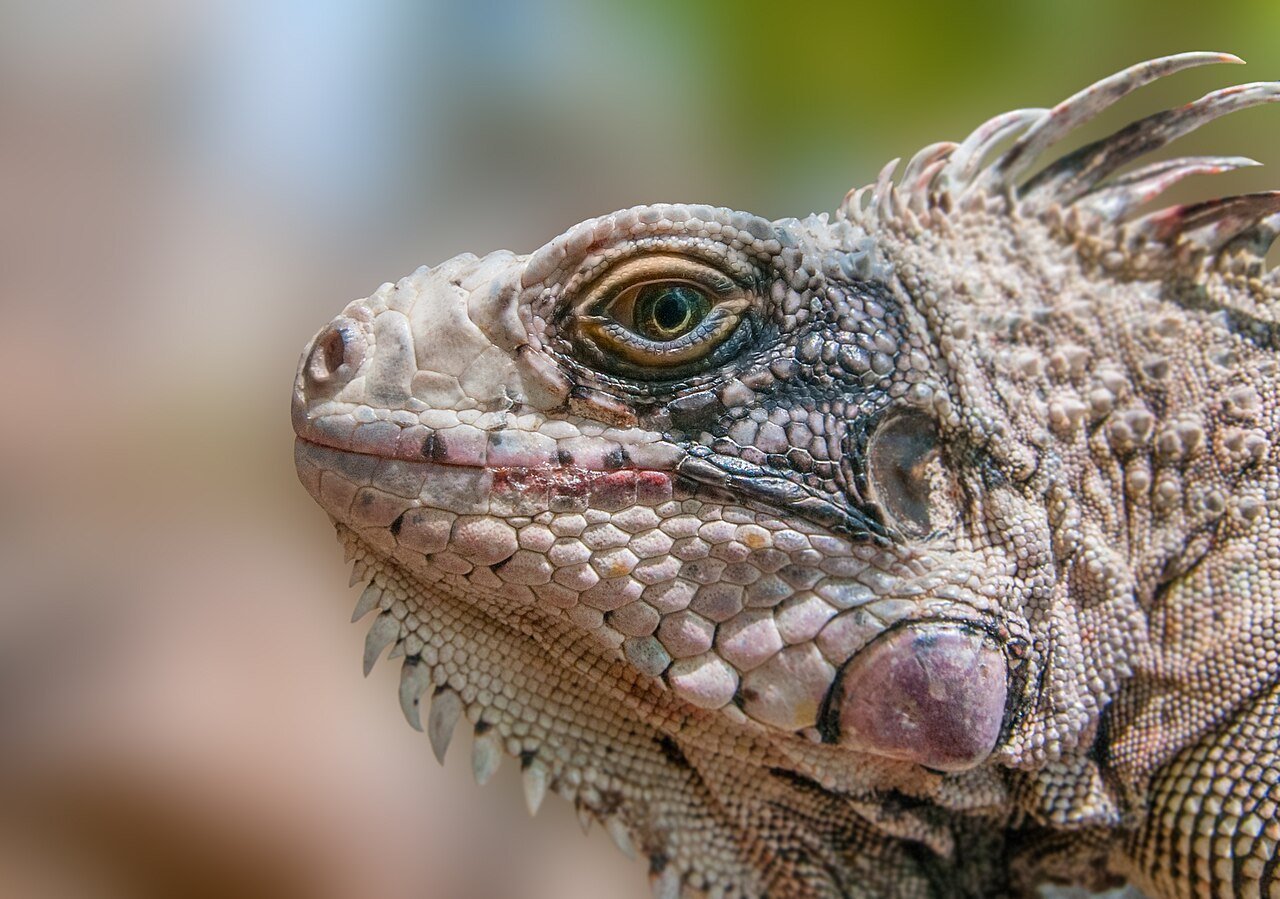
Green iguanas (Iguana iguana) are among the reptiles most often affected by metabolic bone disease (MBD) in captivity. This guide explains how calcium works in an iguana’s body, the husbandry checklist that protects it, the signs that something is wrong, and what a vet is likely to do.
Why calcium matters so much for iguanas
Iguanas are strict herbivores that grow quickly and can reach well over a metre in length. Building and maintaining that skeleton takes a great deal of calcium. When blood calcium runs low, the body draws calcium out of the bones to keep the heart, muscles and nerves working. Over time the bones become thin and soft. Vets usually call this nutritional secondary hyperparathyroidism, the most common form of MBD.
Calcium status depends on three links in a chain:
- Enough calcium in the diet, mainly from dark leafy greens, plus any supplement your vet recommends.
- A favourable calcium-to-phosphorus balance. Foods with more phosphorus than calcium work against bone health.
- Vitamin D3, which iguanas produce in their skin under UVB light and which they need in order to absorb calcium from food.
The Merck Veterinary Manual and VCA both list inadequate UVB and a low-calcium or high-phosphorus diet as the key causes of MBD in reptiles. Any one weak link is enough to cause a problem.
Signs your iguana may not be getting enough calcium
| Stage | Signs you might notice | What to do |
|---|---|---|
| Early | Less appetite, less activity, reluctance to climb, slow growth, occasional toe or leg twitches | Review UVB, basking temps and diet now; book a reptile vet check |
| Moderate | Soft, rubbery or swollen lower jaw (“rubber jaw”), thickened or lumpy limbs, tremors, difficulty lifting the body | See a reptile vet promptly; do not start high-dose supplements on your own |
| Severe | Bent limbs or spine, kinked tail, fractures, seizures, inability to eat, constipation, collapse | Emergency vet care; low blood calcium can be life-threatening |
Egg-laying females have an extra calcium demand and can develop dangerously low blood calcium even when kept well, so any female that seems weak, shaky or straining should be seen quickly.
The calcium checklist: is your setup doing its job?
If you can tick every line below, your iguana has a good foundation. If not, start fixing the gaps today.
| Factor | Commonly recommended target | Check |
|---|---|---|
| UVB lighting | A strong linear T5 UVB tube (often 10-12% UVB) covering much of the enclosure length, 10-12 hours a day; iguanas are usually placed in Ferguson Zone 3 (basking UV index roughly 3-7) | Replace tubes on the maker’s schedule (often 12 months); a UV meter is ideal |
| Basking temperature | Around 95-100°F (35-38°C) at the basking spot | Measure with a digital probe thermometer or infrared thermometer |
| Ambient day temperature | Around 80-88°F (27-31°C) | Warm enough for digestion |
| Night temperature | Not below about 75°F (24°C) | Use non-light heat if needed |
| Diet | Mostly calcium-rich dark leafy greens, some other vegetables, very little fruit, no animal protein | See the food table below |
| Supplement | Calcium powder on salads as your vet advises (often several times a week for juveniles) | Ask your vet about vitamin D3-containing products |
| Vet check | A check-up soon after purchase and then regularly | Bloods and X-rays if there is any concern |
Glass and most plastics block UVB, so a bulb behind a window or under a sheet of glass does nothing for calcium. Mesh tops also filter part of the output, so follow the bulb maker’s distance guidance. For more on how UVB bulbs work, see our UVB lighting guide; the principles are the same, though iguanas are larger and need a bigger coverage area.
Best calcium foods for iguanas
Values per 100 g of raw food from USDA FoodData Central; ratios are our calculation.
| Food | Calcium (mg) | Phosphorus (mg) | Ca:P | Role |
|---|---|---|---|---|
| Collard greens | 232 | 25 | 9.3:1 | Staple |
| Turnip greens | 190 | 42 | 4.5:1 | Staple |
| Dandelion greens | 187 | 66 | 2.8:1 | Staple (pesticide-free) |
| Prickly pear pads (nopales) | 164 | 16 | 10:1 | Staple, spines removed |
| Mustard greens | 115 | 58 | 2.0:1 | Staple |
| Butternut squash | 48 | 33 | 1.5:1 | Vegetable mix |
| Green beans | 37 | 38 | 1.0:1 | Occasional |
| Banana | 5 | 22 | 0.2:1 | Rare treat |
Many keepers aim for roughly 80-90% leafy greens and vegetables and no more than about 10% fruit. Spinach, beet greens and Swiss chard are high in oxalates, which bind calcium, so most vets suggest limiting them. Animal protein (insects, dog or cat food) is not appropriate for green iguanas and has been linked to kidney problems.
How a vet checks calcium status
Because you cannot see bone density, a reptile vet is the only way to get a real answer. Typical steps include:
- Husbandry review: your vet will ask about bulbs, temperatures, diet and supplements. Bring photos of your setup and bulb packaging.
- Physical exam: feeling the jaw and limbs for softness or swelling and assessing muscle tone and body condition.
- Blood tests: total and ionised calcium, phosphorus and other values. Ionised calcium is the most useful for spotting dangerous lows.
- X-rays: to look at bone density, fractures and, in females, eggs or follicles.
Treatment for confirmed MBD usually combines correcting husbandry with vet-directed calcium (oral or injectable), sometimes vitamin D3 and supportive care. Do not attempt to treat suspected MBD with large doses of supplements at home. Too much vitamin D3 can cause its own harm, and an iguana with very low blood calcium can need urgent care.
Common mistakes that lead to calcium problems
- Using a compact or coil UVB bulb too small for a large lizard, or an old tube that still glows but has lost its UVB output.
- Placing the UVB light behind glass or too far from the basking spot.
- Basking temperatures that are too low, so the iguana cannot digest properly.
- Diets built around lettuce, fruit or commercial pellets alone.
- Feeding animal protein.
- Skipping vet checks because the iguana “looks fine”.
A sample daily salad for an adult iguana
To make the advice above concrete, here is one way to build a calcium-friendly salad. Quantities scale with the size of your iguana; most adults eat a salad roughly the size of their head or a little larger each day.
- About 40-50%: collard or turnip greens (rotate daily).
- About 20-30%: mustard greens, dandelion greens or chopped nopales.
- About 10-20%: grated butternut squash, bell pepper, green beans or a little zucchini.
- Up to about 10% (a few times a week): fruit such as papaya, figs or a little mango.
- Calcium powder lightly sprinkled over the top, at the frequency your vet recommends.
Chop or shred everything into small pieces and mix it so the iguana cannot pick out only its favourites. Offer food in the morning, after the iguana has had time to warm up under its basking lamp, because digestion works best at proper body temperature. Remove leftovers before evening.
Juveniles vs adults
Young iguanas grow fast and are at the highest risk of calcium problems. They usually need to be fed every day, may need more frequent calcium supplementation, and should have their UVB and basking temperatures checked carefully from day one. Adults are more forgiving, but they still need daily UVB and a calcium-rich diet. Females can produce eggs even without a male, which draws heavily on their calcium reserves. If you keep a female iguana, ask your vet about a plan for the breeding season, including a suitable nesting area so she does not retain eggs.
Tracking your iguana’s health at home
Keeping simple records helps you and your vet spot a problem early:
- Weigh your iguana monthly (weekly for juveniles) and note the result.
- Record the date you installed each UVB tube.
- Note basking and ambient temperatures once a week.
- Take a side-on photo every month; changes in jaw shape, limb thickness or posture are easier to see side by side.
Frequently asked questions
How much calcium does an iguana need?
There is no simple milligram figure published for pet iguanas. In practice, vets focus on a calcium-rich diet with a positive Ca:P ratio, a calcium supplement as directed, and proper UVB so the iguana can use the calcium.
Should I use calcium with or without D3 for my iguana?
If your iguana has strong, correctly placed UVB, many vets recommend plain calcium for most dustings. Practices vary, so follow your own vet’s plan.
Can natural sunlight replace a UVB bulb?
Unfiltered outdoor sunlight is an excellent UVB source, but only if it is not through glass and the iguana is safe, supervised and has shade to avoid overheating. Most keepers still need a UVB tube indoors.
Can MBD in iguanas be reversed?
Many iguanas improve once a vet treats them and husbandry is corrected. Bone deformities that have already formed may remain. Early treatment gives the best outlook.
Is a swollen jaw always MBD?
No. Jaw swelling can also come from infection, abscesses or injury. That is why a vet exam is important rather than guessing.
How often should my iguana see a vet?
A check-up after you first get the iguana and then about once a year is a common recommendation, with extra visits for any change in appetite, behaviour or posture.
Sources and further reading
- VCA Animal Hospitals: Iguanas – Care and Lighting Requirements for Reptiles
- Merck Veterinary Manual: Routine Health Care of Reptiles
- RSPCA: Green iguana care
- ARAV (Association of Reptile and Amphibian Veterinarians): Find a reptile vet
- USDA FoodData Central: nutrient data for the foods listed
This article is general, researched information and does not replace advice from a qualified reptile veterinarian. Questions or corrections? Contact us at info@myhealthyreptile.com.
Related: metabolic bone disease explained (bearded dragon guide), how to heat a reptile enclosure, how often turtles need to bask in UV light, and our reptile care basics.