Yes, bearded dragons can eat cilantro, but only as an occasional garnish, not a staple green. Fresh cilantro (coriander leaf) is non-toxic, hydrating and has a slightly positive calcium-to-phosphorus ratio of about 1.4:1. It is, however, nowhere near as calcium-rich as the collard, mustard or turnip greens that should make up the bulk of a dragon’s salad, and like other herbs it contains oxalates and strong aromatic oils. A small sprinkle mixed into a salad once or twice a week is a reasonable way to add variety and tempt a fussy eater.
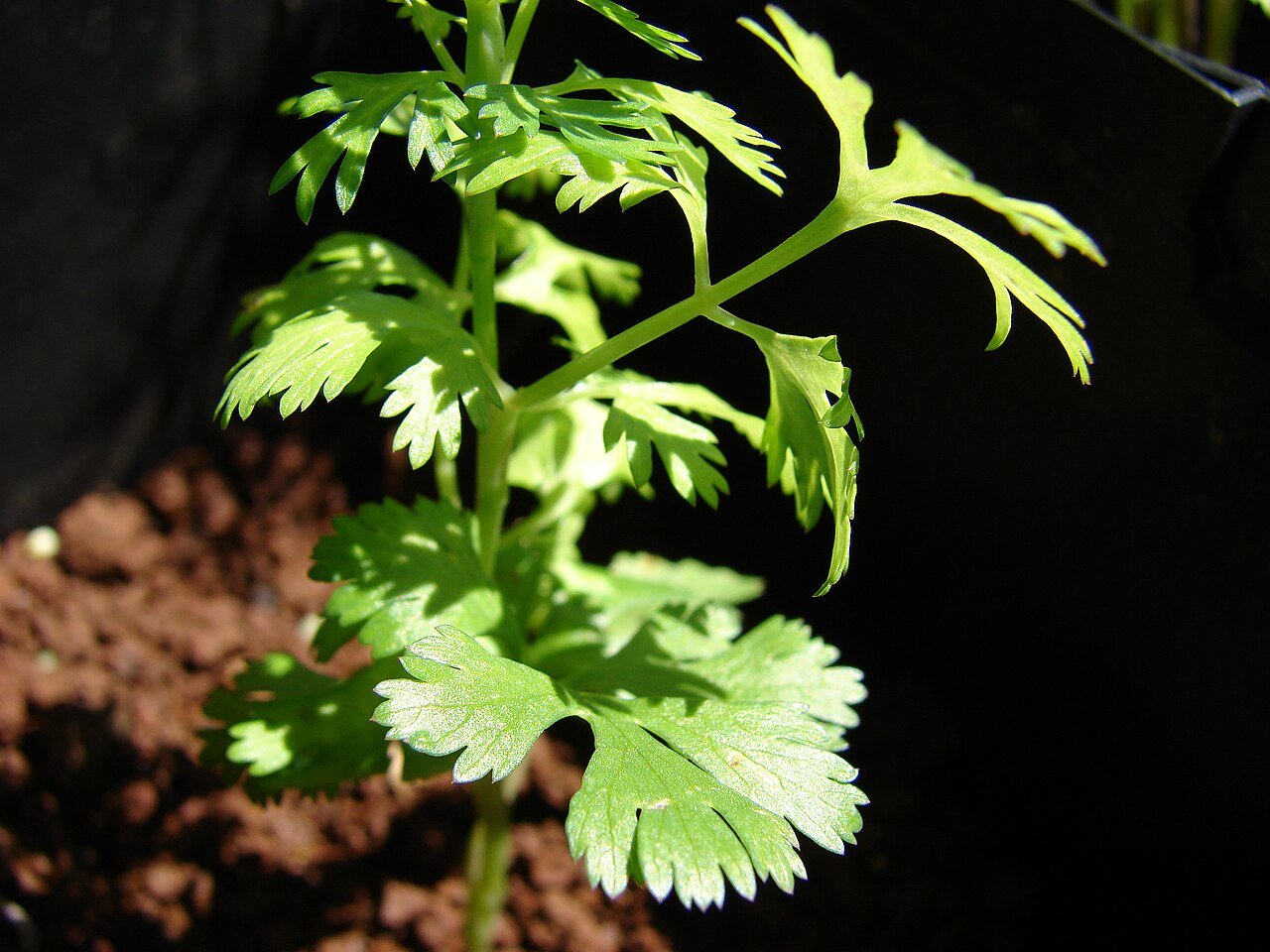
This guide covers the nutrition numbers (from USDA FoodData Central), how often to offer cilantro, how to prepare it safely, and how it compares with the greens your dragon should be eating every day.
Is cilantro safe for bearded dragons?
Cilantro is not on any recognised list of toxic plants for reptiles, and it appears on the “occasional” lists published by many reptile vets and keeper organisations. The leaves and tender stems are the parts to offer. Coriander seeds (the dried spice) are a different product and should not be fed.
Three things keep cilantro in the “occasional” category rather than the “daily” one:
- Modest calcium. At roughly 67 mg of calcium per 100 g it is far behind staple greens such as collards (over 200 mg).
- Oxalates. Cilantro contains oxalic acid, which can bind calcium in the gut. The amount is lower than in spinach or parsley, but it still adds up if herbs make up a large share of the diet.
- Strong flavour and oils. Some dragons love it; others refuse it. Large amounts of aromatic herbs are not something wild bearded dragons would eat regularly.
Cilantro nutrition for bearded dragons
The figures below are per 100 g of raw cilantro leaves (USDA FoodData Central, “Coriander (cilantro) leaves, raw”). We have added the calcium-to-phosphorus ratio because it matters most for bone health.
| Nutrient (per 100 g) | Cilantro, raw | Why it matters |
|---|---|---|
| Water | 92.2 g | Helps hydration, but very watery foods can loosen stools |
| Calcium | 67 mg | Essential for bones; dragons need a diet rich in calcium |
| Phosphorus | 48 mg | Competes with calcium when too high |
| Ca:P ratio | about 1.4:1 | Positive, but below the roughly 2:1 many vets aim for across the whole diet |
| Vitamin A (RAE) | 337 µg | Useful, but avoid stacking with vitamin A supplements |
| Vitamin C | 27 mg | Antioxidant |
| Vitamin K | 310 µg | Normal in dark leafy herbs |
| Fibre | 2.8 g | Supports digestion |
| Sugars | 0.9 g | Very low, unlike fruit |
How cilantro compares with staple greens
The quickest way to see where cilantro belongs is to compare it with the greens most reptile vets suggest as everyday foods. Values are USDA figures for raw leaves per 100 g; the ratio is our calculation.
| Green | Calcium (mg) | Phosphorus (mg) | Ca:P | Suggested role |
|---|---|---|---|---|
| Collard greens | 232 | 25 | 9.3:1 | Staple |
| Turnip greens | 190 | 42 | 4.5:1 | Staple |
| Dandelion greens | 187 | 66 | 2.8:1 | Staple (pesticide-free only) |
| Mustard greens | 115 | 58 | 2.0:1 | Staple |
| Cilantro | 67 | 48 | 1.4:1 | Occasional garnish |
| Parsley | 138 | 58 | 2.4:1 | Occasional (high oxalate) |
| Romaine lettuce | 33 | 30 | 1.1:1 | Occasional filler |
Cilantro is better than lettuce but clearly weaker than true staples. For more on parsley, see can bearded dragons eat parsley, and for lettuce see can bearded dragons eat lettuce.
How much and how often?
There is no research-based “dose” of cilantro for bearded dragons, so treat the following as a sensible guide rather than a rule:
| Age | Diet balance | Cilantro guideline |
|---|---|---|
| Babies (0-6 months) | Mostly insects, some finely chopped greens | A few chopped leaves once a week at most, mainly to get them used to greens |
| Juveniles (6-18 months) | Roughly half insects, half greens | A small pinch mixed into the salad once or twice a week |
| Adults (18 months +) | Mostly greens and vegetables, fewer insects | A small handful of chopped leaves, making up no more than about a tenth of a salad, one to two times a week |
Rotating herbs (cilantro one week, a little basil or parsley another) keeps the diet varied without letting any single herb dominate.
How to prepare cilantro for your dragon
- Buy fresh, ideally organic. Herbs are often sprayed. Wilted or slimy bunches should be thrown away.
- Rinse well under cool running water to remove soil and residues, then shake or pat dry.
- Remove thick stems. The tender upper stems are fine; tough lower stems are a choking and impaction risk for small dragons.
- Chop finely, to pieces no wider than the space between your dragon’s eyes.
- Mix it in. Toss chopped cilantro through a base of collards, mustard or turnip greens and a little squash. Its smell can encourage a reluctant dragon to start eating the salad.
- Remove leftovers after a few hours so they do not wilt or attract insects.
Never feed cilantro from a garden that has been treated with pesticides or fertiliser, and never offer cooked, seasoned or oiled herbs (for example leftovers from salsa or curry, which may contain onion, garlic, salt or lime).
Possible downsides of feeding too much
- Calcium imbalance: a diet built on herbs and lettuce instead of calcium-rich greens can contribute, along with poor UVB, to metabolic bone disease.
- Loose stools: large amounts of very watery greens can cause runny droppings.
- Food refusal: some dragons fill up on a favourite herb and ignore more nutritious foods.
If your dragon has persistent diarrhoea, stops eating or seems lethargic, do not just adjust the salad. These can be signs of parasites, infection or husbandry problems, and a reptile vet should check them.
Building a balanced salad around cilantro
A practical adult salad might look like this:
- About 70-80%: staple greens (collard, mustard, turnip or dandelion greens, rotated).
- About 10-20%: vegetables such as squash, bell pepper or zucchini.
- Up to about 10%: herbs or treats, such as cilantro, or fruit like blueberries.
Dust insects with a calcium supplement as your vet recommends, and make sure the enclosure has a good UVB light, because without UVB your dragon cannot use dietary calcium properly. Our safe foods list and unsafe foods list cover many more options.
Other herbs: how they compare
Keepers often ask about cilantro alongside other kitchen herbs. Here is how the common ones stack up, using USDA values per 100 g of fresh herb where available. Treat all herbs as toppers rather than staples.
| Herb | Calcium (mg) | Phosphorus (mg) | Ca:P | Our take |
|---|---|---|---|---|
| Basil, fresh | 177 | 56 | 3.2:1 | Good occasional topper |
| Parsley, fresh | 138 | 58 | 2.4:1 | Occasional; relatively high in oxalates |
| Cilantro, fresh | 67 | 48 | 1.4:1 | Occasional topper |
| Spearmint, fresh | 199 | 60 | 3.3:1 | Occasional; strong flavour many dragons dislike |
| Dill, fresh | 208 | 66 | 3.2:1 | Occasional |
| Chives | 92 | 58 | 1.6:1 | Avoid: onion family |
Chives belong to the onion family (Allium), which is generally considered unsafe for reptiles, so leave them out even though the numbers look acceptable. A good habit is to rotate one herb per week in small amounts, which gives your dragon variety without letting any single herb’s oxalates or oils build up.
Will my dragon actually eat cilantro?
Bearded dragons have individual preferences, and keeper reports suggest cilantro divides them more than most greens. Some will pick every leaf out of a salad first; others will refuse anything that smells of it. If your dragon ignores it, there is nothing lost nutritionally: simply drop it and try another herb or a colourful vegetable such as squash or bell pepper. Dragons are strongly attracted to colour and movement, so bright foods on top of the bowl, or a few insects placed on the greens, are a more reliable way to encourage salad eating than any single herb.
If your dragon has gone off its food entirely rather than just ignoring one item, check its basking temperature (around 100-110°F or 38-43°C for adults), its UVB bulb age and whether it is about to shed or brumate. Persistent appetite loss should always be discussed with a reptile vet.
Frequently asked questions
Can baby bearded dragons eat cilantro?
Yes, in tiny, finely chopped amounts. Babies need mainly appropriately sized insects plus calcium-rich greens, so cilantro should be no more than an occasional flavour to encourage salad eating.
Can bearded dragons eat cilantro stems?
The soft upper stems are fine if chopped small. Remove the thicker lower stems, which are fibrous and harder to swallow.
Is coriander the same as cilantro?
Botanically yes: both come from Coriandrum sativum. “Cilantro” usually means the fresh leaves and “coriander” can mean either the leaves (in the UK) or the dried seeds. Offer only the fresh leaves.
Can bearded dragons eat cilantro every day?
We would not recommend it. Its calcium content is moderate and it contains oxalates, so daily feeding could crowd out better staples. Once or twice a week is a safer pattern.
Can bearded dragons eat dried cilantro?
Dried herbs are concentrated and lack moisture, and shop-bought blends may contain salt or other spices. Fresh is the better choice.
My dragon only eats salad with cilantro on it. Is that a problem?
Using cilantro as a “topper” to tempt a picky dragon is fine, as long as the salad underneath is mostly staple greens. Gradually reduce the amount of cilantro over time. If your dragon refuses food altogether, check temperatures and lighting and talk to a reptile vet.
Sources and further reading
- USDA FoodData Central: nutrient data for coriander (cilantro) leaves, collards, turnip, dandelion and mustard greens, parsley and romaine
- VCA Animal Hospitals: Bearded Dragons – Feeding
- Merck Veterinary Manual: Routine Health Care of Reptiles
- RSPCA: Bearded dragon care
This article is general, researched information and does not replace advice from a qualified reptile veterinarian. Questions or corrections? Contact us at info@myhealthyreptile.com.
Related: bearded dragon feeding guide, can bearded dragons eat kale and the bearded dragon hub.