Disclosure: This article contains affiliate links. If you buy through them we may earn a small commission at no extra cost to you. See our affiliate disclosure. This care sheet is general, researched information and is not a substitute for advice from a reptile veterinarian.
Crested geckos (Correlophus ciliatus) are small, tree-dwelling geckos from the humid forests of New Caledonia, a group of islands in the South Pacific. They were once thought to be extinct until they were rediscovered in 1994, and today almost all pet crested geckos are captive bred. They are popular because they do well at typical room temperatures, eat a prepared powdered diet, and are calm enough for gentle handling. They are also long-lived: the RSPCA lists a captive lifespan of 15–20 years.
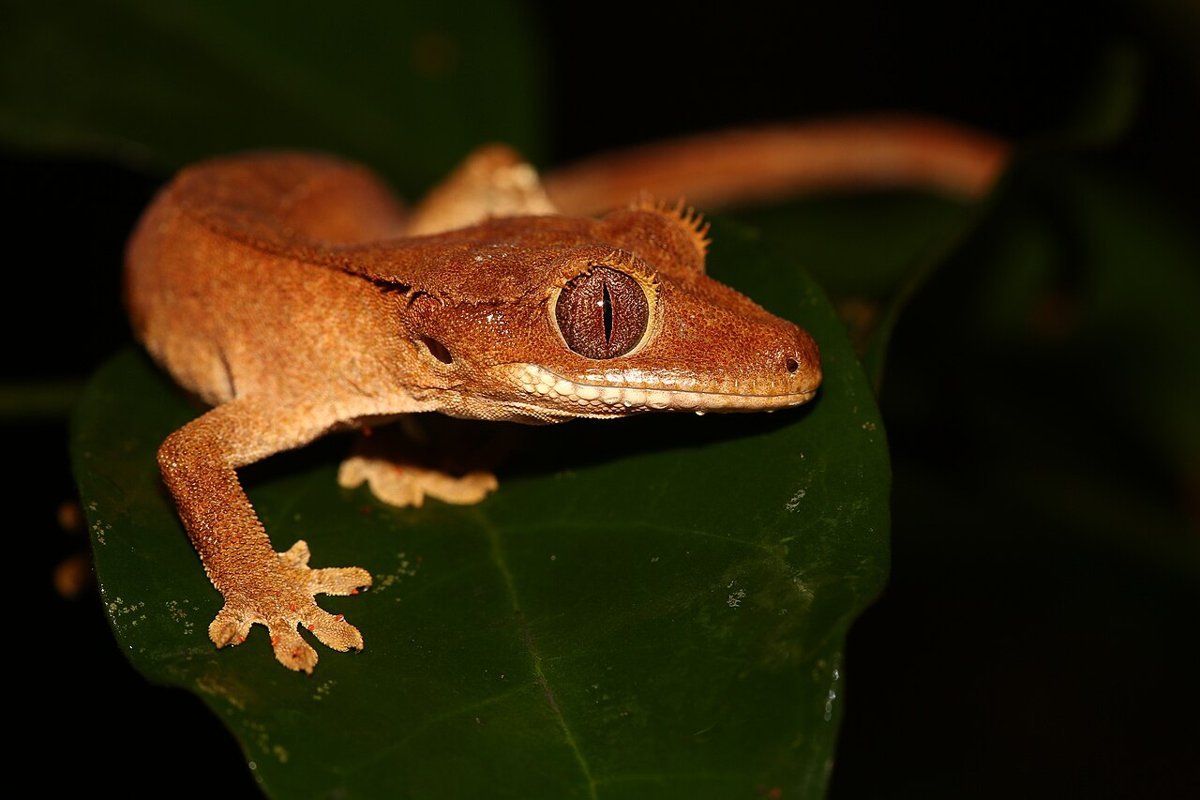
This care sheet summarises current guidance on enclosure size, temperature, humidity, lighting, diet, handling and common health problems, drawing on veterinary and welfare-organisation care sheets listed at the end.
Crested gecko quick facts
| Scientific name | Correlophus ciliatus (formerly Rhacodactylus ciliatus) |
| Native range | Southern New Caledonia |
| Adult size | About 7–9 in (18–23 cm) including tail |
| Lifespan | 15–20 years with good care |
| Activity | Arboreal (climbing); most active at night and dusk |
| Day temperature | Roughly 72–78 °F (22–26 °C), avoid above about 82 °F |
| Humidity | Daily cycle, about 50–70% with spikes to 80%+ after misting |
| Diet | Complete powdered crested gecko diet, plus optional insects |
Enclosure size and setup
Because crested geckos climb rather than roam the floor, height matters more than floor space. The RSPCA recommends a minimum of 45 cm wide × 45 cm deep × 60 cm tall (about 18 × 18 × 24 in) for one adult. Many keepers go larger, such as 18 × 18 × 36 in or 24 × 18 × 36 in, which allows more climbing space and a better temperature and humidity gradient.
Front-opening glass terrariums with a mesh top are a common choice, and the RSPCA notes that glass is preferred over wood because of the humidity involved. Something like an 18 × 18 × 24 in front-opening glass terrarium is a typical starter size for an adult.
Babies and juveniles
Hatchlings can be shy and may struggle to find food in a large, sparse enclosure. Many keepers start them in a smaller, well-planted enclosure or a ventilated tub and move them up as they grow. Whatever you use, keep the food dish easy to find.
Furnishings
- Climbing: branches, cork bark tubes and flats, and vines at a range of heights and angles.
- Cover: dense live or artificial plants, especially near the top, so the gecko can hide during the day.
- Feeding ledge: crested geckos often prefer to eat up high, so a magnetic feeding ledge for food and water cups is popular.
- Substrate: a moisture-holding mix such as coconut fiber, a soil blend, or a bioactive setup with drainage layer and clean-up crew. Paper towel works well for quarantine and very young geckos. Avoid sand and small loose pellets that could be swallowed.
Our care guides section and the reptile care basics page explain the general principles of building a safe enclosure.
Temperature
Crested geckos are sensitive to heat, and overheating is a more common danger than cold for this species. Care sheets from vets and welfare groups give slightly different numbers, but they cluster around these targets:
- Daytime ambient: about 72–78 °F (22–26 °C).
- Warmest spot: around 78–82 °F (26–28 °C); the RSPCA gives 26–28 °C for the hot end.
- Night: a drop to roughly 65–72 °F (18–22 °C) is fine.
- Avoid: prolonged temperatures above about 82 °F (28 °C). Several care sheets warn that temperatures in the mid-80s °F and higher can become dangerous quickly.
In many homes, room temperature is enough. If you need extra heat, use a low-wattage heat source above the mesh on one side so the gecko can move away from it, and always control it with a thermostat. The RSPCA advises that a thermostat must be used with all heat sources and that temperatures are checked daily with digital thermometers. Avoid heat rocks, which the Tree of Life Exotic Pet Medical Center notes can cause serious burns. Keep the enclosure out of direct sunlight, which can overheat a glass tank very fast.
Humidity and misting
Crested geckos need moisture for drinking and shedding, but also need the enclosure to dry out between mistings. Constantly wet conditions with poor airflow can encourage skin and respiratory infections.
- Baseline: about 50–70%.
- After misting: spikes into the 70–80%+ range are normal and helpful.
- Drying period: let the enclosure surfaces dry somewhat before the next misting.
Most keepers mist once in the evening and again in the morning, adjusting for room humidity and ventilation. Crested geckos often lick water droplets from leaves and glass, so misting doubles as a water source. Still provide a shallow water dish. A digital hygrometer is far more reliable than an analogue dial. A pressure sprayer or automatic misting system makes the routine easier.
Lighting and UVB
Crested geckos have historically been kept without UVB because they eat a supplemented complete diet. More recent guidance suggests that low-level UVB may be beneficial. The Aurora Animal Hospital care sheet, for example, notes that UVB is recommended for babies and breeding females to help prevent metabolic bone disease. If you add UVB, use a low-output bulb designed for shade-dwelling or forest species, mounted so the gecko can climb into plenty of shade. A regular day/night light cycle of about 12 hours helps keep behaviour normal.
Diet and feeding
Complete powdered diet
The staple diet for most pet crested geckos is a commercial complete crested gecko diet: a powder you mix with water to a smooth, ketchup-like consistency. Well-known brands include Pangea, Repashy and Zoo Med. These are formulated to be nutritionally complete, so they do not need extra calcium dusted on top. You can compare options with this crested gecko diet search.
- Offer a small cup of fresh diet about every other day for adults; many keepers feed juveniles more often.
- Remove uneaten food after about 24 hours, as it spoils.
- Store dry powder as the manufacturer directs, and keep it sealed.
Insects
Insects are optional but offer enrichment. A few appropriately sized crickets, dubia roaches or black soldier fly larvae once or twice a week work well, gut-loaded and dusted with calcium. Insects should be no larger than the space between the gecko’s eyes. The Aurora Animal Hospital sheet advises avoiding mealworms.
Fruit and baby food
Pure fruit or baby food is not a balanced diet and should not replace a complete powdered diet. If you offer fruit, keep it occasional and small.
Handling and behaviour
Crested geckos are generally calm but can be jumpy, especially when young. Let a new gecko settle for a couple of weeks before handling. Then:
- Handle close to the ground or over a bed in case the gecko jumps.
- Let it walk from hand to hand (“hand walking”) instead of gripping it.
- Never grab or hold the tail.
- Keep sessions short at first.
Tail loss: crested geckos can drop their tails when stressed or grabbed, and unlike leopard geckos, they do not regrow them. Most tail-less adults (often called “frogbutts”) live normal lives, but the wound should be kept clean. Contact a vet if it looks infected.
Housing together: adult males should never be housed together because they can fight. Many keepers prefer to house crested geckos alone to avoid stress, competition and unplanned breeding.
Common health problems
- Metabolic bone disease (MBD): from poor diet, no supplementation, or feeding mainly fruit or insects without a complete diet. Signs include a soft or kinked jaw, bent limbs, weakness and a wavy tail.
- Floppy tail syndrome: the tail flops over the body when the gecko hangs upside down. It is often linked to long periods resting head-down on glass in small or bare enclosures. Plenty of climbing cover and enough height help.
- Stuck shed: especially on toes and the tail tip, usually linked to low humidity.
- Dehydration: sunken eyes, wrinkled skin and lethargy.
- Respiratory infections: often linked to wet, stagnant enclosures. Look for open-mouth breathing or mucus.
- Parasites: a fecal test at a new-pet vet visit is a sensible precaution.
The Tree of Life Exotic Pet Medical Center recommends annual exams and regular fecal testing. See a reptile vet promptly for weight loss, refusal of food for more than a couple of weeks, swelling, a soft jaw, breathing problems or stuck shed that does not release. The ARAV find-a-vet directory can help you find one.
Crested gecko vs leopard gecko
Both are popular beginner geckos, but their needs are different. Leopard geckos are ground-dwelling, prefer a warmer setup with a hot spot, need a lower-humidity environment with a humid hide, and eat only insects. Crested geckos climb, prefer cooler temperatures, need higher humidity with misting and eat a powdered diet. If you are deciding between the two, compare this sheet with our leopard gecko care sheet. UK readers can also check our guide to what reptiles you can own in the UK.
Crested gecko setup checklist
- Tall glass terrarium, at least 18 × 18 × 24 in for an adult
- Branches, cork bark and dense plants for climbing and cover
- Moisture-holding substrate or paper towel
- Digital thermometer and hygrometer
- Thermostat for any heat source
- Mister or spray bottle
- Feeding ledge with food and water cups
- Complete powdered crested gecko diet
- Optional low-output UVB for forest species
Frequently asked questions
Do crested geckos need a heat lamp?
Often not. Many homes stay within the 72–78 °F range that suits them. If your room is cooler, a low-wattage heat source on a thermostat can provide a gentle warm spot. Overheating is a bigger risk than mild cool temperatures for this species.
Do crested geckos need UVB?
They can live without it when fed a complete diet, but current guidance suggests low-level UVB may be beneficial, particularly for juveniles and breeding females. If you use UVB, choose a low-output bulb and provide plenty of shade.
How often should I feed a crested gecko?
Adults are commonly offered a complete powdered diet every other day, with insects once or twice a week if you choose. Juveniles are often fed more frequently. Remove old diet after about 24 hours.
Can crested geckos live together?
Males should not be housed together. Some keepers house females together in large enclosures, but individual housing avoids competition, stress and accidental breeding.
Will a crested gecko’s tail grow back?
No. Once a crested gecko drops its tail, it does not regrow. The gecko can still live a healthy life.
How long do crested geckos live?
The RSPCA lists 15–20 years in captivity, so plan for a long-term commitment.
Sources and further reading
- RSPCA: Crested gecko care sheet (PDF)
- Tree of Life Exotic Pet Medical Center: Crested Gecko Care
- Aurora Animal Hospital: Crested Gecko Care (PDF)
This care sheet is for general information only and does not replace advice from a qualified reptile veterinarian. Questions or corrections? Contact us at info@myhealthyreptile.com.
This care sheet is part of our crested gecko care guides hub.