Disclosure: This article contains affiliate links. If you buy through them we may earn a small commission at no extra cost to you. We only recommend gear that meets current reptile care guidelines. See our affiliate disclosure.
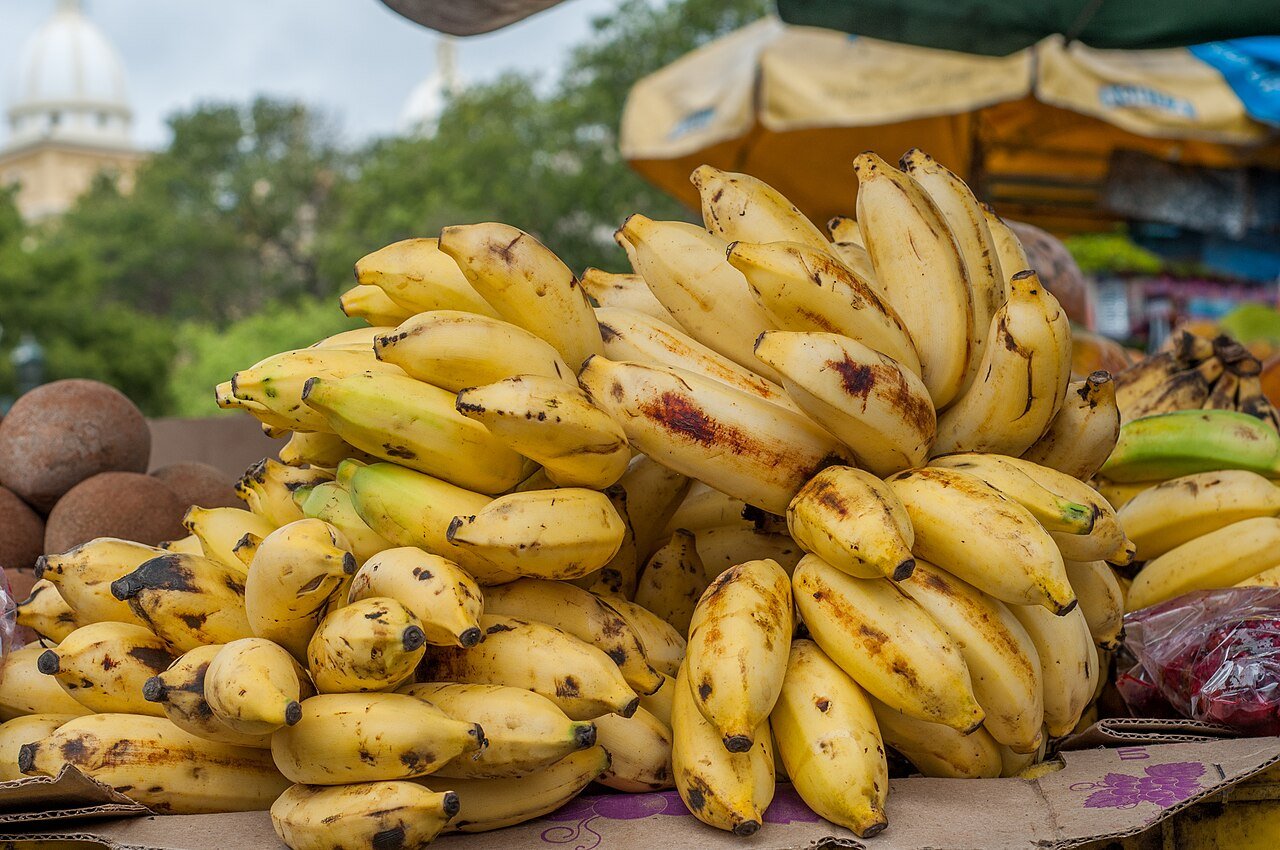
Short answer: Yes, bearded dragons can eat bananas, but rarely. Banana isn’t toxic, but it’s one of the worst fruits for a dragon’s mineral balance. It has about four times as much phosphorus as calcium, plus a lot of sugar. A thumbnail-sized piece every two weeks or so is a reasonable limit for an adult.
Why bananas need limiting
USDA figures for 100 g of raw banana are roughly:
- Calcium: about 5 mg
- Phosphorus: about 22 mg
- Sugars: about 12 g
- Potassium: about 360 mg
That’s a calcium-to-phosphorus ratio of about 1:4, while vets aim for the overall diet to sit around 1.5–2:1. Phosphorus binds calcium in the gut, so phosphorus-heavy foods take calcium out of the system even when you’re dusting insects. Feed them often enough and you raise the risk of metabolic bone disease (MBD): soft, rubbery jaws, fractures, tremors and deformed limbs.
Bananas are also dense and starchy-sweet. In a reptile that evolved on sparse desert plants and insects, regular sugar adds to obesity, fatty liver and tooth decay.
How much banana is safe?
| Dragon | Serving | How often |
|---|---|---|
| Baby (under 6 months) | Best skipped. At most a pea-sized piece | Rarely, if ever |
| Juvenile | 1–2 small diced pieces | Every 2–3 weeks |
| Adult | A slice about 1 cm thick, diced | Every 1–2 weeks at most |
Count all fruit together. If your dragon had blueberries this week, skip the banana.
What about banana peel?
You’ll find claims online that banana peel is “high in calcium” and good for dragons. Peel does contain somewhat more minerals than the flesh. It’s also tough, fibrous and hard to digest, and it’s the part most exposed to pesticides and ripening agents. We don’t recommend it. If you want to experiment, use a tiny, finely chopped piece from a washed organic banana, and expect most dragons to ignore it anyway.
Dried banana and banana chips
Skip them. Drying concentrates the sugar several times over, and commercial chips are often fried in oil and sweetened. They’re also hard and sticky, so they can be a choking risk.
How to serve banana
- Choose a ripe banana. It should be yellow, not green and starchy or black and fermenting.
- Peel it and cut small cubes. Nothing should be wider than the gap between your dragon’s eyes.
- Scatter the cubes over a bowl of calcium-rich greens (collard, mustard, dandelion, turnip greens).
- Take out the leftovers within a few hours. Banana browns and draws flies fast at basking temperatures.
Banana as a “tool,” not a treat
The best use for banana is practical:
- Getting medication down. A tiny smear of mashed banana can hide a crushed tablet or liquid dose. Check with your vet first.
- Coaxing a dragon after brumation or illness. A scent-and-sweetness cue can restart interest in food. Read how long bearded dragons can go without food before you worry.
- Gut-loading feeders. Crickets or roaches fed some banana pass part of that nutrition on. Banana is a poor sole gut-load, though, so pair it with greens and a commercial gut-load.
Better everyday choices
Day to day, a healthy adult dragon’s plate is mostly greens and veg, with insects a few times a week. Juveniles eat insects daily. The feeding guide covers ratios by age, and the safe foods list ranks staples against treats. For fruit with a better mineral balance, papaya and figs beat banana easily.
How bananas compare with other fruit
Here’s a rough ranking of common fruits by calcium-to-phosphorus balance and sugar, using USDA figures per 100 g:
| Fruit | Approx. Ca:P | Sugar | Verdict |
|---|---|---|---|
| Papaya | ~2:1 | ~8 g | One of the best fruits for dragons |
| Figs (fresh) | ~2.5:1 | ~16 g | Good mineral balance but very sweet, so keep portions small |
| Strawberries | ~0.7:1 | ~5 g | Occasional treat |
| Blueberries | ~0.5:1 | ~10 g | Occasional treat |
| Mango | ~0.8:1 | ~14 g | Occasional treat |
| Banana | ~0.25:1 | ~12 g | Rare treat only |
Fruit isn’t the enemy. It’s just the least important part of the diet. Rotating small amounts of several fruits is better than a regular banana habit, and the calcium-rich greens underneath should make up most of the bowl.
A sample “treat week” for an adult dragon
- Mon/Wed/Fri: A large salad of collard greens, dandelion, butternut squash and bell pepper, plus 5–10 dusted dubia roaches or crickets on two of those days.
- Tue/Thu/Sat: Salad only. Rotate the greens: mustard, turnip greens, endive, prickly pear pad.
- Sunday: Salad topped with two or three diced banana cubes.
Next week, swap the banana for papaya or a couple of blueberries. Juveniles need far more insects. See the feeding guide for ratios by age.
Calcium supplements still matter
Banana makes good supplementing more important. Dust feeder insects with a phosphorus-free calcium powder at most feedings, and use a reptile multivitamin about once a week. Whether you need calcium with D3 depends on your UVB setup. With a strong T5 HO tube (see our UVB guide), many vets recommend plain calcium plus occasional D3. Check phosphorus-free reptile calcium powder on Amazon
Green, ripe or overripe?
Ripeness changes the banana. Green bananas are high in resistant starch, which a dragon’s gut handles poorly, and they’re astringent. Most dragons won’t touch them. Ripe yellow bananas, perhaps with a few brown freckles, are the right choice for a rare treat. Overripe, black bananas have more free sugar and may be starting to ferment, so put them in the compost, not the enclosure.
Plantains are a different fruit, starchier and usually cooked. Don’t offer them raw or cooked.
If your dragon has a known health issue, such as obesity, fatty liver, kidney disease or past MBD, ask your reptile vet before giving any fruit. For those dragons, the safest treat is often a favourite green like dandelion rather than anything sweet. Our health guide explains why diet matters so much for these conditions.
FAQ
Can bearded dragons eat bananas every day?
No. Daily banana is a fast track to calcium imbalance and weight gain.
Are bananas toxic to bearded dragons?
No. They’re safe in small amounts. The problem is nutrition, not toxicity. For foods that really are dangerous, see the unsafe foods list.
Can bearded dragons eat banana leaves or flowers?
There’s little reliable data. Washed banana leaf sometimes gets used as cage decor, but we wouldn’t offer it as food.
Do bearded dragons need potassium from bananas?
No. A varied diet of greens and insects supplies plenty of potassium.
My dragon has diarrhoea after eating banana. Is that normal?
Too much sugary fruit commonly causes loose stools. Stop the fruit and offer greens and water. If it lasts more than a couple of days, or the stool contains blood, mucus or worms, see a reptile vet. Our health guide lists red-flag symptoms.
Sources: USDA FoodData Central (bananas, raw); Mader & Divers, Current Therapy in Reptile Medicine and Surgery; ARAV husbandry resources. General information only, not veterinary advice.
This guide is part of our bearded dragon care guides hub.
Related Bearded Dragon Guides
Related: Can bearded dragons eat grapes.