Disclosure: This article contains affiliate links. If you buy through them we may earn a small commission at no extra cost to you. See our affiliate disclosure. This guide is general, researched information and is not a substitute for an exam by a reptile veterinarian.
Impaction means something is blocking or slowing the gut so a bearded dragon cannot pass stool normally. It can start as simple constipation, a urate plug, or a true blockage from swallowed substrate or other material. Mild, short-lived constipation sometimes improves once temperatures and hydration are corrected. A swollen or firm belly, straining with no stool, weakness in the back legs, or a dragon that stops eating and becomes lethargic needs a reptile vet promptly. Do not try enemas, oils or “impaction remedies” at home.
This guide covers how to tell a normal gap between stools from a problem, common causes, what you can safely check at home, what the vet may do, and how to lower the risk.
Constipation, urate plugs and true impaction
Keepers often use “impaction” for any dragon that has not pooped. Vets usually distinguish a few related problems that can look similar from the outside:
- Constipation or delayed gut transit. Stool is produced slowly or sits in the lower gut. Low temperatures, dehydration and a diet that is too dry are common reasons. In a lecture on clinical medicine of bearded dragons, Grayson Doss, DVM, DACZM, notes that a urate plug is a frequent cause of constipation in this species.
- Foreign-body impaction. Substrate, gravel, loose sand or other material has been swallowed and is physically blocking the gut. Veterinary hospitals report cases in which bearded dragons ingest bedding, especially when hunting live insects off the floor.
- Other causes of a blocked or silent gut. Parasites, infection, egg binding, metabolic bone disease and masses can all reduce appetite and stool output. A dvm360 case discussion of a bearded dragon with anorexia and weight loss shows why radiographs and a full exam matter: the cause is not always “just substrate.”
You cannot reliably tell these apart at home. That is why a dragon that is unwell, or has gone an unusually long time without stool, should be examined rather than treated with guesswork.
How often should a bearded dragon poop?
There is no single “normal” number. Hatchlings and juveniles, which eat every day, usually pass stool more often than adults. Adults on a mixed salad-and-insect diet may poop every one to several days. A short pause around a shed, a brumation period, or after a diet change can be normal if the dragon is otherwise bright, is still eating and has a soft, comfortable belly.
Start a simple log: date, food offered, whether stool was passed, and warm-side temperature. The pattern for your dragon is more useful than a generic chart. Our guide to how long bearded dragons can go without food is a useful companion if appetite drops at the same time.
Signs that need attention
Call a reptile veterinarian, or an emergency clinic that sees reptiles, if you notice:
- No stool for longer than is usual for that dragon, especially with a reduced appetite
- Straining, pacing the enclosure, or repeatedly using the bath or water bowl without producing stool
- A belly that looks bloated, feels firm, or is painful when gently touched
- Lethargy, hiding more than usual, or weakness or dragging of the back legs
- Visible grit, sand or unusual material in any stool that is passed
- Vomiting, regurgitation or bubbles from the mouth
Hind-limb weakness is sometimes blamed on “impaction pressing on the spine.” It can also be metabolic bone disease, so it is not something to wait out.
Common causes
Temperatures that are too low
Bearded dragons need a proper thermal gradient to digest food. If the basking surface is too cool, gut movement slows and food or urates can sit in the intestine. Check the basking surface with an infrared thermometer, not just the air temperature, and confirm the cool side is still in range. Our bearded dragon care guide and habitat setup page cover target temperatures.
Dehydration
Dry stools and urate plugs are more likely when a dragon is not drinking enough or the enclosure is very arid. Always offer a shallow dish of fresh water. Supervised, lukewarm, shallow soaks a few times a week are a common husbandry habit to encourage drinking and defecation. They are not a cure for a true blockage. Never leave a weak dragon unattended in water, and keep the water below the shoulders.
Substrate and feeding off the floor
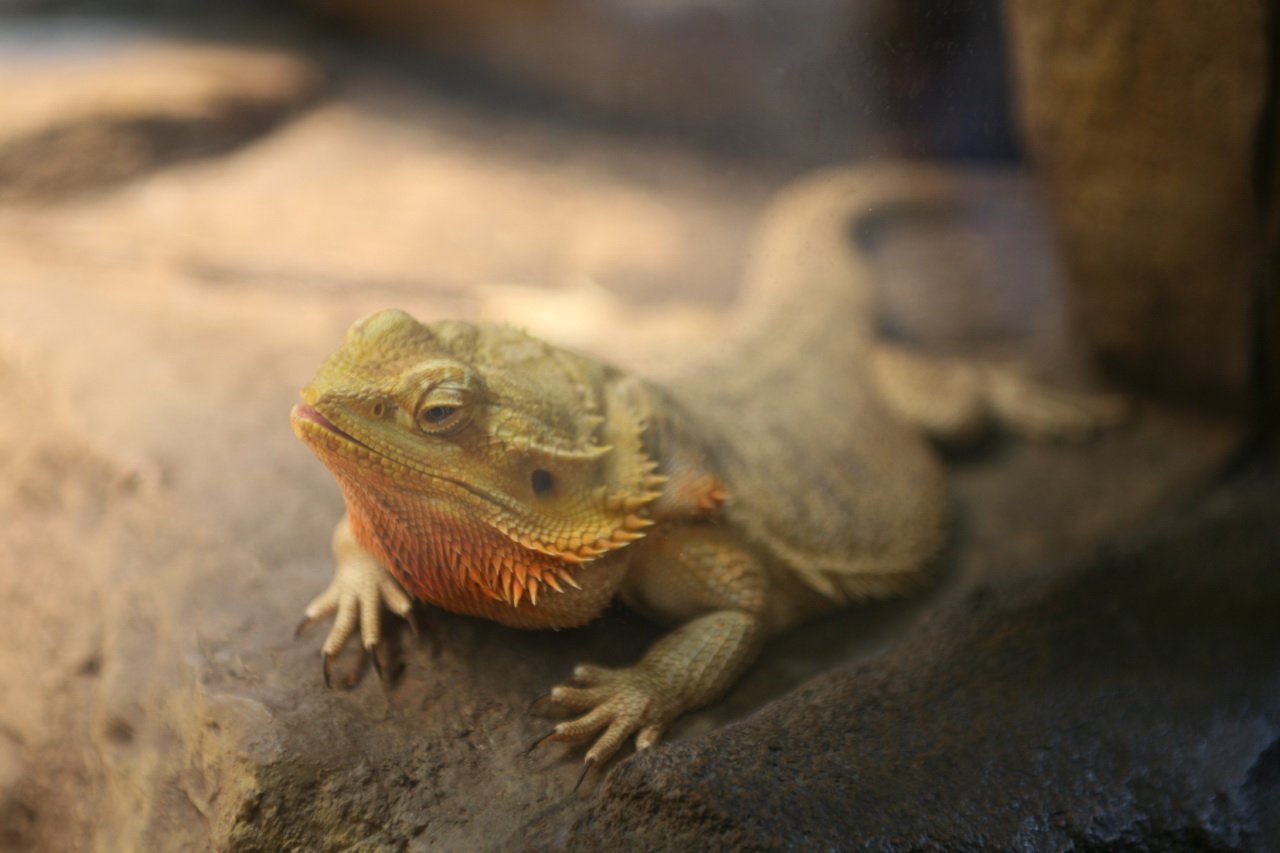
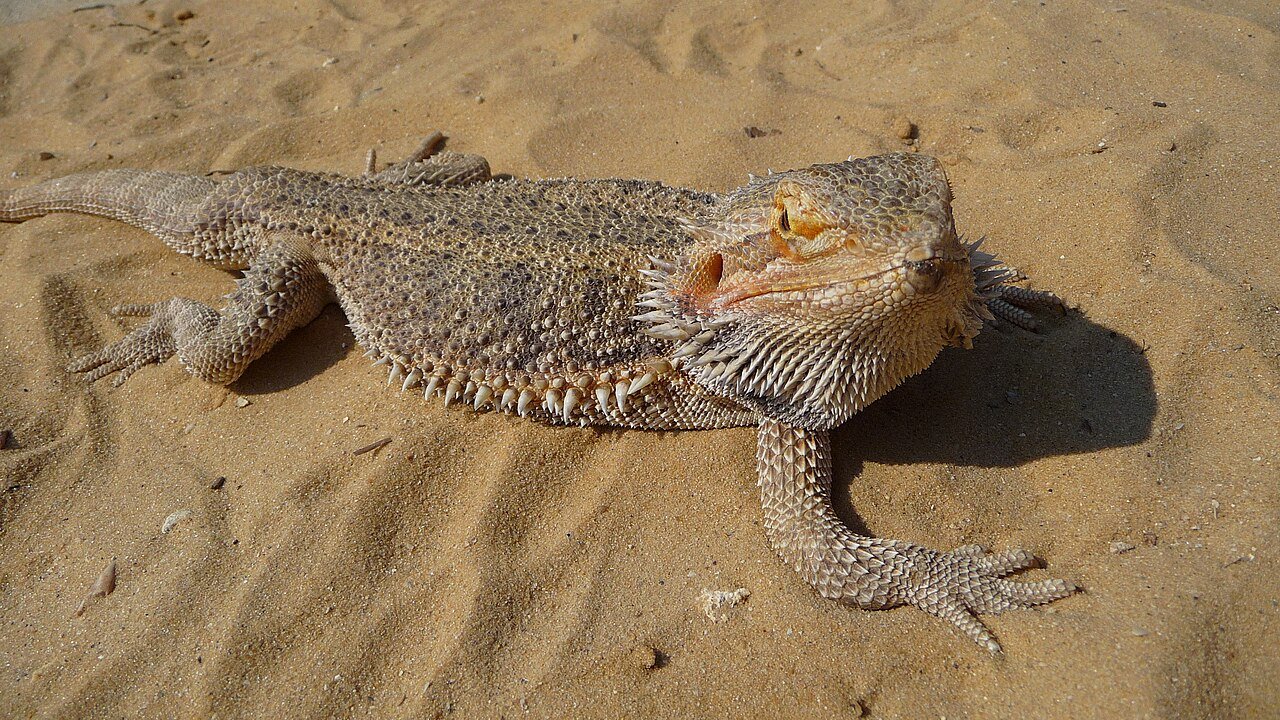
Loose sand, calcium sand, crushed walnut shell, gravel, bark chips and similar particulate bedding can be swallowed with food. Calcium sands are sometimes marketed as digestible, but veterinary sources still report impactions with them. Feeding insects in a smooth bowl, or in a separate bare-floor bin, reduces how much bedding is eaten. Safer everyday options include tile, a soil mix used carefully in a well-heated enclosure, paper towel or newspaper, especially for juveniles and for any dragon already under treatment. The photo with this article shows a bearded dragon on sand in a natural setting; it is not a recommendation to use loose sand as enclosure bedding.
Diet and prey size
Very large insects, too many insects at once, or a diet with almost no moisture can make stools harder to pass. Offer appropriately sized prey and a regular salad of suitable greens, as outlined in our feeding guides.
Other health problems
Parasites, infection, pain, egg binding and metabolic bone disease can all reduce gut motility or appetite. Repeated “constipation” despite good temperatures and hydration is a reason for a faecal exam and a vet visit, not another home remedy.
What you can safely do at home
These steps are for a dragon that is still alert, while you are checking husbandry or waiting for a vet appointment. They are not a substitute for veterinary care if signs are more than mild or last more than a short time.
- Check the setup. Measure the basking surface, cool side and night temperatures. Confirm the dragon can warm up properly after eating.
- Offer water. Refresh the water dish. A supervised shallow soak in lukewarm water may encourage drinking. Do not add soap, oils or salts.
- Pause large meals. Do not keep offering big insects to a dragon that is not passing stool.
- Look at the substrate. If the dragon is unwell, moving it onto paper towel or tile makes it easier to see any stool and reduces further ingestion.
Do not give mineral oil, olive oil, petroleum jelly, human laxatives, or over-the-counter “impaction pastes” unless a veterinarian has prescribed a specific product and dose. Do not attempt an enema at home. The cloaca and colon are easy to injure, and a complete obstruction can worsen if you push fluid against it.
What to expect at the vet
Bring recent temperature readings, a description of the diet and substrate, and photos of the enclosure. The vet will usually examine the dragon, palpate the abdomen and discuss husbandry. Radiographs (X-rays) are often used to look for packed stool, swallowed substrate, gas, eggs or other abnormalities. Some cases need fluids, a carefully performed enema in the clinic, pain relief, assisted feeding or, if a solid obstruction will not move, surgery.
Treatment only works if the underlying cause is also fixed. A dragon returned to a cool enclosure or a tank of loose calcium sand is likely to have the same problem again.
How to lower the risk
- Keep a reliable basking gradient and check it with a temperature gun
- Choose a substrate that is hard to swallow, or feed insects in a bowl or a separate tub
- Avoid calcium sand, walnut shell, gravel and similar loose products
- Provide fresh water and, if you use soaks, keep them shallow, lukewarm and supervised
- Offer a balanced diet and prey that is not too large
- Weigh your dragon regularly and keep a stool log
- Find a reptile vet before you need one, through the ARAV vet finder
Helpful supplies
- Infrared thermometer gun to check basking surface temperatures
- Digital thermometer / hygrometer
- Digital gram scale for weekly weigh-ins
- Slate tile or similar solid flooring if you are moving away from loose sand
These are search links to help you compare options. We have not hands-on tested these products.
Frequently asked questions
How long can a bearded dragon go without pooping?
It depends on age, diet and the individual. A bright, eating adult may have a gap of a few days. A long gap plus a firm belly, straining, lethargy or appetite loss should be checked by a vet rather than timed against a chart.
Can a warm bath fix impaction?
A supervised lukewarm soak may help a mildly constipated, well-hydrated dragon pass stool, and it is a reasonable husbandry habit. It will not reliably clear a foreign-body blockage. If the dragon is unwell, book a vet visit instead of repeating baths and hoping.
Is sand always unsafe?
Loose and calcium sands are a repeatedly reported risk, especially when insects are fed on the floor and in young dragons. Some keepers use a packed soil mix in a correctly heated enclosure. The safer approach, particularly for juveniles or a dragon with a history of gut problems, is a solid or paper substrate and a feeding bowl.
Why are my bearded dragon’s back legs weak?
A packed gut can make a dragon reluctant to move, but weak or trembling back legs are also a classic sign of metabolic bone disease. Treat this as a veterinary problem, not a waiting game.
Should I massage my dragon’s belly?
Do not press or massage a swollen abdomen. You can injure the gut. Leave palpation and treatment to the vet.
Sources and further reading
- Lafeber Vet (Doss, DVM, DACZM): Clinical Medicine of Bearded Dragons
- dvm360: Delineating the cause of a bearded dragon’s anorexia and weight loss
- Dublin Veterinary Hospital: Foreign Body in Bearded Dragons
- PetMD: Bearded Dragon Care Sheet
- ARAV: Find a reptile vet
This article is general, researched information and does not replace advice from a qualified reptile veterinarian. Questions or corrections? Contact us at info@myhealthyreptile.com.
Related: metabolic bone disease in bearded dragons, bearded dragon care guide and all bearded dragon guides.
Related: bearded dragon brumation and bearded dragon not eating.