Yes, red-eared sliders can eat fruit, but only as an occasional treat that makes up a very small part of their diet, roughly 5-10% at most for adults and less for juveniles. Safe options include small pieces of strawberry, blueberry, melon, apple (no seeds), banana, mango and papaya. Fruit is high in sugar and usually low in calcium, so too much can upset digestion, foul the water and crowd out the foods sliders really need: a quality aquatic turtle pellet, leafy greens and aquatic plants, plus some animal protein for younger turtles.
Below you will find a fruit-by-fruit table with USDA nutrition values and calcium-to-phosphorus ratios, serving guidance by age, and the fruits and foods to avoid.
What red-eared sliders eat naturally
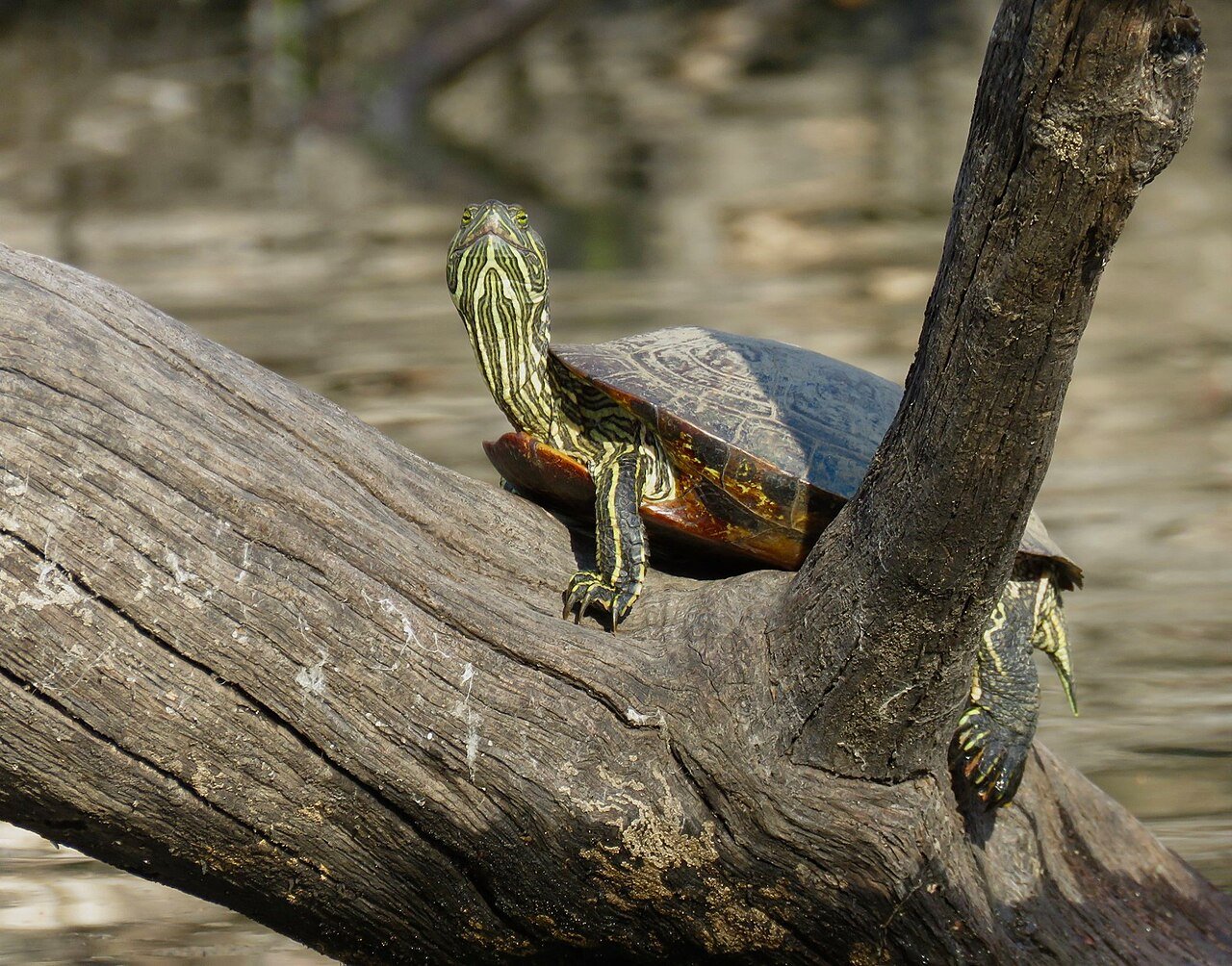
Red-eared sliders (Trachemys scripta elegans) are omnivores. Young sliders eat mostly animal food such as insects, snails, small fish and tadpoles. As they mature they shift towards plants, especially aquatic vegetation. Wild sliders may eat fallen fruit occasionally, but it is a minor part of their diet. Most vet guides recommend a captive diet built on:
- Commercial aquatic turtle pellets (a main component for many keepers).
- Leafy greens and aquatic plants, such as romaine, dandelion greens, collards, duckweed, water lettuce and anacharis.
- Animal protein, such as earthworms, insects and feeder fish where appropriate, more for juveniles.
- Treats, including small amounts of fruit.
Safe fruits for red-eared sliders (with nutrition)
Values per 100 g of raw fruit from USDA FoodData Central. The Ca:P ratio is our calculation. Turtles need plenty of calcium for shell and bone, so fruits with a ratio below 1:1 are best kept rare.
| Fruit | Sugar (g) | Calcium (mg) | Phosphorus (mg) | Ca:P | Notes |
|---|---|---|---|---|---|
| Papaya | 7.8 | 20 | 10 | 2.0:1 | One of the better choices |
| Figs (fresh) | 16.3 | 35 | 14 | 2.5:1 | Good ratio but sugary; tiny pieces |
| Strawberries | 4.9 | 16 | 24 | 0.7:1 | Low sugar; popular |
| Blueberries | 10.0 | 6 | 12 | 0.5:1 | Cut in half for small turtles |
| Cantaloupe | 7.9 | 9 | 15 | 0.6:1 | Remove rind and seeds |
| Watermelon | 6.2 | 7 | 11 | 0.6:1 | Very watery; seedless flesh |
| Apple (with skin) | 10.4 | 6 | 11 | 0.5:1 | Remove seeds and core |
| Mango | 13.7 | 11 | 14 | 0.8:1 | Remove skin and stone |
| Banana | 12.2 | 5 | 22 | 0.2:1 | High sugar, poor ratio; rare |
| Grapes | 15.5 | 10 | 20 | 0.5:1 | Seedless, quartered; rare |
How much fruit and how often?
| Age | Main diet | Fruit guideline |
|---|---|---|
| Hatchling and juvenile (under about 2 years) | More animal protein and pellets; some greens | A pea-sized piece once every week or two, if at all |
| Subadult | Pellets, increasing greens and plants, some protein | A few small pieces once a week |
| Adult | Mostly greens and aquatic plants plus pellets; protein less often | Small pieces once or twice a week, no more than around 5-10% of food |
A useful rule of thumb is to offer no more fruit at a time than your turtle can finish in a couple of minutes. These guidelines come from general care recommendations rather than controlled studies, so your vet may suggest different amounts.
How to prepare fruit for your slider
- Wash the fruit thoroughly.
- Remove seeds, pits, stones, cores and tough peel. Apple seeds and stone-fruit pits contain compounds that can release cyanide.
- Cut into pieces smaller than the turtle’s head.
- Feed in the water or, better, in a separate feeding tub. Many keepers feed in a tub to keep the main tank cleaner.
- Remove leftovers within 15-30 minutes. Fruit rots quickly in warm water and can drive up ammonia levels.
Fruits and foods to avoid
- Avocado: contains persin and is widely considered toxic to many animals, including reptiles.
- Citrus (oranges, lemons, limes, grapefruit): acidic and can upset digestion.
- Rhubarb: very high in oxalates and toxic.
- Canned fruit, fruit in syrup, dried fruit or juice: extremely high in sugar.
- Seeds and pits from apples, cherries, peaches, plums and apricots.
- Processed human foods, dairy, bread and anything salted or seasoned.
Why too much fruit is a problem
Sugary foods can disturb gut bacteria and lead to diarrhoea. Fruit is also low in calcium relative to phosphorus, so a fruit-heavy diet can contribute, together with poor lighting, to shell and bone problems. Signs to watch for include a soft or misshapen shell, pyramiding (raised, lumpy scutes), swollen eyes, which can be linked to vitamin A deficiency, and lethargy or loss of appetite. Any of these warrant a visit to a reptile vet.
Diet is only half the story. Sliders also need strong UVB lighting and a warm basking spot to make vitamin D3 and use the calcium they eat. See our guide on how often turtles need to bask in UV light for the details.
A sample weekly menu for an adult slider
| Day | Food |
|---|---|
| Mon | Pellets + leafy greens |
| Tue | Leafy greens and aquatic plants |
| Wed | Pellets + earthworms or insects |
| Thu | Leafy greens and aquatic plants |
| Fri | Pellets + greens, a few pieces of strawberry or papaya |
| Sat | Greens and aquatic plants only |
| Sun | Optional rest day or greens |
Many keepers leave aquatic plants such as duckweed in the tank so adults can graze. Juveniles generally need feeding more often with more protein; ask your vet for a plan suited to your turtle’s age and size.
Better treats than fruit
If you want to give your slider something special, several foods are more nutritious than fruit and just as exciting for the turtle:
- Earthworms (from a bait shop or bred feeders, not garden worms that may carry pesticides) are rich in protein and readily accepted.
- Aquatic plants such as duckweed, water lettuce, water hyacinth and anacharis let the turtle forage naturally.
- Dandelion greens and flowers from pesticide-free areas.
- Squash and carrot, finely grated, add colour and some vitamin A.
- Feeder insects such as crickets, dubia roaches or black soldier fly larvae, especially for juveniles.
Feeder fish are popular, but some species (such as goldfish and rosy reds) contain an enzyme called thiaminase that may cause vitamin B1 deficiency when fed often, and wild-caught fish can carry parasites. If you use fish, ask your vet which species are suitable.
Water quality and feeding
Turtles eat in the water and also defecate in it, so every feeding affects water quality. Sugary, soft fruit breaks down quickly and can cloud water, encourage bacterial growth and raise ammonia. Poor water quality is linked to shell infections, skin problems and eye irritation. Good habits include:
- Feeding in a separate tub filled with tank water when possible.
- Using a filter rated for at least two to three times the tank volume.
- Doing regular partial water changes and testing ammonia and nitrite.
- Removing uneaten food quickly.
Keeping the water clean also helps you notice if your turtle starts eating less, an early sign of many health problems.
Quick reference: fruit for red-eared sliders
- Best choices: papaya, strawberries, a little fig or melon.
- Rare treats: banana, grapes (seedless, quartered), mango, apple (no seeds).
- Avoid: avocado, citrus, rhubarb, canned, dried or syrup-packed fruit, and pits and seeds.
- How much: no more than about 5-10% of an adult’s diet; less for juveniles.
- Serve: washed, peeled where needed, in pieces smaller than the head, removed within 30 minutes.
Red-eared sliders can live for 20-30 years or more with good care, so the habits you set now matter. A varied, mostly plant-based adult diet, clean water, a warm basking area and strong UVB are the foundations; fruit is simply the occasional extra on top. Regular check-ups with a reptile vet (the ARAV directory below can help you find one) are the best way to catch problems early. Many of the same principles apply across reptiles; see our care guides for other species.
Frequently asked questions
Can red-eared sliders eat bananas?
Yes, a small piece occasionally. Bananas are high in sugar and have a poor Ca:P ratio, so they should be one of the rarer treats.
Can red-eared sliders eat strawberries?
Yes. Strawberries are lower in sugar than many fruits and are a popular treat. Cut them into small pieces and offer them once a week or less.
Can red-eared sliders eat grapes?
Seedless grapes cut into quarters are generally considered safe in small amounts, but they are sugary, so keep them rare.
Can baby red-eared sliders eat fruit?
Hatchlings need mainly protein and pellets to grow. A tiny bit of fruit occasionally will not hurt, but it is not necessary.
Can red-eared sliders eat oranges?
Citrus is best avoided because of its acidity.
My slider only wants fruit. What should I do?
Stop offering fruit for a while and focus on pellets, greens and plants. Turtles can be stubborn, but most adapt. If your turtle refuses all food or loses weight, see a reptile vet.
Sources and further reading
- VCA Animal Hospitals: Red-Eared Sliders – Care and Turtles – Feeding
- Merck Veterinary Manual: Routine Health Care of Reptiles
- RSPCA: Terrapin (slider) care
- USDA FoodData Central: nutrient data for the fruits listed
- ARAV: Find a reptile vet
This article is general, researched information and does not replace advice from a qualified reptile veterinarian. Questions or corrections? Contact us at info@myhealthyreptile.com.
Related: how to heat a reptile enclosure, our care guides and reptile care basics.