Disclosure: This article contains affiliate links. If you buy through them we may earn a small commission at no extra cost to you. See our affiliate disclosure. This guide is general, researched information and is not a substitute for an exam by a reptile veterinarian.
Crested geckos are omnivores that eat fruit, nectar and insects in the wild. In captivity, the simplest healthy diet is a complete commercial crested gecko diet (CGD) powder, such as Pangea or Repashy, mixed with water and offered 2-3 times a week, plus calcium-dusted live insects once or twice a week. Fresh fruit is an occasional treat, not a staple, because plain fruit is low in calcium and has a poor calcium-to-phosphorus ratio.
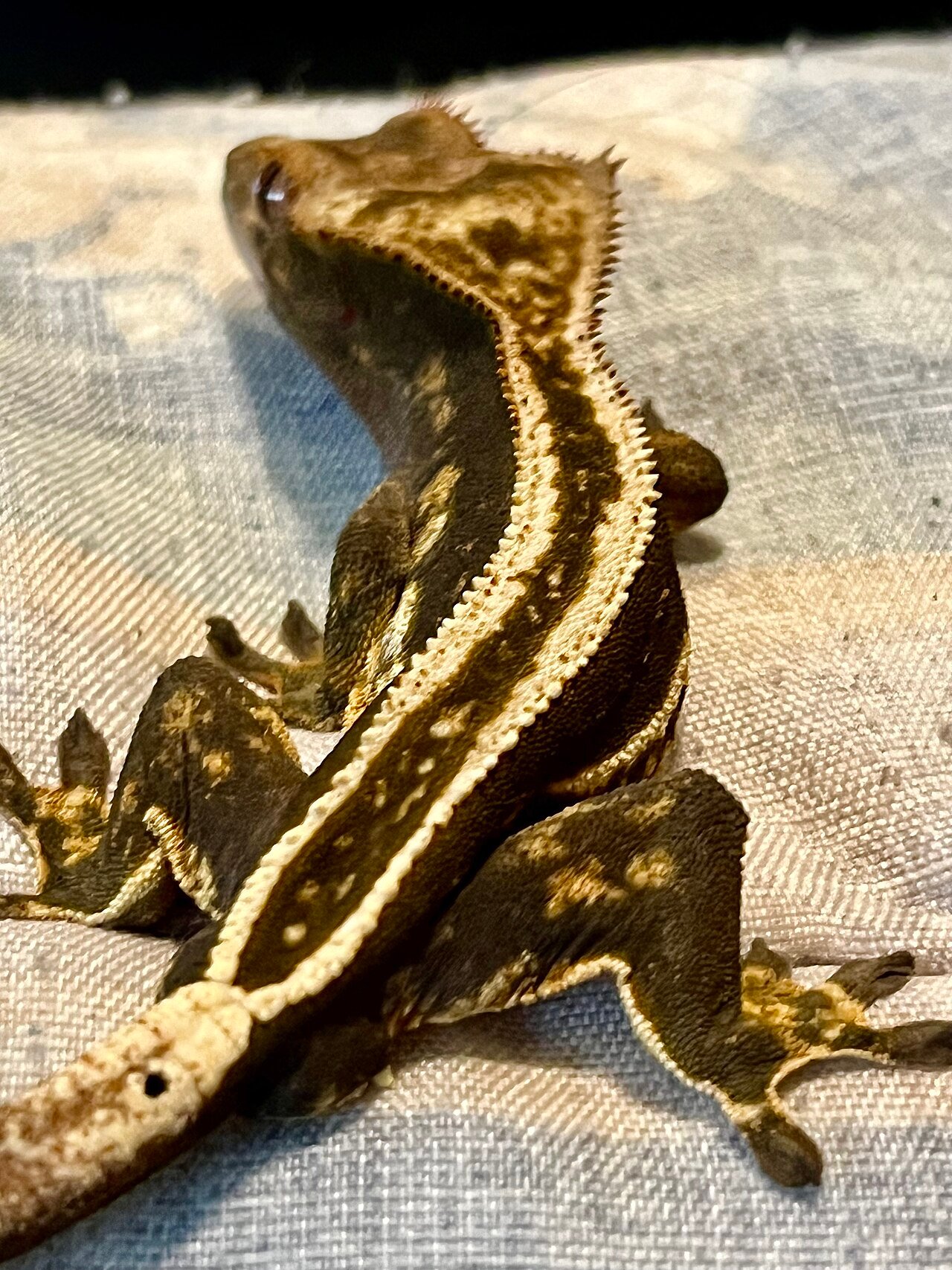
Here is what to feed, a schedule by age, how to prepare CGD, which insects and fruits work, and the mistakes to avoid.
What crested geckos eat in the wild
Crested geckos (Correlophus ciliatus) live in the forests of New Caledonia. They climb at night and eat soft, overripe fruit, nectar, pollen and small invertebrates. Commercial powdered diets were developed to copy that mix in a complete, balanced form.
Commercial crested gecko diet (CGD): the staple
A quality CGD contains fruit, protein, vitamins and calcium in the right balance, so you do not need to add extra supplements to it. Popular brands include Pangea, Repashy and Leapin’ Leachie. Many keepers rotate two or three flavours to keep their gecko interested.
- Pangea crested gecko diets
- Repashy crested gecko diets
- Magnetic feeding ledges and small food cups
How to prepare it
- Mix the powder with water following the label, usually about 1 part powder to 2 parts water, until it looks like ketchup or a smooth smoothie.
- Serve it in a small, shallow cup, ideally on a raised ledge, since crested geckos prefer to feed off the ground.
- Offer it in the evening.
- Remove and replace it after about 24-48 hours, before it spoils.
Feeding schedule by age
| Age | CGD | Insects |
|---|---|---|
| Hatchling and juvenile (under about 12 months) | Fresh every 1-2 days, or available most of the time | Small insects 1-2 times a week, dusted with calcium |
| Adult | 2-3 times a week | Once a week or so, dusted with calcium |
Newly hatched geckos often do not eat for the first few days while they absorb yolk reserves and complete their first shed. Expect them to lick only small amounts at first.
Insects for crested geckos
Insects are optional with a complete CGD, but many keepers find they boost growth and give enrichment. Good options are crickets, small dubia roaches, black soldier fly larvae and silkworms. Mealworms and superworms are less ideal because of their hard shells and fat content, and waxworms are a rare treat. Offer insects no larger than the space between your gecko’s eyes and dust them lightly with calcium.
Can crested geckos eat fruit?
Yes, as an occasional treat. Mashed, ripe, soft fruits such as mango, papaya, banana, fig or strawberry work well. Keep fruit to a small part of the diet, avoid citrus, and do not use fruit-flavoured baby food as a staple: it lacks the protein and calcium they need. Because plain fruit has a poor calcium balance, a diet built mainly on fruit can lead to metabolic bone disease.
Water and humidity
Crested geckos often prefer to drink droplets, so mist the enclosure in the evening and keep a shallow water dish available. Commonly recommended humidity is about 50-60% during the day, rising to around 80% or higher after misting, with a chance to dry out between mistings. Room temperatures of about 72-78°F (22-26°C) suit them, and temperatures above about 82°F (28°C) can be dangerous. Full setup details are in our crested gecko care sheet.
Common feeding mistakes
- Feeding mostly fruit or baby food instead of a complete CGD.
- Adding calcium to CGD, which is already balanced. Dust insects, not the powdered diet.
- Leaving CGD out too long, where it ferments or grows mould.
- Oversized insects that can cause choking or regurgitation.
- Feeding wild-caught insects, which can carry parasites or pesticides.
Is my crested gecko eating enough?
Crested geckos are messy, slow eaters, and it can be hard to see how much they take. Look for lick marks in the food, regular droppings and steady weight gain in juveniles. Weigh in grams every few weeks. Weight loss, a thin tail base (or hips if tail-less) or a kinked or soft jaw are reasons to see a reptile vet.
Frequently asked questions
Do crested geckos need insects?
Not strictly, if fed a complete CGD, but most keepers offer them for growth and enrichment.
Do crested geckos need UVB?
They can live without it on a complete CGD, but low-level UVB is increasingly recommended. See our care sheet for options.
Can crested geckos eat bananas?
A little mashed banana as an occasional treat is fine. Banana is high in phosphorus relative to calcium, so it should not be a regular food.
How long can a crested gecko go without food?
Healthy adults can skip a few days to a week, especially in cooler months or when breeding. Ongoing refusal with weight loss means a vet visit.
Sources and further reading
- VCA Animal Hospitals: Geckos: Care
- Merck Veterinary Manual: Routine Health Care of Reptiles
- ARAV: Find a reptile vet
This article is general, researched information and does not replace advice from a qualified reptile veterinarian. Questions or corrections? Contact us at info@myhealthyreptile.com.
Related: all crested gecko guides, leopard gecko guides and care guides.